
Sale

EM (Effective Microorganisms) is a symbiotic community of beneficial living microorganisms, invented by Prof. Dr. Teruo Higa (Japan) in the 1980s, which functions to break down organic matter and thoroughly suppress biological pathogens.
The composition of EM products includes more than 80 species of beneficial microorganisms, concentrated into 5 main groups:
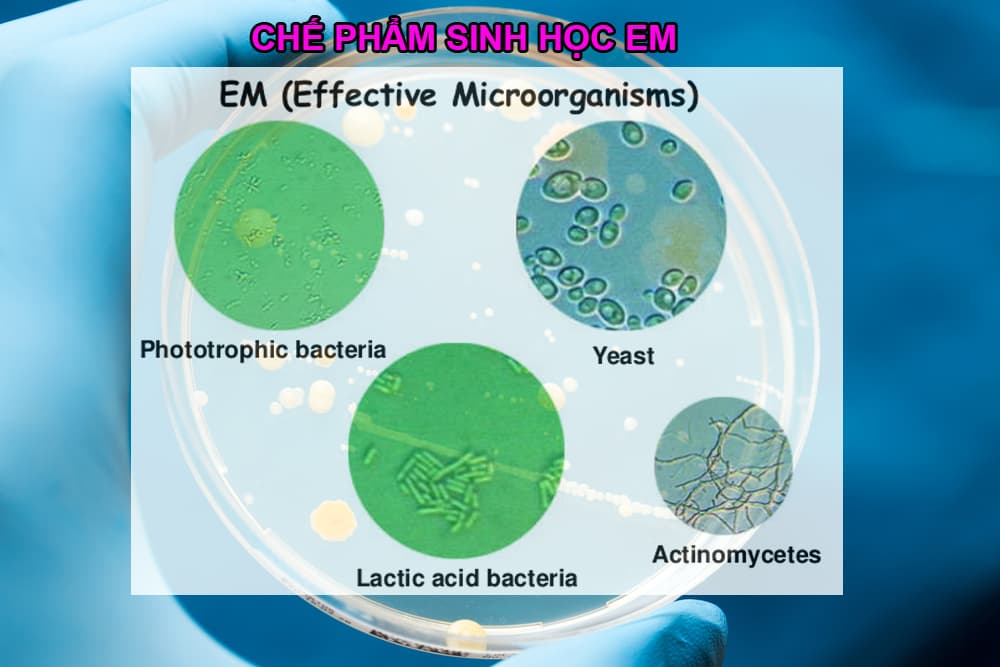
EM biological product is an effective microorganism preparation containing more than 80 beneficial strains
From the original microbial base solution, EM is propagated into many secondary lines to optimize its uses and save costs for each specific purpose.
| Comparison criteria | EM1 (Base solution) | EM2 (Secondary) | EM5 (Insect repellent) | Bokashi (Solid form) |
| Color | Clear reddish-brown | Light yellow to orange | Deep reddish-brown | Dry, loose grayish-brown |
| Standard pH | 3.2 – 3.5 | 3.5 – 4.0 | 4.0 – 4.5 | 4.5 – 5.5 |
| Microbial density | Very high (> 10^8 CFU/ml) | Medium (10^7 CFU/ml) | Specialized antifungal strains | Diverse enzymes |
| Mixing composition | Pure concentrate | EM1 + Molasses + Water | EM1 + Alcohol + Vinegar | EM1 + Bran + Sawdust |
| Shelf life | 12 – 18 months | 3 – 6 months | 6 – 8 months | 18 – 24 months |
| Main uses | Propagation, Aquaculture | Soil watering, Foliar spraying | Pest control, Insect repellent | Composting, Base odor control |
| Odor characteristics | Mild sweet-and-sour scent | Strong yeasty smell | Strong vinegar-alcohol smell | Fermented bran smell |
This is the original base preparation containing the highest density of beneficial bacteria (typically reaching 10^8 – 109 CFU/mL or 10^8 CFU/g).
Use: Used as the core raw material to ferment secondary products; not for direct application/watering due to its high cost.

EM base product for organic agriculture (Emgro)
Fermented from EM1 combined with molasses and clean water.
Use: Applied directly to the soil to improve soil friability, sprayed to eliminate barn odors, used to treat waste, and applied to aquaculture ponds to control algae.

Mixing EM2 from EM base solution and molasses
This is an anaerobically fermented compost made from rice bran and sawdust mixed with EM solution.
Use: Used as a super-microbial base fertilizer, helping beneficial bacteria establish deep root systems in the soil and treat organic household waste.

Mixing EM Bokashi from EM base solution
Fermented from EM base solution combined with alcohol, vinegar and pungent herbs (garlic, chili, ginger).
Use: Works as a biological pesticide, repelling insects (leafhoppers, aphids) and treating leaf fungus.

Mixing garlic EM from EM base solution
Fermented from fresh plant materials (banana, moringa, etc.) and EM base solution.
Use: Rich in enzymes and growth hormones, used as a foliar fertilizer to stimulate flowering and fruit set.

Mixing banana EM
Thanks to its biological safety and powerful decomposing ability, EM acts as a “multi-purpose processing plant,” delivering outstanding effectiveness in 4 key areas: crop farming, livestock, aquaculture, and environmental protection.
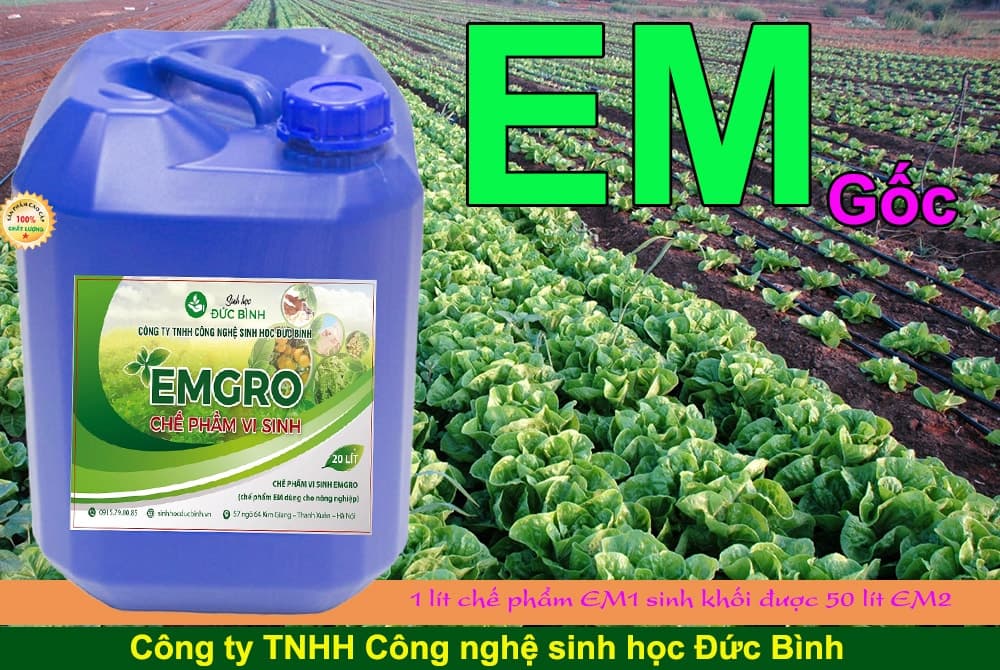
Using EM biological product in crop farming
EM accompanies the crop’s growth cycle, from soil preparation and sowing through to harvest:

Watering the soil directly with EM helps improve and enrich the soil quickly
A clean barn environment and a healthy digestive system are the two key factors that EM addresses:

Applying EM product in livestock farming helps eliminate barn odor and biologically ferment animal feed.
Particularly effective for high-density intensive farming models such as whiteleg shrimp, black tiger shrimp and commercial fish:
EM is an ideal biological agent for treating pollution issues in both household and industrial settings:

EM product for treating polluted waste sources
There are currently many self-fermented microbial lines on the market with no guaranteed density. The Duc Binh Microbial Products Center supplies an EM base line cultured in a laboratory according to Vietnamese Standards.
| Criteria | EM products of uncertain origin on the market | Duc Binh EM base product |
| Microbial density | Low, unstable, prone to contamination. | Meets the standard of 108 – 109 CFU/mL. |
| Biomass propagation capacity | Poor (1 liter of base produces only 10–20 liters of secondary product). | Outstanding (1 liter of base produces 20–40 liters of EM2). |
| Shelf life | Short (3–6 months). | Long (12–24 months when unopened). |
| Versatility | Usable for only 1–2 single purposes. | Multi-purpose (crop farming, livestock, aquaculture). |
| Price | Informal, no technical support. | From 30,000đ – 120,000đ (with lifetime technical consultation). |
To optimize costs by up to 90%, farmers must propagate their own biomass from EM1 (base) into EM2 (secondary) before using it widely.
Formula for mixing secondary EM (EM2):
Dilution ratios for EM2 for each purpose:
Bokashi B: used as animal feed
Formula: 1 liter of EM base (or 2 packets of powdered EM base) + 2 liters of molasses + 40 liters of water + (70 – 100kg) of feed, sealed and fermented for 5-7 days ==> Bokashi B
Feed ingredients: corn meal, bran, fish meal, etc., mixed in a specific ratio to ensure the protein and nutrient content needed for livestock.
How to ferment
Bokashi C: EM Bokashi for environmental treatment
Fermentation formula: 5 liters of EM base + 5 liters of molasses + 50 liters of water + 100kg of rice bran and sawdust, sealed and fermented for 7-10 days =====> Bokashi C
How to ferment
How to use
– Use Bokashi C as a biological bedding: Mix evenly with rice husk or sawdust to line livestock barns
– Composting manure and organic waste: Use 15kg of Bokashi C mixed evenly with 1 ton of waste, add water to reach the right moisture level, cover tightly with a tarp to compost
– Additionally, EM Bokashi C is also used to treat wastewater and other environmental issues…
Use EM base product (EMGRO) diluted with clean water to water plant roots or as a foliar microbial fertilizer for crops
Root watering method: Mix 1 liter of EMGRO with 200 liters of clean water, water evenly around the base of the plant. The amount depends on the type and age of the plant
Foliar spraying: Dilute 1 liter of EMGRO with 300 liters of clean water, spray evenly over the entire leaves, stem and base of the plant. Best sprayed in the early morning or cool afternoon. Apply once every 2 – 3 weeks; for vegetables, once a week. Avoid spraying while the plant is flowering or setting fruit.
Uses of herbal EM:
Formula for producing herbal EM
250ml of EMGRO base + 1 liter of molasses + 1kg of roots/fruits + 8 liters of water —–> Mix thoroughly, seal and ferment for 3 – 5 days —-> Yields 10 liters of herbal EM
How to use:

Duc Binh’s EM base products come in a wide range of types, serving many purposes
EM products consist of living microorganisms that are either active or dormant. Improper storage will completely destroy the product’s effectiveness.
Signs that EM has gone bad (must be discarded):
Note: When a large amount of algae dies off and pH drops, lime should be used to raise the pH
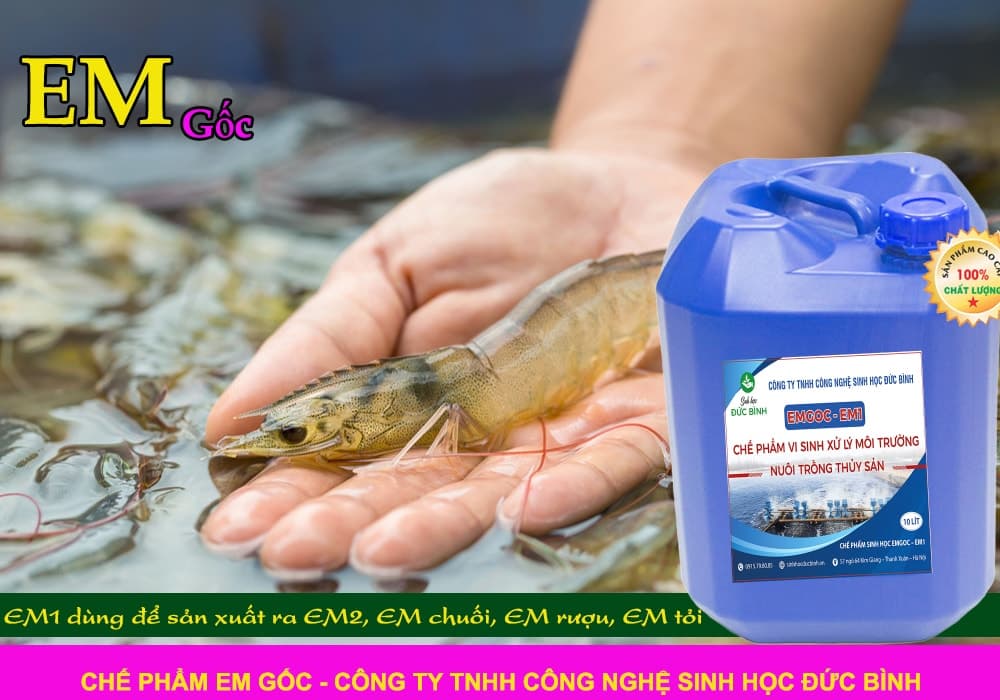
EM base biological product (EM1) used in aquaculture
8.1 Is EM product harmful to humans?
Not at all. EM is a collection of naturally occurring beneficial bacteria and yeast, non-GMO, completely safe for people and livestock, and leaves no harmful residue on agricultural produce, making it very suitable for organic farming.
8.2 Can EM product be used for all types of plants?
Yes. EM product is highly effective and compatible with all types of crops: from vegetables and ornamental flowers to fruit trees and long-term industrial crops such as coffee, pepper and durian.
8.3 Does long-term use of EM cause soil compaction?
On the contrary. Regular use of EM is the most sustainable biological method for restoring soil health. Microorganisms continuously break down organic matter, keeping the soil loose and rich in humus, minimizing compaction caused by overuse of chemical fertilizers.
8.4 Can EM be self-propagated at home?
Yes. Farmers can fully propagate secondary EM (EM2) from EM base (EM1) using the standard ratio: 1 liter of EM base + 1 liter of molasses + 18 liters of clean water. This saves up to 90% of the cost compared to buying pre-diluted EM directly.
8.5 What is the price of Duc Binh’s EM product?
Prices range from 30,000đ to 120,000đ depending on the product line (liquid or powder form) and packaging. Farm owners buying by the box or in bulk will always receive the best discount and wholesale pricing policy.
8.6 Where can I buy reputable, quality EM product?
To avoid purchasing fake or low-quality microbial products, farmers should order directly from the Duc Binh Microbial Products Center (Website: chephamvisinh.vn) to ensure the live microbial density meets standards and to receive lifetime technical consultation from agricultural engineers.
8.7 Can EM be mixed with chemical pesticides?
Absolutely not. Chemicals, pesticides and chemical herbicides will immediately destroy the entire living microbial ecosystem in the product. Farmers should separate the timing of chemical application and EM application by at least 7–10 days.
8.8 Can EM be used to compost fish fertilizer without producing maggots?
EM breaks down fish protein very well, turning foul odors into a pleasant fragrance similar to fish sauce. However, EM microorganisms themselves do not have the function of killing maggots. If the compost is not sealed tightly and flies lay eggs in it, maggots may still appear, but this does not reduce the nutritional quality of the fish fertilizer at all.
Duc Binh Microbial Products is a leading, reputable supplier of EM lines that meet Vietnamese Standards and agricultural industry regulations.
EMZEO microbial product is a powdered EM base line that decomposes and eliminates odor from organic waste. It is effectively applied in composting fish fertilizer, soybeans, oil cake, earthworms, soybean residue, manure, agricultural by-products, and more.
EMGRO biological product is a type of EM base product applied in agriculture effectively for: composting manure, eliminating barn odor, treating wastewater and waste, and fermenting animal feed…
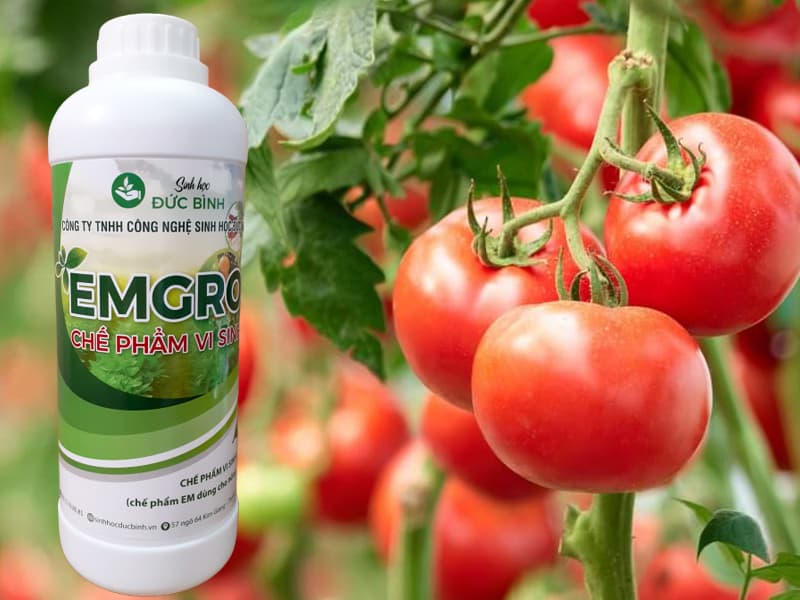
EM biological product (Emgro) works very well for all types of crops
EM base biological product (EM1) is a liquid-form EM microbial product, extremely effective for use in wastewater treatment, developing water color, treating pond bottoms, eliminating toxic gases, and more
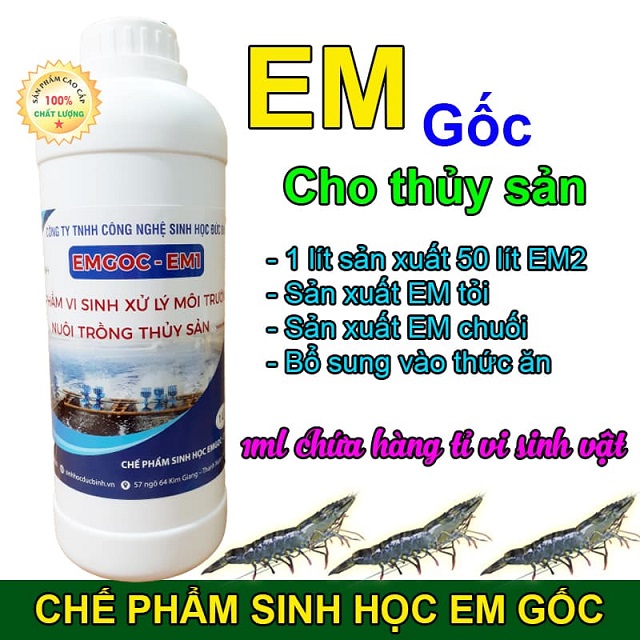
EM biological product is indispensable for livestock and aquaculture
Duc Binh Microbial Products – Research and Application Center for Biological Products
Through this article, Duc Binh Microbial Products hopes to provide you with the most complete information about what EM biological product is, its benefits, uses, and the most accurate mixing methods. In addition, we also distribute many other lines of biological products such as: the Emzeo biological product brand, Trichoderma fungus, organic biological fertilizer, aquaculture microbial products… We are delighted to provide farmers with the highest quality products at reasonable prices
Login
Register

