


1. What Is Trichoderma?
What is Trichoderma? This is a question many farmers ask when learning about biological solutions for crops. Trichoderma is defined as a genus of filamentous fungi belonging to the family Hypocreaceae, distributed worldwide and playing an important role in the soil ecosystem.
Trichoderma fungus is a beneficial fungus that lives around plant root zones and is processed into microbial products. This fungus is capable of secreting enzymes that destroy other harmful fungi. Specifically, the substances it secretes dissolve the cell walls of harmful fungi to destroy them and eventually break them down into food. This process generates many useful organic substances.
This fungal genus can be easily identified by its characteristic green color, visible to the naked eye. Trichoderma’s morphological structure consists of finely branched hyphae that form a complex network in the soil. Reproduction occurs mainly asexually through spores, allowing the fungus to spread quickly in suitable environments.
In terms of geographic distribution, Trichoderma is found in most soil types, from tropical to temperate regions, adapting well to a wide range of environmental conditions. This high adaptability makes Trichoderma an ideal choice for agricultural applications.
Trichoderma Spp. Scientific Definition – A Fungal Genus of the Family Hypocreaceae
In taxonomy, Trichoderma has a clearly defined position in the classification system of living organisms. It belongs to the kingdom Fungi, phylum Ascomycota, class Sordariomycetes, order Hypocreales, and family Hypocreaceae. This taxonomic position reflects the evolutionary relationships and biological characteristics of this important fungal genus.

What is Trichoderma fungus? It is a beneficial fungal genus that occurs naturally in the soil, living around plant root zones. Trichoderma forms a beneficial symbiotic relationship with plant roots, helping to strengthen the plant’s natural immune system.
The way Trichoderma interacts with the soil environment is quite complex, involving the secretion of decomposing enzymes and natural antibiotic compounds. These characteristics allow Trichoderma to occupy living space and prevent the growth of harmful microorganisms.
Trichoderma comprises around 33 species, with an asexual reproductive trait. They multiply from a single original individual into many others in an exponential manner. The suitable temperature for their growth and development is about 25-30°C. Under ideal conditions, Trichoderma fungi can survive for up to a year and a half. They will be destroyed if exposed to intense sunlight or prolonged rain.

How Trichoderma fungus works
Trichoderma is an aerobic fungus that lives saprophytically on decaying plant organic matter in the soil. It breaks down cellulose in plant residues, forming humus that supplies nutrients to plants and increases soil fertility.
During its life cycle, Trichoderma inhibits the growth of many pathogenic fungi such as Fusarium, Rhizoctonia, Sclerotium, and Pythium. Trichoderma hyphae wrap tightly around other fungal filaments while secreting antibiotic substances that destroy the pathogenic fungi. Trichoderma is considered an important antagonistic fungus against soil-borne pathogenic fungi.
Trichoderma includes many species with varying degrees of antagonism against pathogenic fungi. In practice, manufacturers produce products combining multiple Trichoderma species to control a wider range of pathogenic fungi.
In Vietnam, several Trichoderma strains have been identified and are in use, such as: Trichoderma virens, T. viride, T. koningii, T. harzianum, and others. In addition, Trichoderma fungi can control nematodes, such as Trichoderma viride. The main fungi used against nematodes are two species: Arthrobotrys irregularis and Paecilomyces lilacinus. These nematode-controlling fungi live parasitically on nematodes and are toxic to them.
In short, Trichoderma is an aerobic fungus capable of antagonizing pathogenic fungi, decomposing organic residues, and controlling nematodes in the soil. That is simply the common name for this antagonistic fungal line. Some other names for Trichoderma products include:
- Trichoderma fungus
- Trichoderma antagonistic fungus
- Trichoderma product
- Trichoderma fungus product
- Trichoderma biological product
- Tricho product
- Trichoderma Bacillus (also known as TRIBAC)
- Trichoderma Bacillus antagonistic fungus
- Trichoderma Bacillus product
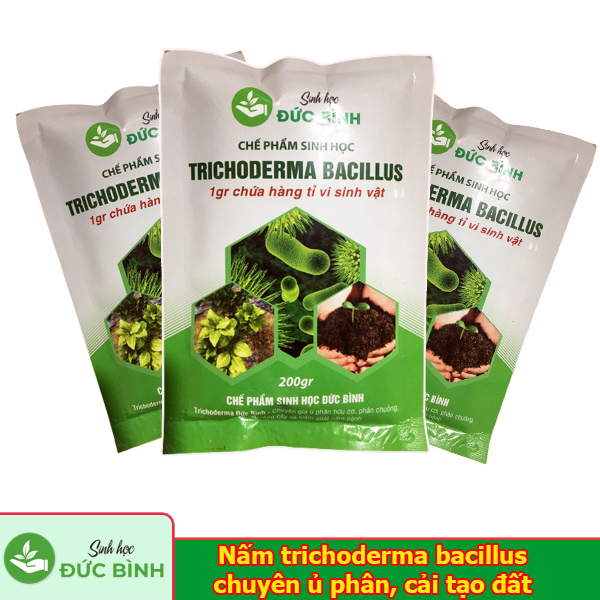
Trichoderma Bacillus fungus used for composting manure and antagonizing plant pathogenic fungi
2. Benefits of Trichoderma Fungus
Understanding what Trichoderma is would not be complete without knowing the practical benefits this fungus brings to agriculture. Trichoderma has three main uses: preventing plant diseases, composting organic matter, and improving cultivated soil.
- Thanks to its inherent properties, it readily destroys fungi that harm plant roots, such as Rhizoctonia solani, Fusarium solani, Phytophthora, and Sclerotium rolfsii. As a result, you can use Trichoderma to treat root rot diseases in pepper plants, collar rot in coffee, stem canker in durian, and root rot in avocado, among others. In addition, most root diseases in plants will also improve when using this fungus.
- Trichoderma fungus doesn’t only act on the root zone — it also helps improve resistance in other parts of the plant. This is because the fungus can gradually release antimicrobial substances that spread throughout the plant. This indirectly destroys harmful fungi on shoots, leaves, fruit, and flowers.
- Trichoderma fungus destroys harmful fungi while being a friend to beneficial microorganisms. It supports nitrogen-fixing microorganisms (in legumes) and phosphate-solubilizing microorganisms, among others.
- This fungus can also decompose organic residues and dead plant matter. It acts as a substitute for putrefactive microorganisms. This process also produces substances that plants can easily absorb, such as chitinase, protease, and pectinase.
- Trichoderma helps speed up the composting process and effectively reduces odor. It can be used with many types of fertilizer, such as manure, green manure, or fish emulsion.
- This fungus is also an ingredient in many other microbial products, helping increase crop performance through synergy among beneficial organisms.
- Boosts beneficial microorganisms in the soil, keeps soil loose and porous, and kills root-damaging nematodes. Trichoderma fungus is a natural nemesis of nematodes and pathogenic fungi
- Coexists with and supports beneficial soil microorganisms, including nitrogen-fixing and phosphate-solubilizing microorganisms
- Stimulates root development, helps roots recover quickly, and allows roots to grow deeper and spread further to absorb nutrients more easily
- Extremely strong cellulose decomposition. Helps balance the soil microbial ecosystem
- Trichoderma combined with organic fertilizer helps improve soil, keeping it loose and increasing soil fertility.
- Balances soil pH and detoxifies the soil
- Helps save on fertilizer used for crops. Trichoderma is an effective way to improve fertilizer-use efficiency for plants
The soil-improving effect of Trichoderma is reflected in enhanced beneficial microbial activity, improved soil structure, and increased water retention capacity. Trichoderma also stimulates root system development, helping plants absorb nutrients more efficiently.

Trichoderma fungus has 3 main benefits: preventing plant diseases, composting organic matter, and improving cultivated soil
Another important benefit is that Trichoderma helps decompose organic waste in the soil, converting it into nutrients that are easy for plants to absorb. This process helps maintain and enhance the soil’s natural fertility.
Thanks to its many significant benefits, Trichoderma is changing the way farmers think. It helps reduce reliance on unsustainable chemical fertilizers and pesticides. Instead, farmers can use biological products that are both highly effective and environmentally friendly.
2.1 Preventing Pythium, Rhizoctonia, and Fusarium Diseases
Experimental studies show that Trichoderma is significantly effective in preventing dangerous diseases such as Pythium, Rhizoctonia, and Fusarium. Prevention efficiency typically reaches 40-60% reduction in disease incidence compared to control groups.
For Pythium, which causes root rot in many crops, Trichoderma harzianum and T. viride show strong antagonistic ability. The mechanism of action includes both direct parasitism and the secretion of antibiotic substances, creating a protective barrier around the root system.
Rhizoctonia solani is the causal agent of damping-off and web blight in many crops, and is especially dangerous for seedlings. Trichoderma asperellum has proven highly effective at inhibiting the growth of R. solani through nutrient competition and the secretion of chitinase enzymes.
Fusarium is a fungal genus that causes many serious diseases such as wilt and fruit rot. Trichoderma koningii and T. harzianum are capable of producing specialized antagonistic compounds against Fusarium, effectively protecting both the root system and the above-ground parts of the plant.
It’s important to note that preventive application is far more effective than treatment after the fact. Once disease symptoms have appeared, Trichoderma’s ability to control the disease decreases significantly, as the pathogens have already penetrated deep into plant tissue.
2.2 Soil Improvement and Root Development Stimulation
Trichoderma’s effect on the crop root system is clearly reflected in measurable growth indicators. Studies show that using Trichoderma can increase the number of lateral roots by 30-50%, helping plants expand their nutrient-absorption zone.
Trichoderma’s root-stimulating mechanism includes secreting natural growth regulators such as auxin and cytokinin. These plant hormones promote cell division and cell elongation in the root growth zone.
Plant nutrient absorption improves by 25-40% in the presence of Trichoderma. This is due not only to increased root mass but also to Trichoderma’s ability to convert hard-to-absorb nutrients into more readily available forms.
In improving soil structure, Trichoderma helps produce biological binding agents that aggregate soil particles into larger structural units. This process creates numerous small pore spaces in the soil, improving drainage and aeration.
Trichoderma’s organic-matter decomposition activity also helps release important trace elements such as iron, zinc, and manganese in absorbable forms. This is especially significant in high-pH or acidic soils, where trace elements are often fixed and unavailable.
2.3 Composting Organic Matter with Trichoderma Fungus
Trichoderma products are used to speed up the decomposition of organic matter, eliminate odors, destroy pathogens, and create a nutrient-rich fertilizer source. Composting with Trichoderma fungus helps rapidly convert agricultural by-products (manure, straw, coffee husks) or kitchen waste into fully decomposed organic fertilizer in just 25 to 35 days.
3. How to Use Trichoderma Fungus
Trichoderma products are mainly used for composting organic matter, soil treatment and improvement, watering or spraying to prevent fungal disease (such as yellowing leaves and root rot), and stimulating root development. Depending on the purpose, the method of use and dosage will vary.

How to use Trichoderma fungus effectively
3.1 Using It to Combat Pathogenic Fungi, Watering or Spraying to Prevent Plant Disease
Choosing a powdered Trichoderma product containing spores that dissolve in water, to spray and thoroughly wet the leaves, stems, and area around the base of the plant, is an effective solution chosen by many growers. Use it regularly to prevent harmful fungi that cause root rot or to control nematodes.
Dosage: dissolve 1 pack of Duc Binh Trichoderma antagonistic fungus (200g) in 200-300 liters of clean water, then spray or water onto plants. Use once every 15 to 20 days.
- Soil drench: Water the diluted Trichoderma solution evenly around the base of the plant.
- Foliar spray: Spray evenly to wet both sides of the leaves.
An effective way to use the nematode-control product is to sprinkle it on the soil around the base of the plant or mix it into the watering solution applied at the plant base. In addition, you can mix Trichoderma with organic fertilizer and apply it to plants, which is also very effective.
3.2 Mixing Trichoderma Directly into Soil or Growing Media
Mix the Trichoderma product with the growing medium — biological soil, potting soil, organic fertilizer, etc. — stir well, then place into trays or pots for planting. When growing clean vegetables in a medium mixed with Trichoderma, you only need to water the plants without worrying about nutrient deficiency. This method creates the best environment for beneficial microbes to thrive right from the start, and works especially well for container gardening.
- Dosage: Mix 2 grams of Trichoderma per kilogram of growing medium (pine bark, treated coconut coir, clean soil).
- Method: Mix Trichoderma thoroughly into the soil or growing medium before placing it in pots or sowing.
3.3 How to Use Trichoderma Fungus for Composting
Trichoderma fungus is used to compost manure from cattle, chickens, pigs, and buffalo, as well as fish waste, soybean meal, worm castings, kitchen waste, green manure, and more. Trichoderma rapidly decomposes organic residues and effectively destroys pathogenic fungi in the compost.
How to use Duc Binh Trichoderma Bacillus for composting, soil improvement, disease-fungus antagonism, and nematode control…
- Dosage: Use 1-2 kg of Trichoderma per ton of organic material (manure, straw, water hyacinth, etc.).
- How to use: Dissolve Trichoderma in water (or mix with bran or dry sand), water it evenly into the composting material, and pile it into compost heaps. Ensure the compost pile’s moisture content is around 50-60% (a light squeeze should release a small amount of water) and cover tightly with tarp. Turn the pile once every 15-20 days; after 40-50 days of composting, the material will be fully decomposed.
3.4 Reviving Weak Plants or Plants Showing Root Rot
Procedure: Trim off the rotted roots, rinse thoroughly, and soak the roots in a diluted Trichoderma solution (10g dissolved in 5 liters of clean water) for 15-30 minutes before replanting into fresh, sterilized growing medium.
3.5 A Few Notes When Using Trichoderma Fungus
- Trichoderma is packaged into bottles. It’s best to use the entire contents in a single application, as opening the cap can affect the fungus’s effectiveness. If there is leftover product, seal it tightly and store it in a dark, dry place.
- Trichoderma does not tolerate harsh environmental conditions. It needs a favorable environment to grow — drought or intense sunlight will gradually kill it.
- This fungus can also be used to decompose dried or dead plant matter. There’s no need to worry, as it will not harm green leaves or new shoots. It can be applied directly by spraying onto fresh leaves to prevent pests and diseases, allowing the solution to run down and decompose dry leaves as well.
- Avoid combining this fungus with inorganic fertilizer or lime powder. Trichoderma is a biological product suited only to organic materials. These other substances kill the fungus and render it ineffective. Therefore, farmers should only use it together with pesticides or inorganic fertilizers under the guidance of agricultural experts.
4. Evaluating the Advantages and Disadvantages of Trichoderma Fungus
Trichoderma brings together many microorganisms beneficial to the safe development of crops. However, the product also has some drawbacks when used in ecological agriculture:
4.1 Advantages
- The product can prevent and treat many fungal diseases such as fruit rot, wilting, and leaf yellowing, among others. It helps supply nutrients to plants by dissolving minerals in the soil, thereby activating the soil’s natural defense mechanisms.
- According to experienced farmers, Trichoderma can quickly address environmental pollution issues. Using the product correctly effectively decomposes organic matter such as fruit peels, sugarcane bagasse, straw, and other agricultural waste. Moreover, Trichoderma also helps detoxify chemicals in the soil, such as heavy metals and pesticides.
- Trichoderma is affordable, highly effective, and easy to produce. Farmers can purchase it in powder or granule form from reputable brands, or even produce it themselves from natural materials.

Trichoderma Bacillus is a biological product containing two groups of microorganisms — Trichoderma and Bacillus sp. — offering many outstanding advantages over other products on the market
4.2 Disadvantages:
- Trichoderma fungus is easily affected by harsh environmental factors such as humidity, pH, temperature, oxygen, and light. These factors reduce its viability and effectiveness.
- On the other hand, continuous use of this fungus can lead to resistance developing in other pathogenic fungi. As a result, Trichoderma’s disease-control effectiveness may decline, and farmers could face the risk of new, harder-to-control diseases emerging.
5. Real-World Field Trial Results at Duc Binh Farms
To demonstrate its outstanding effectiveness, Duc Binh Microbial Products has conducted numerous field trials in key farming regions:
5.1 Trial on Roses in Da Lat (Lam Dong Province)
- Situation: A rose garden was affected by Fusarium wilt at a rate of up to 30%.
- Solution: Applied Duc Binh Trichoderma Bacillus as a soil drench every 15 days.
- Result: After 45 days, the disease rate dropped to under 5%. Fine root systems developed 40% more vigorously, leaves became glossier and greener, and flowering cycles became more stable.
5.2 Trial on Coffee Plants in Cu M’gar (Dak Lak Province)
- Situation: Degraded soil, with plants showing yellowing leaves and root rot caused by nematodes and Phytophthora fungus.
- Solution: Mixed Trichoderma into well-decomposed cattle manure during the coffee-husk composting process.
- Result: The density of beneficial fungi increased from 10^4 to 10^6 CFU/g of soil. Leaf yellowing decreased by 80% after 3 months of treatment, and harvest yield increased by 15% compared to the chemical-treated control group.
6. Guide to Properly Storing Trichoderma Fungus
In practice, Trichoderma is a living fungus that is easily affected by external environmental conditions. Therefore, to ensure its effectiveness, it must be stored properly. Below are some guidelines from experts:
6.1 Storing as Raw Material
If you produce Trichoderma yourself from rice or wheat, as soon as fungal spores appear, keep them in a nylon bag or transfer them to a cloth bag for better ventilation. Store the fungus in a dry, cool place away from direct sunlight. In some cases, you can dry the fungus at a temperature below 40°C to reduce moisture and extend its shelf life.

How to store Trichoderma fungus
6.2 Storing as a Biological Product
If you purchase a Trichoderma biological product from a manufacturer, keep it in its original bottle with the cap tightly sealed. Store the product in a dark, dry, enclosed space away from direct sunlight. If needed, you can store the product in the refrigerator at around 4°C.
6.3 Storing Trichoderma After Dilution
Expert recommendation: after diluting Trichoderma with water for foliar spraying or soil application, it’s best to use it up within 24 hours. If any solution remains, store it in a tightly sealed container in the refrigerator at around 4°C. Note that this diluted form should not be stored for long, as its effectiveness gradually decreases over time.
7. How to Choose a Quality Trichoderma Product?
There are many different brands of Trichoderma products on the market. This can make it hard to decide which Trichoderma product is truly effective. To find a quality product at a reasonable price, you need to know how to choose Trichoderma and find a genuine, authorized retailer.
Only by understanding the selection principles can you buy the highest-quality, most effective Trichoderma. Below is how to find a high-quality Trichoderma product :
– Choose the type of fungus suited to your specific crop. For example: Trichoderma for orchids and roses; Trichoderma for pepper plants, for coffee plants, etc.
– Choose reputable sources to buy the product from. Due to its popularity, microbial products are now widely sold everywhere. Unfortunately, you could end up choosing a counterfeit or low-quality product.
– Choose a Trichoderma product with a high spore density — pay attention to the spore count per gram or per kilogram.
– If you plan to spray it, you can choose a liquid form or a powder that dissolves completely in water. Water-soluble powder is preferable, since it is in spore or capsule form, giving it stronger potency once released into the environment.
– If you’re buying Trichoderma for composting or for sprinkling on plants, choose the powder form.
– Choose a Trichoderma product that has been registered with the relevant state authority and has a circulation license and barcode for traceability.
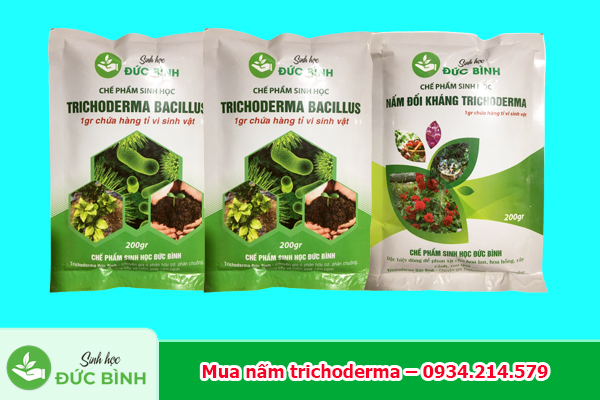
A reputable, high-quality address to buy Trichoderma fungus — currently the number-one choice
After learning about the benefits of Trichoderma, you’re probably eager to find out more about this product — where to buy it, and how much it costs.
Trichoderma products on the market are widely sold at prices ranging from tens of thousands to several hundred thousand VND. So why is there such a price difference? What price point offers the best balance of quality and value when choosing Trichoderma?
Why should you choose Trichoderma products from Duc Binh Microbial Products?
| Comparison: Duc Binh Trichoderma Product vs. Ordinary Trichoderma Fungus | ||
| Product Type | Ordinary Trichoderma Fungus | Duc Binh Trichoderma Product |
| Composition | Trichoderma fungal strains | – Trichoderma fungus – Bacillus sp. – Effective microbial strains. |
| Spore Density | 10^6 spores/g (1 gram contains millions of fungal spores) | 10^9 CFU/g (1 gram of product contains billions of spores) |
| Product Form | Liquid or powder form | Powder form containing original fungal spores |
| Applications | – Composting manure – Soil improvement – Preventing nematodes and harmful fungi | – Composting manure, straw, green manure, pig manure, chicken manure, fish waste, soybean meal, etc. – Antagonizing pathogenic fungi, killing nematodes – Soil drenching, foliar spraying, mixing with organic fertilizer for plants – Soil improvement |
| Dosage | Composting 1 ton of manure requires 2-3kg, priced at 50k/1kg pack | Too cheap”}”> – Composting 1 ton of material requires 1-2 packs of 200g, priced at 30k/200g pack ==> Too cheap |
| Production Technology | Standard technology | Biotechnology |
| Shelf Life | 12 months | 24 months |
Contact Information
Duc Binh Microbial Products – Center for Research and Application of Biological Products specializing in researching, manufacturing, and applying product lines such as: probiotics, septic tank enzymes, wastewater treatment enzymes, aquaculture probiotics, Trichoderma fungus, biological products, and more.
Address: 1B Alley 774 Kim Giang, Thanh Liet, Hanoi
Phone: 0934.214.579
Hotline: 024.66.55.46.86
Email: chephamvisinhhungdung@gmail.com
Website: https://chephamvisinh.vn/
In addition, we also offer cash-on-delivery shipping for Trichoderma products to all 34 provinces and cities nationwide. So customers simply need to place an order by calling Phone/Zalo – 0934.214.579 and the product will be delivered right to your door.
8. Frequently Asked Questions About Trichoderma Fungus
Can Emzeo be used instead of Trichoderma for composting green manure?
EMZEO focuses on microorganisms that decompose protein (meat, fish) and eliminate odors. Trichoderma, on the other hand, specializes in breaking down cellulose and lignin (plant stalks, husks, grass). It’s best to combine both for maximum effectiveness.
Why do plants still wilt and die even after applying Trichoderma?
Trichoderma is primarily preventive. If a plant is already severely infected in its vascular tissue, Trichoderma cannot cure it. You need to apply it from the very start of the growing season to establish a protective barrier.
Can Trichoderma be mixed with NPK fertilizer for application?
Yes, but the mixture should not be left standing for too long — apply it right after mixing. However, never mix it with copper- or sulfur-based chemical fungicides.
How can I tell if Trichoderma is working well in the compost pile?
After 7-10 days of composting, if you see patches of white or fine green fungal growth resembling silk threads on the surface of the material, that’s a sign the fungus is thriving and multiplying rapidly.
Can Trichoderma be used on saline-alkaline soil?
Trichoderma works best at a pH of 5.5-7.5. If the soil is too acidic (pH below 4.0), you must apply lime to adjust the pH 10-15 days beforehand before introducing the microorganisms, to ensure effectiveness.
9. Conclusion
Understanding what Trichoderma fungus is and applying it correctly can bring tremendous benefits to agriculture. From reducing chemical use and increasing crop yields to improving the health of cultivated soil, Trichoderma is proving itself an indispensable part of sustainable agriculture. Start your journey toward biological farming with Trichoderma today to protect the environment and improve production efficiency.
In addition to Trichoderma fungus, Duc Binh Microbial Products also researches, develops, and supplies other biological products such as: original-strain EM products, the Emzeo biological product brand, environmental microbials, aquaculture microbials, organic biological fertilizers, and more.