
Along with the continuous development of the agricultural sector, the livestock industry is becoming an increasingly important part of the global economy. However, this strong development also means challenges in pollution and environmental degradation. From the perspective of leading experts in the field of livestock, cshare below about the problem environmental protection in livestock and the accompanying solutions will help you con towards a sustainable livestock farming.
1. Environmental pollution in livestock farming and negative impacts
The concept of environmental pollution in animal husbandry is the situation in which toxic substances from animal husbandry activities such as animal waste, chemicals and antibiotics enter the natural environment, affecting the quality of air, water, soil and the life of other organisms. This situation not only threatens to animals’ health but also directly impacts humans and the ecosystem. Therefore, understanding these impacts is extremely necessary to help people find measures sustainable development methods, helping to protect the environment in livestock farming and ensuring food sources for future generations.
- Water pollution: Livestock produces large amounts of animal waste, including feces and urine. If not managed properly, this waste is discharged directly into water sources, causing pollution and long-term degradation of the water environment.
- Air pollution: Livestock operations emit many greenhouse gases, including methane and nitrous oxide, from animal digestion and manure. These gases have the ability to retain heat many times more strongly than carbon dioxide, contributing to climate change.
- Land degradation: Livestock farming without environmental protection can lead to land degradation due to overexploitation of soil and plant resources. Extensive grazing without scientific business practices can reduce soil fertility, leading to erosion and loss of native plant species. It is one of the main causes that affects agricultural productivity and loss of biodiversity.
- Risk of disease outbreaks: Large-scale livestock farming has the risk of creating environments favorable to the spread of infectious diseases between animals and from animals to humans. These factors can lead to major epidemics, threaten public health and cause economic losses.

The negative impact on the environment from the livestock industry requires sustainable management and practices
2. What is environmental protection in livestock farming?
Environmental protection in animal husbandry is the process of implementing measures to minimize the negative impacts of animal husbandry activities on the natural environment. This process includes many aspects, from waste management, efficient use of resources to ensuring livestock methods do not harm the health of both humans and animals. Thanks to that will contribute to developing a sustainable livestock farming with positive impacts such as:
- Prevent environmental pollution: Animal waste along with chemicals used in livestock can pollute water sources, and emit greenhouse gases and other toxic gases. Therefore, applying environmental protection measures is essential to control the amount of waste discharged into the environment, thereby preserving the cleanliness and safety of water sources.
- Protection of human health: Environmental protection in livestock farming plays an important role in controlling the spread of diseases, protecting the health not only of animals but also of the entire society. When limiting the use of toxic chemicals and antibiotics in the livestock farming process, the risk of food poisoning and related diseases will be significantly reduced.
- Protect biodiversity: Unsustainable livestock farming practices, especially overuse of resources and overconsumption, can lead to biodiversity loss and loss of natural habitats. Therefore, environmental protection in animal husbandry not only helps maintain and restore ecosystems but also keeps animal and plant species in the area from being threatened.
- Promoting sustainable agricultural development: Optimizing resources is essential to ensure that future generations still have adequate and sustainable access to food and resources. By encouraging the efficient use of resources, the livestock industry can reduce waste and protect precious resources such as water and soil.

Environmental protection in livestock farming ensures human health and ecosystems and promotes sustainable development
3. Environmental protection solutions in livestock
Environmental protection in livestock farming is an essential task to minimize the negative impacts that this industry causes on the ecosystem. To protect the environment and promote sustainable development, it is necessary to apply effective and consistent solutions. The following measures are an important premise to ensure proper, safe and friendly livestock farming for both the environment and human health:
3.1 Waste management
One of the effective solutions to manage animal waste is to establish a standard treatment system. Technologies such as biogas should be widely applied to convert animal waste into energy and organic fertilizer. This method not only helps reduce pollution but also optimizes resource use, creating renewable energy sources and quality fertilizer for crops.
In addition, reusing animal waste as fertilizer for plants is also essential. In this way, we can reduce soil and water pollution and improve soil fertility. Organic fertilizers from animal waste provide essential nutrients for plants, helping to improve crop productivity without relying on toxic chemicals.
- Biogas System: Aerobic decomposition of organic waste to produce methane gas (CH₄), providing clean energy for living and production while also significantly reducing gas toxic waste. Waste residue after treatment can be used as organic fertilizer.
- Solid-liquid manure separation: Applying technology to separate livestock waste into solid and liquid components. Solid waste is used for composting, while liquid is further treated with probiotics to be released into the environment or used for irrigation.
3.2 Planning in livestock farming
In livestock farming, implementation of planning is extremely necessary. That not only ensures compatibility with the ecological region but also ensures that the number and types of livestock are not overloaded, causing environmental pollution. In particular, in livestock areas that use underground water or water from rivers and lakes to supply domestic water plants.
That further requires planning work in livestock production to be strictly managed, avoiding spontaneous implementation by farmer households that seriously affects the surrounding living environment. One of the basic principles of livestock planning is: The farm must be far enough away from the inner city, inner city, and residential area.
Livestock farms must be designed according to standards and have a modern waste treatment system. And livestock raising households must commit to complying with the conditions for safe livestock farming, without affecting the surrounding environment.
Governments at all levels must regularly monitor and supervise the activities of households and livestock farms. If any livestock farming household acts indiscriminately discharging waste into the environment, they must be strictly handled. In short, the government needs an ordinance on livestock breeds and an ordinance on veterinary medicine. Livestock planning and periodic review of planning are always necessary.
3.3 Raising livestock using biological bedding
To protect the environment in livestock farming, using biological bedding will bring positive effects. Biological bedding is created from forest product waste or by-products of the farming industry such as corn stalks, straw, rice husks, coffee husks… Using the product on the mattress is to use selected beneficial microorganisms to create a large enough number of beneficial microorganisms on the mattress. These microorganisms have the effect of inhibiting and destroying harmful microorganisms and decomposing organic matter from livestock and poultry waste. Thereby, minimizing the risk of environmental pollution.
3.4 Using biological products
This is an effective solution in animal husbandry recommended by experts. In fact, since the early 80s, many countries around the world have used biological products in livestock farming. In our country, in recent years, biological yeast has been produced in many units, so finding and buying it is easy and the price is not high.
Bioenzymes on the market are currently very diverse: Used to spray barns, spread on waste to reduce odors, mixed with food to increase absorption, added to wastewater… Using probiotics in livestock farming is considered a simple, fast, cost-saving and effort-saving way for farmers while still ensuring the best waste treatment efficiency.
⫸ See more: Revealing the experience of effective odorless livestock farming most
3.5 Waste treatment by composting
Using waste for composting is a solution that brings many benefits. Farmers will use plant waste, animal manure and biological products to compost to create nutrient-rich organic fertilizer for plants.
We choose high land, spread crop residue with a thickness of about 20cm, then layer each layer of livestock and poultry manure at a ratio of 20 to 50% compared to garbage. That layer of manure must ensure a moisture level of 45 to 50%, then spread another layer of garbage, crop residue, then another layer of manure… until the compost pile is high enough.
People use plastic or tarpaulin to cover the compost pile, pressing the corners tightly. After incubation for enough time, this mixture can be fertilized to plants. Thus, animal waste has been effectively treated and reused.
⫸ See more: How to compost manure quickly and simply most
⫸ See more: What is organic fertilizer? Uses, how to make and how to use it
3.6 Applying sustainable livestock farming methods
One of the sustainable livestock farming methods encouraged currently is to apply an integrated model, combining livestock and crop farming. This model creates a circular system in which animal waste is used as fertilizer for crops, while agricultural byproducts can be used as animal feed.
In addition, ecological livestock farming also plays an important role. Implementing methods such as natural grazing allows animals to move and live in their natural environment, minimizing pressure on the land and preserving biodiversity. When animals are raised in natural environments, they have the opportunity to grow healthier, while minimizing the spread of disease and reducing dependence on antibiotics.
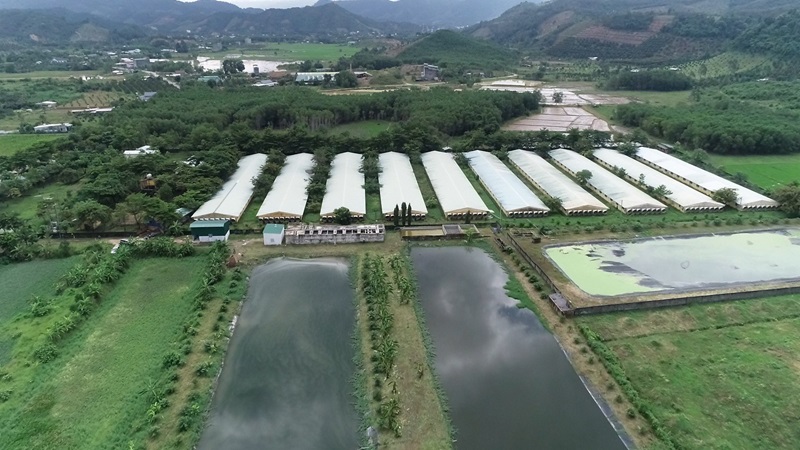
Integrated livestock farming not only optimizes resource use but also minimizes environmental pollution
3.7 Technology research and development
Investing in research into new technologies not only helps improve production efficiency but also minimizes negative impacts on the environment. For example, animal nutrition solutions can be optimized to help them digest food more thoroughly, thereby reducing emissions and waste. Biotechnology can also be applied to develop animal breeds that are better able to adapt to environmental conditions, minimizing the need for food and antibiotics.
In addition, sharing experiences between researchers, farmers and businesses is also very important. It contributes to creating a connection network to help relevant parties exchange knowledge and experience on environmental protection in livestock farming. This collaboration not only promotes the adoption of new technologies but also creates more sustainable livestock farming models.
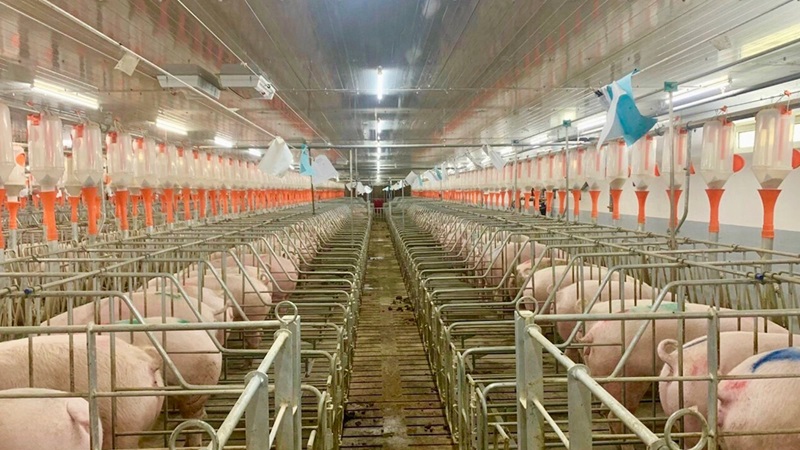
Research and develop technology to help improve production efficiency
Environmental protection in animal husbandry is a big challenge but also an opportunity to develop the sustainable agricultural industry. That, cooperation is needed between government, businesses and farmers to implement effective solutions contribute to protecting the environment and ensuring food safety. For more detailed information about environmental protection and solutions in the livestock industry, you can refer to chephamvisinh.vn to receive advice and support from a team of experienced agricultural experts.
⫸ See more: Aquaculture in our country today: Challenges & Future development direction
Contact information
>
Address : 1B Alley 774 Kim Giang, Thanh Liet, Hanoi
Phone number: 0934.214.579
Hotline: 024.66.55.46.86
Email: chephamvisinhungdung@gmail.com
Website: https://chephamvisinh.vn
⫸ See more: What are the effects of garlic? How to ferment garlic for pets


