

Currently, the demand for rabbit meat is nChickens are increasing thanks to clean meat sources, low in cholesterol and rich in nutrients. That’s why many farmers switch to raising rabbits for meat. However, not everyoneUnderstand how to properly raise rabbits. For high rabbit meat yield,usWhat should we pay attention to when choosing breeds, choosing food and caring for rabbits? Let’s come alongMicrobial product Duc BinhLearn useful knowledge through the article:How to raise rabbits for meat without odor to achieve high productivityokay!
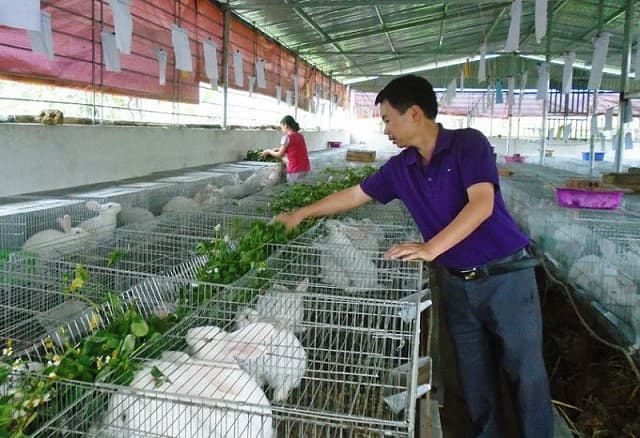
How to raise rabbits with odor-free meat to achieve high productivity
1. Choose a location for a meat rabbit farm
First thing What you need to pay attention to when raising rabbits is choosing the locationbuild barns. This is the factor that determines the rabbit’s living environment, health and growth rate.The location for the barn needs to meet the following conditions:
- Convenient for managing and taking care of rabbits
- Do not place the cage near residential areasto avoid causing unpleasant odors.
- Stay away from domestic water sources because it easily causes pollutionwater source.
- Choose a high, airy place with natural shade from trees, avoiding direct drafts or flooding during the rainy season.
- Rabbit cages need to be maintained at an ideal temperature of 26–30°C, with a humidity of about 60–70%.
When living in the natural environment, rabbits will dig burrows to live.But with modern livestock models, cages should be designed with rectangular cages, arranged in 2-3 floors to save space and be easy to clean.
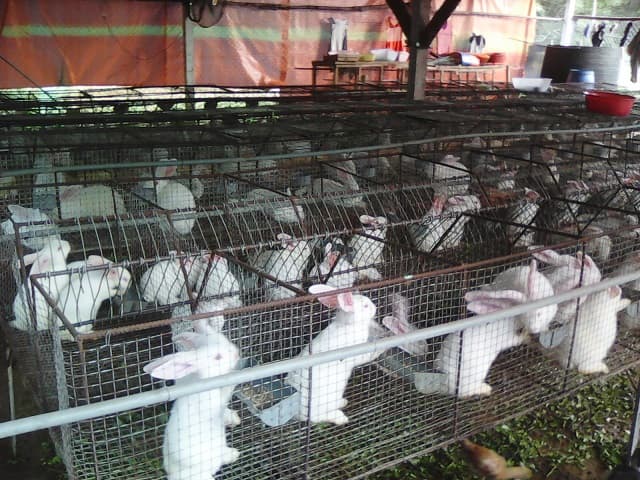
Keep the rabbit cage in a high, cool, dry location to avoid flooding
The cage for raising meat rabbits will need to be spacious, but not necessarilytoo high. The width will depend on how many rabbits there are.On average, one cage holds 10 rabbitswill have a length of 150cm, a width of 70cm and a height of only 50cm. Necessary itemsequipIn the barn: food trough, grass trough, water trough.
2. How to choose a rabbit breed
Choosing the right rabbit breed will be the deciding factor in whether breeding is effective and highly productive or not. Therefore, when choosing a rabbit breed, people need to pay attention to the following issues:
- You should choose animals of good stature and weight at maturity about 4.5 – 5kg/fish.
- Buy from a reputable seed supplier with clear quarantine certificates.
- Rabbit health, vaccination historyThese are also things buyers need to ask and check carefully.
- Appearance is strong, agile, hyperactive.
- The ears are set high, thick and hard, the ear lobes are not covered with scabies.
- Rabbit eyes are clear and bright, the eye mucosa is not swollen.
- Hair is smooth and bright.
- The back is straight, the skin is not scabies or signs of scabies.
- The belly is soft, the hair in the belly area is spongy.
- The tail is clean and dry
- Legs walk normally, no limp
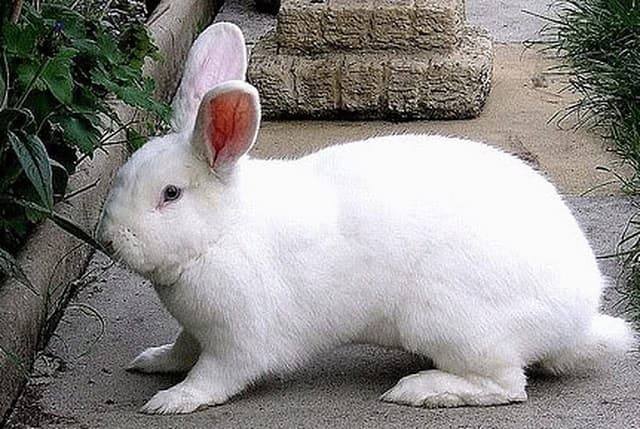
Choose healthy, agile rabbits for breeding
3. How to choose food when raising meat rabbits
For rabbits to grow healthily and gain weight quickly, the food needs to be green enough, pure enough, and watery enough. You should note the following specific information:
- Green food:Includes natural grass such as elephant grass, thread grass, betel nut grass, feather grass,… or water spinach leaves, water spinach leaves, jackfruit leaves, bamboo leaves… Grass should be re-dried before feeding to reduce humidity and avoid flatulence. Besides that shouldUse a chopper to make it easier for your rabbit to eat and avoid waste.
- Fruit and vegetable foods: Pumpkin, ripe bananas, pears, apples, carrots,…Helps supplement vitamins and create natural sweetness
- Cereals: Rice, cold rice, green beans,…
- Food pellets: cereals can be crushed and put into the machine to compress into bran pellets. It’s clean, nutritious and safe for rabbits to grow healthily.
Besides, the need to drink water when raising rabbits for meat also needs attention. A rabbit will need to be given 0.2 to 0.5 liters of water a day. Especially in the summer, rabbits will often eat a lot of dry food, so they need to be supplemented with 2-3 times more water.You can use an automatic drinking bottle to avoid contamination.
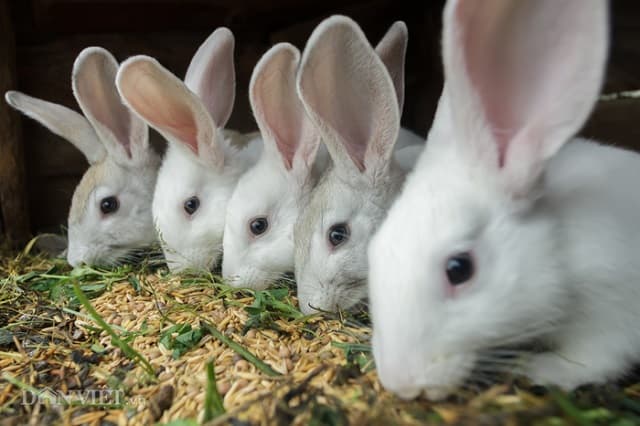
Green food and carbohydrates must be present in the rabbit’s diet
4. How to care for rabbits in each stage
Each stage of rabbit development will require different care, so everyone should carefully follow each step below to know how to properly care for rabbits:
Baby rabbit follows mother
Rabbits, after about 5-6 months of raising, weigh about 3kg and can be bred. However, if you want high productivity, you should wait until the rabbit is 7-8 months old. Because at this time, the rabbit’s reproductive organs are complete. The mother rabbit will have a gestation period of 30 days. At this time, the nutritional regimen for rabbits needs to be very careful to help the baby rabbits be healthy when born.
When born, baby rabbits will be very weak and especially if there is no mother rabbit, these baby rabbits will die. Baby rabbits need to be warm in the bedding. After a period of 14 to 15 hours, they can drink mother’s milk. You should give them breast milk once a day. During the first 18 days, mother’s milk is the only source of nutrition for baby rabbits to maintain life. If unfortunately the baby rabbit dies, everyone needs to destroy it so as not to affect the other animals in the herd.
From the next 18 to 20 days, you can feed the baby rabbits with young grass, also to help the baby rabbits adapt to learning to eat. From 25 to 30 days is the time when their bodies can absorb 50% of nutrition coming from outside food sources. People should wean rabbits when they are 30 days old and put them in separate cages.
Rabbits after weaning (from 30 to 70 days old)
By this stage, rabbits can get used to dry, green and concentrate foods. Rabbit farmers need to pay close attention to avoid letting the food source go rancid. You should choose foods that contain high levels of nutrients such as vitamins A, B, C, etc.
However, note that during this time, do not let your rabbit eat too muchstarch, because it will cause digestive disorders for them. The amount of pelleted food suitable for a rabbit at this stage is 10 – 15g/day.At the same time, vitamins A, D, E, B-complex and digestive enzymes can be supplemented to help rabbits absorb better. If you discover that your rabbit has anorexia or ruffled fur, it is necessary to separate it and monitor its health.
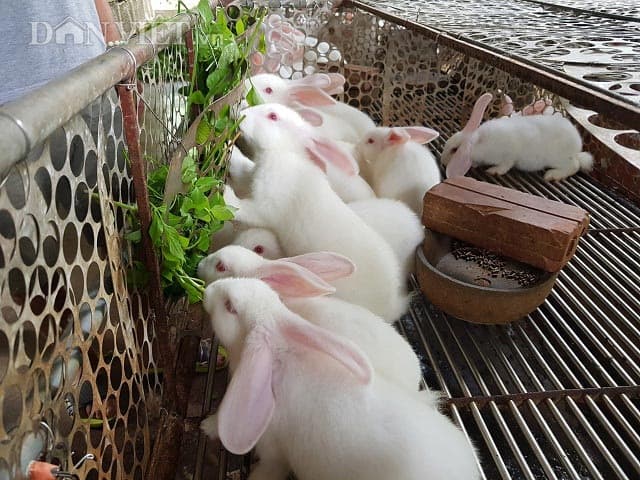
Rabbits after weaning need proper nutritional supplementation
Young rabbit stage (from 70 to 100 days old)
At this stage, farmers need to separate male and female animals and raise them separately. Choose beautiful ones for breeding. The diet can be applied to rabbits weighing 2 – 2.5kg. This helps small rabbits grow quickly in both size and weight.
Rabbit fattening stage (from 100 to 120 days old)
This period can be shortened, but there must still be reasonable regimes for rabbits to grow quickly. You should supplement foods that contain a lot of carbohydrates such as rice, potatoes, and pelleted foods. Note that you need to reduce the amount of protein in your rabbit’s food.
About 1 week before selling, reduce the amount of fresh grass and green food and increase the amount of dry food and sugar powder. This will make the rabbit meat firmer, more delicious and sweeter.
The way to raise rabbits for meat without odor is to use the product EMZEO to deodorize the barn regularly.
5. How to properly clean a rabbit cage
Cleaning the cage is an important step to help keep rabbits healthy, prevent diseases and eliminate unpleasant odors.Every day you need to clean the food trough. Remove all leftover food from the previous day, then clean the trough and add new food.
Drinking troughs also need cleaning and water replacement. Occasionally, rabbit feeding equipment should be exposed to the sun to disinfect. About once a week, the cage should be cleanedThe entire barn should be cleaned periodically every 15 days.
You can use soap to wash the background clean, then use the productEMZEO treats barn odorsraise rabbits.This is an environmentally friendly product, safe for pets and extremely good at deodorizing. You can see information about purchasing genuine products atChephamvisinh.vnto ensure quality and efficiency.
⫸ See more:Experience in raising livestock without bad odormost effective
⫸ See more: SolutionRaising chickens does not require cleaning the coop
⫸ See more:How to eliminate dog and cat odorseffective quickly
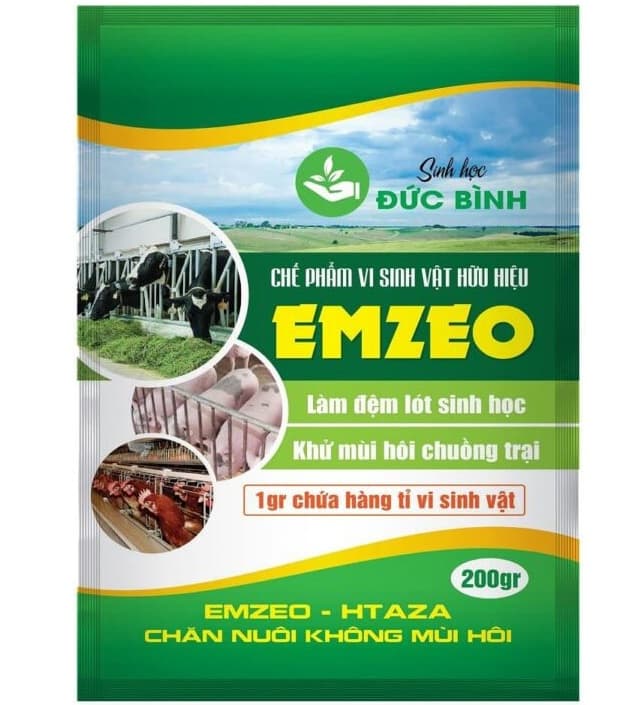
Microbiological product EMZEO is used to deodorize rabbit cages
6. Practical experience helps raise rabbits with high productivity
Not only do they master techniques, successful rabbit farmers also have practical secrets to help their rabbits stay healthy and grow faster. You can pocket some more useful experiences as follows
- To keep rabbits healthy and productive, patience and meticulous observation are the most important factors. Rabbits are susceptible to stress, so it is necessary to create a stable environment, without sudden changes in temperature, light or sound.
- Regularly brushing and checking the skin will help detect skin diseases, parasites or fungi early. Especially in the rainy season, rabbits are susceptible to scabies or colds, so the cage must always be kept dry and clean.
- Do not breed too densely or be greedy for quantity, moderate space helps rabbits move easily, reduces odor, has less disease and has a better appetite.
- If possible, you should divide the cage into separate areas for male rabbits, female rabbits, baby rabbits and young rabbits for easy control.
Conclusion
Above are detailed instructionsHow to raise rabbits for odorless meat to achieve high productivity. Hopefully this article brings you practical knowledge that is easy to apply and brings good results. Wishing you success with the clean rabbit farming model, providing stable productivity and profits!
Learn more: Discover how to effectively raise eels in cement tanks
Contact information
Duc Binh Biotechnology Co., Ltd
Tax code: 0108433217
Address: 57 Lane 64 Kim Giang, Khuong Dinh, Hanoi
Phone number: 024.66.55.46.86
Transaction office
Microbial products Duc Binh – Center for research and application of biological productsspecializes in research, production and application of product lines: Probiotics, septic tank enzymes, wastewater treatment enzymes, aquatic enzymes, biological products…
Address:1B Alley 774 Kim Giang, Thanh Liet, Hanoi
Phone number: 0934.214.579
Hotline: 024.66.55.46.86
Email:chephamvisanhungdung@gmail.com
Website:https://chephamvisinh.vn


