
For those who raise seafood in tanks, ponds, lakes or rivers, they must have more or less known about the phenomenon of eutrophication. This is a dangerous phenomenon for livestock and the water environment.Therefore, many people appear confused and worried when encountering this situation. Read the following article byMicrobial product Duc Binhwill help people:DecodingWhat is eutrophication and how to fix it?effective.
1. What is eutrophication?
In fact, eutrophication is a natural phenomenon caused by excess nutrients in water. There are many causes leading to excess nutrients in water. However, that is mainly an objective cause from environmental factorsbut without human intervention.
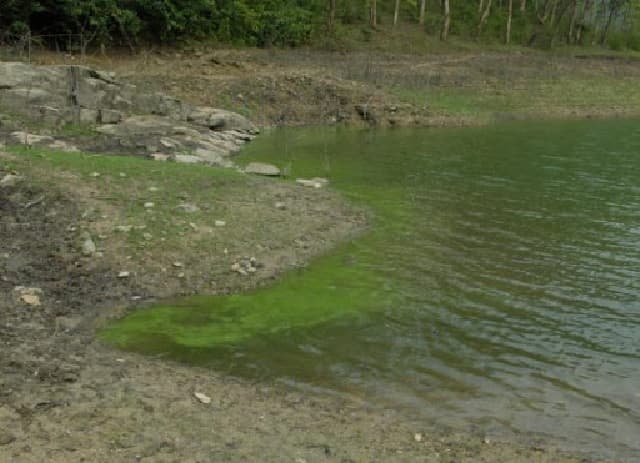
What is eutrophication?
When eutrophication occurs, that is when the water in rivers and lakes has an excess of specific substances such as Nitrate or Phosphate, they will be consumed by plankton. Plankton consider this as their daily food intake and begin to multiply and multiply massively thanks to this natural nutritional food source. Blue-green algae, algae, moss… are typical examples of plankton consuming excess nutrients, also known as eutrophication.
2. Why does eutrophication appear?
As mentioned, eutrophication occurs due to many objective reasons. First, is the ability of lakes and rivers to filter their own water through natural microorganisms. They take on the role of balancing the ecosystem inside the lake and creating nutrients. This nutrient, when not fully consumed, will cause excess.The final consequence is: Eutrophication occurs, causing many negative impacts on shrimp, fish and water in the pond.
Besides, landslides and soil erosion around ponds and lakes also lead to this phenomenon. Specifically, the nutrients in the soil will then enter the river and lake water sources, causing the water to become unbalanced and later have eutrophication. Some human causes include industrial waste and household waste. When not treated properly, this waste source, if discharged into rivers and lakes, also causes the above phenomenon.
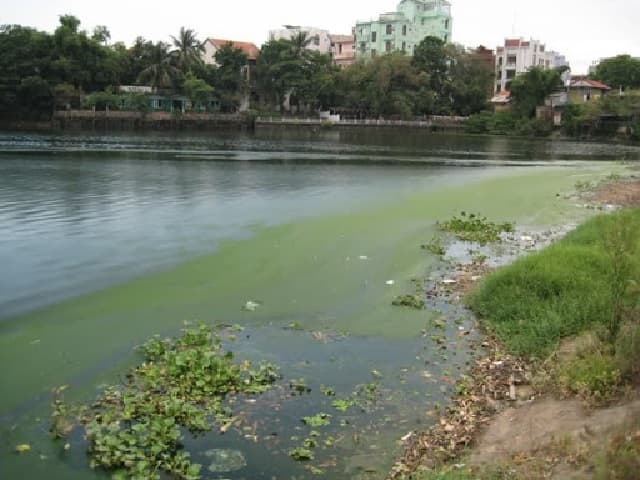
Why does eutrophication occur?
3. Signs of eutrophication
After knowing what eutrophication is,It is not difficult for people to recognize it.When rivers and lakes have an excess of nutrients, plankton such as algae, algae, and moss will begin to consume and grow.
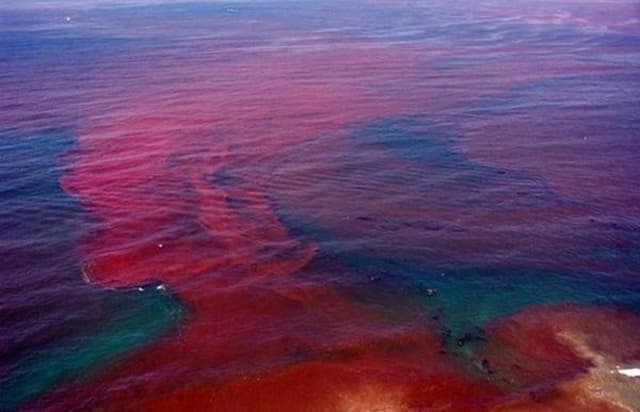
They grow and reproduce massively, leading to phenomena such as algae blooms and causing the water to change color to red or green. Plankton reproduction will also cause algae and moss to appear around the lake and the water level will become increasingly lower due to the waste created by these organisms at the bottom of the lake.
If eutrophication continues for a long time, the water in the lake will gradually thicken and will later turn into a swamp. This sign is quite easy to recognize, however when receiving this sign, it seems there is no way to save the water source here. Therefore, with basic initial signs such as discolored water or the appearance of many floating organisms… people should take quick control and balance measures.
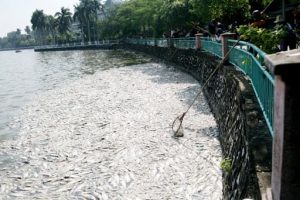
Signs of eutrophication
4. Factors affecting eutrophication
Besides excess nutrients in the lake, other environmental factors will also affect the eutrophication phenomenon. First, we consider the factor of water depth in rivers and lakes. Each different water level will have a certain impact on the ecosystem. Specifically, the shallower the lake, the higher the risk of eutrophication. Causeis becauseBecause nutrients are often deposited in the bottom layer, the closer they are to the water surface, the faster eutrophication occurs.
⫸ See more:Solution to thoroughly treat stinky fish pond water
In addition, this phenomenon is also affected by the ability to circulate water. For rivers with fast and steady flow of water to the sea, this phenomenon will be limited. Water flows quickly, taking away nutrientsshouldPlankton cannot absorb it in time. This will avoid algal blooms. On the other hand, environmental temperature also affects the ability of water evaporation and the development of algae, indirectly causing the phenomenon ofmentioned above

Factors affecting eutrophication
5. Negative effects of eutrophication
Eutrophication is caused by many different objective and subjective causes. However, most of them lead to common consequences for water resources in rivers and lakes. Specifically, some possible negative impacts will be listed below. You can refer to and add new knowledge:
Impact on pets
For livestock and aquatic animals living in rivers and lakesThey have to face the situation:
- Oxygen in the water is reduced, not enough for animals to exchange: When algae grow and multiply massively, they will mostly block the absorption of sunlight into the water. At the same time, at night, they breathe, depleting oxygen and leading to severe oxygen deficiency for pets.
- Easy to get sick, easy to die and unable to develop stably: When algae and plankton die, they will decompose to the bottom of the lake and cause a fishy smell from NH3. This has a significant impact on the health of pets.
- Unequal litters of animals can have deformities: Living in poor environmental conditions, animals that come to harvest often produce uneven litters and can easily have deformities.
Impact on the water environment
- Ecological imbalance: When phytoplankton grows, the ecosystem will be imbalanced. The dominant animal species has also changed, leading to many negative impacts on the water environment.
- Turns into a swamp after a while: When algae and plankton die or produce waste, they settle to the bottom of the lake. Gradually, the amount of water in the lake decreased, and the bottom level gradually increased. Over time, rivers and lakes will turn into swamps.
- Causes bad smell and changes water color: Dead organisms cause bad smell and pollute water sources. At the same time, when they reproduce, phytoplankton causes the water to change color.
Negative effects of eutrophication
6. How to handle eutrophication
Currently, there are not many ways to help handle this eutrophication phenomenon. The most effective method is to do it early, as soon as there are signs of eutrophication. Using probiotics is the best way to solve the above problem. Here are a few probiotics that helpput an end to eutrophication:
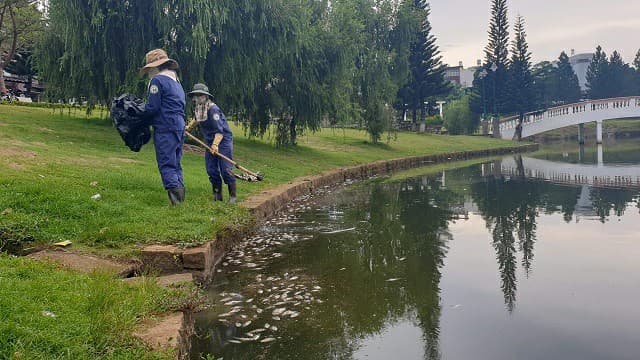
How to handle eutrophication
Use probiotics to increase beneficial bacteria
The first type of probiotic you can consider using is a probiotic that creates beneficial microorganisms. Specifically, these microorganisms willis introduced into the waterand does its job of consuming excess nutrients in the water. At the same time, they do not cause any negative effects on the health of animals and do not disrupt the balance of the ecosystem. Therefore, users can choose to buy this type of product to use periodically for their water source. The 2 best types of probiotics today are:Biological product EMZEO DrandEM is of aquatic origin

Biological product EMZEO TS effectively treats the environment of shrimp and fish ponds to prevent eutrophication.
Using probiotics helps dissolve mud and deodorize
Besides, if you combine the above probiotic with another type of probiotic such as: Microbial to dissolve mud and deodorize.will bring positive results. This probiotic blendHas the effect of killing harmful bacteria, while eliminating odors and fishy odors, helping the water environment to be cleaner. In addition, waste and dead microbial plants at the bottom of the lake are also treated quickly and effectively without causing an imbalance in the ecosystem.
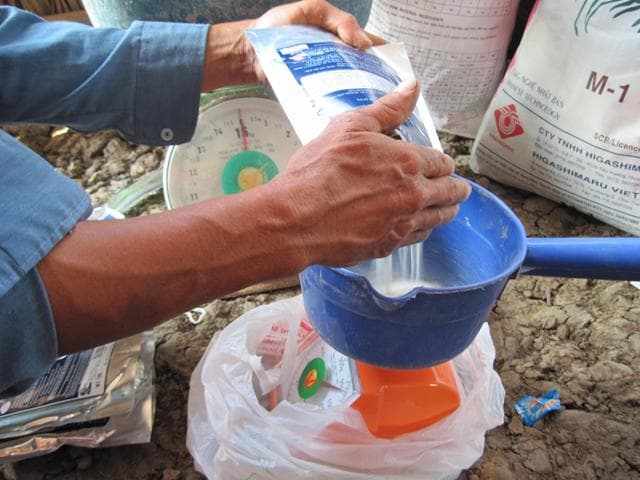
Using microbial products helps dissolve sludge, decompose the bottom and eliminate odors
Limit the use of chemical fertilizers
To prevent eutrophication in lakes, rivers and streams, people must limit the use of chemical fertilizers. This type of fertilizer must be applied in the right dosage and only applied when really necessary. If we overuse chemical fertilizers, there will be a risk of leaching, which means it will seep into the water source, causing many consequences.
On the other hand, in farming, you should prioritize using organic fertilizers to improve soil structure, provide comprehensive nutrition for plants, and contribute to protecting water sources. In addition, fertilizer must be applied in the right season and at the right time so that plants can absorb it to the maximum, minimizing excess and then seeping into the water or being washed away. That also helps prevent eutrophication.
Treat water to standards before discharging into the environment
The basic cause of eutrophication is environmental wastewater, especially livestock wastewater. Therefore, we need to strictly control this source of waste. Specifically, people should build biogas tanks in livestock farming and use the biological product EMZEO to deodorize, decompose organic matter, and destroy pathogens before discharging it outside.
7. How to limit eutrophication in ponds and lakes
Once you have an overviewWhat is eutrophication?You should learn more about how to prevent and limit them. To limit eutrophication, which causes negative impacts on livestock and the water environment, we should take appropriate preventive measures. Specifically, for ponds and lakes that have not yet suffered from eutrophication, the following steps should be taken:
- Use probiotics periodically, limit too much sludge on the bottom and control nutrients in the water: Regularly use probiotics to increase beneficial microorganisms for the water ecosystem.
- Control the amount of wastewater discharged into rivers and lakes: The amount of industrial wastewater or domestic wastewater discharged into ponds and lakes needs to go through rigorous treatment processes. This also helps limit environmental pollution.
- Use organic fertilizers:Instead of using chemical fertilizers, people should prioritize using themOrganic fertilizers are easily soluble and do not cause ecological imbalance in rivers and lakes.
- Greening bare hills: The lands around ponds and lakes need to be protected and greened. This method helps prevent landslides and soil erosion while also preventing foreign nutrients from flowing into rivers, lakes and ponds.
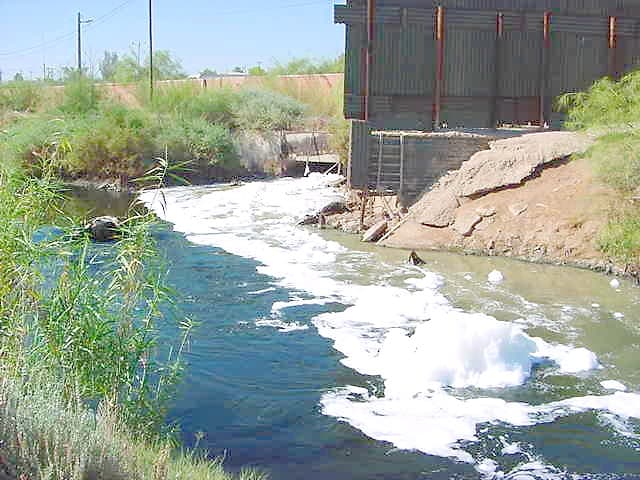
How to limit eutrophication
Above,Microbial product Duc Binhshared some basic information as well as answered the question of what eutrophication isHow to prevent and solve it? Hope the information in the article will be useful to you. Don’t forget to share with those around you!
⫸ See more:InstructionsHow to raise crispy carpachieve high productivity
Contact information
Microbial products Duc Binh – Center for research and application of biological productsspecializes in research, production and application of product lines: Probiotics, septic tank enzymes, wastewater treatment enzymes, aquatic enzymes, biological products… Please follow the details of these products.Aquaculture secretseffective and sustainable!
Address:1B Alley 774 Kim Giang, Thanh Liet, Hanoi
Phone number: 0934.214.579
Hotline: 024.66.55.46.86
Website:https://chephamvisinh.vn


