
Root rot disease on plants is a common phenomenon when we water too much. This situation often occurs in potted plants, when water cannot escape, causing the roots to suffocate and rot, and even cause the plant to die.However, before it’s too late, we can still save the plants.Microbial product Duc BinhDetailed instructions on root rot disease on plants through the article:Causes and ways to prevent and treat root rot on plants

Let’s learn about root rot disease in plants
1. Identify root rot disease on plants
To be able to save or avoidRoot rot disease on plantsWe must recognize when a tree’s roots are rotten.
Observe signs on leaves
You can check to see if the plant’s leaves are turning yellow? If the tree’s roots are waterlogged, the leaves will change color, so observe carefully to see if the leaves lose their green color, turn yellow, or become pale? You may also see yellow patches appearing on the leaves.
The reason for this is that when the plant is waterlogged, the photosynthesis process is not guaranteed as usual. The leaves of the plant will not get essential nutrients and the color will change to yellow.
Brown spots appear on the body
Root rot disease on plants can also be recognized when brown spots appear. When the roots are waterlogged, they do not provide water to other parts above the plant’s trunk, and they also do not get nutrients from the soil. That’s why the tree can die or wilt, at which point the young leaves and branches will have brown spots appearing.
Plants can also die from lack of water sometimesyou can’t tell the differenceThe cause is due to excess water or lack of water. Brown spots will be a sign for you to distinguish that the cause of the tree’s death is due to too much water.
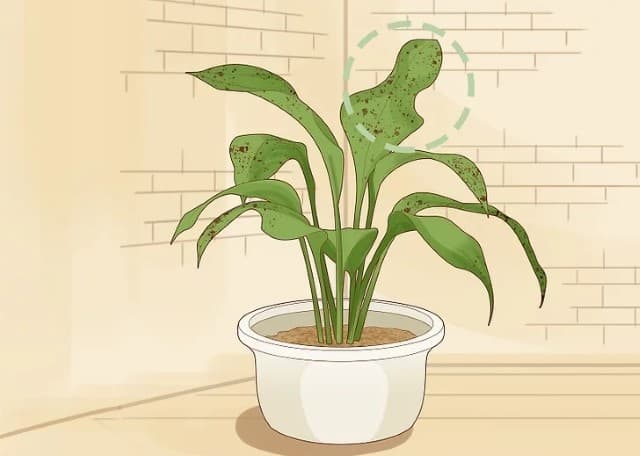
Plants with waterlogged roots will have brown spots
Moss mold appears around the trunk and ground
Moss mold is also a sign of root rot disease on plants.When there is too much water in the pot,Around the tree trunk, thin white, black or green mold may appear on the ground. They can also form at the base of the tree and are a sign that the tree is experiencing root rot.
These moss molds may grow in a spreading pattern or in small clusters and spots. Any type of mold or moss that forms is a sign of bad symptoms, so special attention is needed.
Unpleasant smell
If too much water stagnates around the plant roots, especially for a long time, there will be an unpleasant odor. This is a phenomenon where the roots rot and smell. You can easily smell it when you touch it or put the pot near your nose or body.
In cases where the tree roots are just waterlogged and not yet severe, the odor will not be too strong, making it very difficult to detect. Therefore, you should occasionally check and contact the plants to grasp and control the situation and then take timely corrective measures.
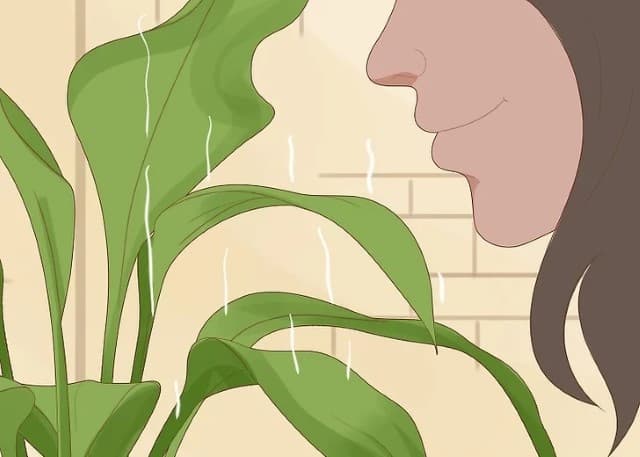
Waterlogged plants also emit an unpleasant odor because of rotten roots.
Check the pot’s drainage hole
You can also check for drainage holes at the bottom of the plant pot. If there are no drainage holes or these holes are clogged, there is a very high possibility that the plant is suffering from waterlogged roots. It’s best to remove the plant completely from the pot to check if the roots are rotten or not. You can also punch another hole in the bottom or move the plant to another pot with good drainage.
In case the pot is made of plastic, you can use a knife or screwdriver to poke the bottom of the pot and punch holes. However, if the pot is made from clay or ceramic, you may have to move the plant to another pot. Pots made from clay or ceramic are very brittle and fragile, trying to punch holes can damage the pot.
⫸ See more: Causes of soft rot disease on orchids and how to prevent and treat iteffective
⫸ See more:Causes of yellow rose leaves and how to treat themdecisively
⫸ See more:Causes, symptoms and treatment of anthracnose in plants
⫸ See more:4 ways to make herbal biological pesticidesat home
2. How to fix the situationRoot rot on plants
In case of encounterRoot rot disease on plantsIf they are not dead, fortunately there are measures to save the tree. So what specifically will we need to do?
Stop watering
All irrigation or water supply to plants must be stopped immediately. At this point you need to wait for the tree and roots to dry. If you water more, the situation will only get worse.Only when you are sure the soil and roots are completely dry should you water again as usual.
Stopping watering needs to be maintained for a very long period of time to help the plant return to its normal state. You also don’t need to worry about the plant lacking water because it is waterlogged. Even if it hasn’t been watered for many days, it won’t die.

Stop watering the plants
Move the tree to a shady place
When you have root rot disease on plants, you need to protect the plants by bringing them to a cool, shady place.Helps the leaves at the top not to burn or wilt due to the sun.The reason is because when the roots are waterlogged, it will be difficult for water to be transported to the leaves above, and the top of the tree will easily lose water. Therefore, if left in a sunny place, it is easy for the plant to wilt on the upper part of the plant or the leaves.
You can bring the plant indoors, in sheltered, shady places. After the tree has stabilized its condition, move it back to a sunny place so it can continue to grow. While the roots are waterlogged, the tree is easily damaged, so all work should be done carefully.
⫸ See more: Trichoderma – The most effective biological fungal disease prevention method today
Knock on the pot
One of the ways to cure the conditionRoot rot disease on plantsThat is to create air pockets in the pot to help the roots dry faster. You can use your hands, a hoe or some hard object and tap the pot wall from many different sides many times. At this time, the soil will loosen from the roots and create air zones.
In addition, tapping on the pot wall like this will also make it easier to get the tree out of the pot, at which point the work of moving the tree to another place or protecting the tree will also become much simpler. However, be careful because if you knock too hard it will cause the pot to break and be damaged.
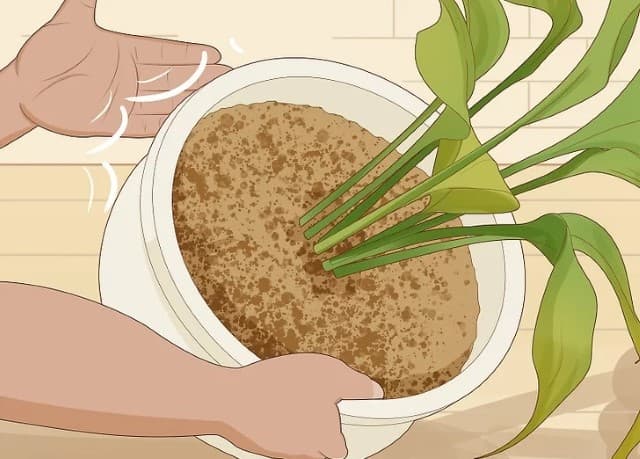
Tap the pot to help the roots dry faster
Take the plant out of the pot
AlthoughTo treat root rot on plants, it is not necessary to remove the plant from the pot, but this will help the roots dry faster, as well as make inspection easier. This will make it easier for you to move or plant the plants in other pots with good drainage, avoiding the risk of waterlogged roots again.
To remove the plant from the pot, you must hold the base of the plant close to the ground, then slowly turn the pot over. You can use one hand to install the pot to help the roots slide out. So when you take the stick out, your hand will hold the stick in an upside down position.
Peel off the soil layer
After taking the tree out of the pot, we need to peel off the layers of soil at the roots to observe the root system more closely, as well as treat it.Root rot disease on plantsbetter. Use your hands to gently brush off the soil, not damaging the roots of the plant. If you see moss and mold, don’t keep that part of the soil, but use the new soil to plant trees to make it more secure.
In case the soil is still clean and has no problems, you can still reuse it.However, it is best to use new soil, because old soil can cause the plant to become waterlogged or re-infected with fungus.Normally, old soil will have a rotting smell because it cures waterlogged and rotten roots.

Peel and remove the soil from the roots
Prune the roots
During treatmentRoot rot disease on plantsthen this is the most important part. Look at the roots and find rotten, brown areas to cut off with pliers or scissors. Healthy roots are very strong and white, whereas perishable roots are brown or black and very soft. Remove damaged roots so they don’t spread and affect surrounding roots.
In case the tree roots are rotten, they will emit a rotten smell and if this part is not removed, the tree will gradually die. In case the tree roots have completely rotted, you can also try cutting the roots close to the base to replant. However, in most cases like this, the tree cannot be saved anymore.
Cut off leaves
Similar to the roots, you will also need to prune the leaves to treat itRoot rot disease on plants. The higher the leaves are, the more likely they are to dry out and turn brown. Use pliers and scissors to remove dead leaves and branches. You should prune leaves and branches from above and approximately so that the remaining parts of the tree are not more than twice the size of the remaining roots.
If you can’t estimate the number of leaves and branches that need to be pruned yourself, remove them to the same extent as the roots. This will help the tree have the right ratio of stem, leaves, branches and roots for growth after escaping the waterlogged situation.
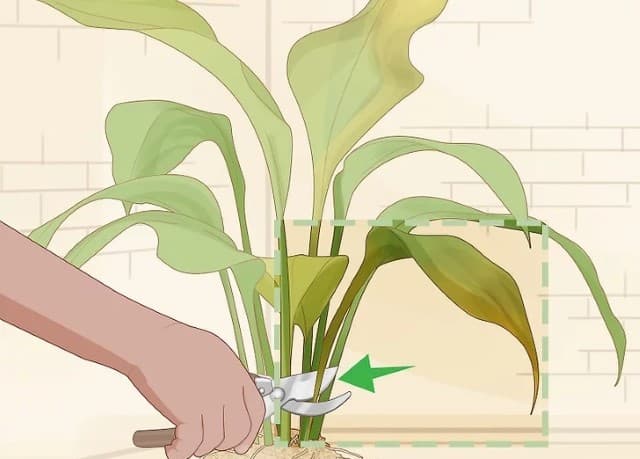
Cut off the leaves and branches to match the roots
Replant the tree
Finally, you just need to find a new pot with good drainage and replant the plant.Additionally, you can put a layer of gravel or crushed charcoal about 5 cm thick on the bottom of the pot to prevent waterlogging.When adding soil, don’t forget to pat it gently to compact the soil, not letting the roots of the plant be exposed.
With information about causes and treatmentsRoot rot disease on plantsthat this article provides, I hope readers will gain more useful knowledge for themselves. Wish you success.
Add the antagonist fungus Trichoderma Duc Binh to protect the roots
Trichoderma Duc Binh antagonistic fungus is a natural microbial product that has the ability to kill and strongly inhibit fungal diseases in the soil, especially strains that cause root rot, root rot, and yellow leaves. Not only has the effect of preventing disease,Trichoderma It also helps protect and stimulate strong root growth, helping plants recover quickly after being waterlogged.
ProductsTrichoderma BacillusDuc Binh is produced using modern technology, containing a high density of beneficial microorganisms, helping to improve the soil environment, loosen it and increase natural drainage. When supplemented regularly, plants will grow healthily, limiting root rot due to waterlogging or bacterial attack.
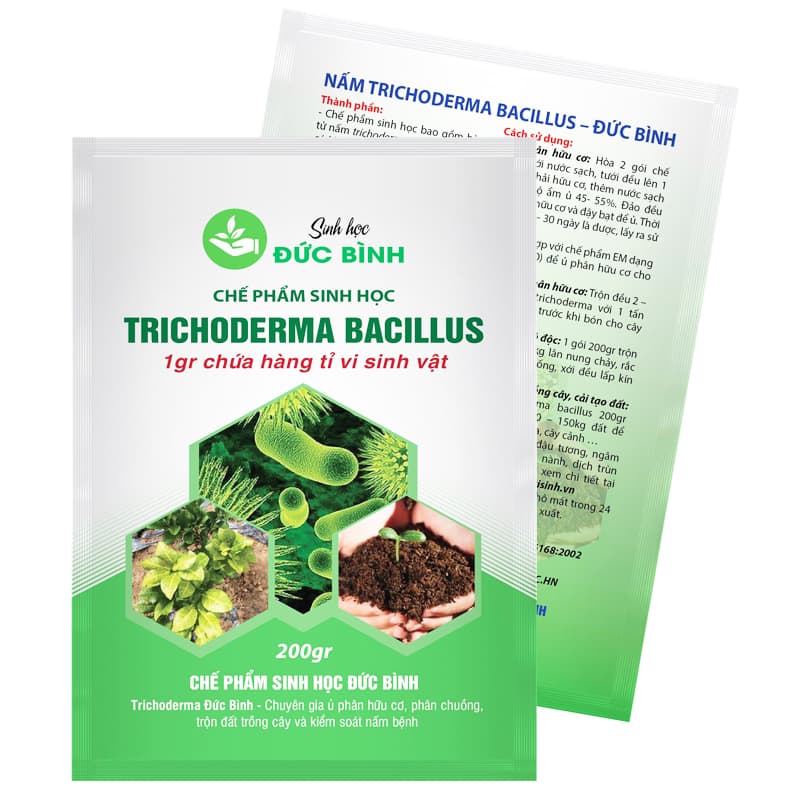
Microbiological product Trichoderma Bacillsu Duc Binh
Usage is very simple: you can mix the product directly with the soil before sowing or spread it evenly around the root area when the plant is waterlogged so that the antagonistic fungi can take effect. In addition, it should be used periodically every 15–20 days to maintain a stable microflora in the soil, protect long-term roots and help plants stay lush and healthy.
3. Conclusion
It can be seen that root rot disease is one of the common causes of slow growth or premature death of plants. Combining measures such as controlling irrigation water, improving soil and adding the antagonistic fungus Trichoderma Duc Binh will help protect long-term healthy roots. Hopefully the shares in this article will help people better understand how to prevent and treat root rot disease, thereby maintaining a lush green garden and stable productivity!
Contact information
Duc Binh Biotechnology Co., Ltd
Tax code: 0108433217
Address: 57 Lane 64 Kim Giang, Khuong Dinh, Hanoi
Phone number: 024.66.55.46.86
Transaction office
Microbial products Duc Binh – Center for research and application of biological productsspecializes in research, production and application of product lines: Probiotics, septic tank enzymes, wastewater treatment enzymes, aquatic enzymes, biological products…
Address:1B Alley 774 Kim Giang, Thanh Liet, Hanoi
Phone number: 0934.214.579
Hotline: 024.66.55.46.86
Email:chephamvisanhungdung@gmail.com
Website:https://chephamvisinh.vn


