

Organic residue is the result of the decomposition of organic matter by natural microorganisms. Organic humus has a great effect in improving soil quality and increasing crop productivity. So What is organic mulch? Structure, role and how to use organic humus in agriculture? What are the advantages and disadvantages? Please join Duc Binh Microbial Products to follow the following article to thoroughly explore this topic!
1. What is organic mulch? How is organic mulch different from organic mulch?
Organic residue is known as an intermediate product in the process of decomposing organic substances such as animal manure, leaves, twigs,… under the influence of various groups of microorganisms. You can also understand it as a mixture of organic matter that has begun the process of decomposition. However, this process has not been completely converted into organic humus

Organic residue is an intermediate product in the process of decomposing organic matter
Many people often confuse organic mulch and organic mulch. But these two concepts still have differences, specifically as follows:
- About organic humus: Humus still contains quite a lot of organic debris that has not been completely decomposed (can be seen with the naked eye). Compared to organic humus, organic humus has a lower nutritional content and is lighter in color.
- Organic humus: This is the final product of the decomposition process. Humus will be black or dark brown in color, rich in nutrients and possess good moisture retention ability.
You can understand the relationship between these two types as follows: Suppose you compost, when new organic objects are mixed in the first stage is the stage of forming organic humus. After a period of incubation and these materials are completely decomposed, you will obtain organic humus.
2. Organic humus formation process and influencing factors
The specific process of forming organic humus is as follows:
- Primary decomposition stage: Microorganisms will begin to decompose complex organic compounds contained in the starting material into simpler compounds. This process will take place quickly and release many nutrients such as nitrogen, phosphorus, potassium… to supply plants
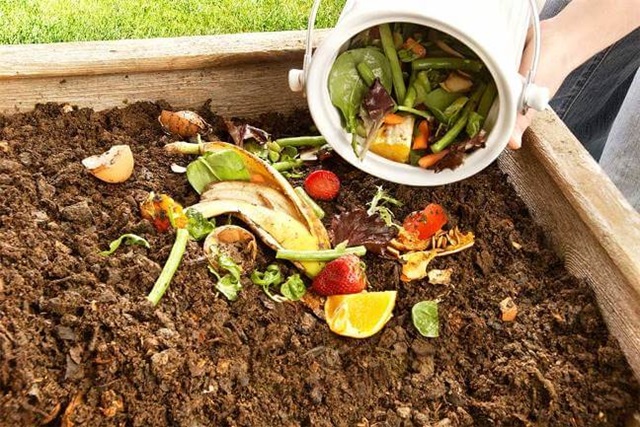
What is organic mulch? Explore the process of forming organic humus
- Humus formation stage: Primary decomposition products will be synthesized by microorganisms into more complex intermediate compounds, creating humus particles. This process is quite slow and takes a lot of time.
Factors affecting the formation of organic humus are:
- Organic materials: Carbon-rich materials (such as dry leaves, straw, etc.) will decompose more slowly than nitrogen-rich materials (such as bean residue, green manure, etc.).
- Humidity: Needs to be maintained stable, too high or too low both slow down the decomposition process.
- Temperature: 25 – 35 °C is the ideal temperature for microorganisms to function.
- Air: Microorganisms need enough oxygen to decompose organic matter.
- PH: The pH suitable for most microorganisms is 6 – 8.
- Type of microorganisms: Different types of microorganisms will have the ability to decompose different groups of organic matter.
3. What ingredients does organic humus contain?
Organic residue contains a complex mixture of inorganic and organic substances. In fact, the exact composition of organic humus will vary depending on the starting material, decomposition time and environmental conditions. However, in general, organic humus will include the following ingredients:
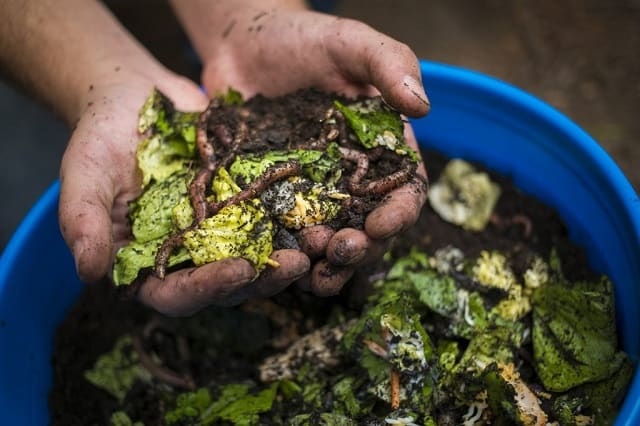
Discover the composition of organic humus
3.1. What are the organic ingredients in organic humus?
Organic ingredients include:
- Undecomposed organic matter: You can understand it as the remains of the original organic materials (leaves, straw, twigs,…). They have not been completely decomposed by microorganisms.
- Partially decomposed organic matter: These organic substances have begun to be decomposed by microorganisms, creating simpler compounds.
- Humin: Is a quite complex organic compound, black in color and insoluble in water or acid. Humin is the final product of the decomposition of organic matter, which has the effect of improving the structure of the body.
- Fulvic acid: Is a yellow organic compound, soluble in water and acids. Fulvic acid can combine with nutrients, helping plants absorb them easily.
- Humic acid: Is a brown organic compound that dissolves in alkaline environments. Humic acid has the ability to retain water and improve soil fertility.
3.2. Inorganic ingredients
Organic humus also includes some inorganic components such as:
- Nutritional elements: Phosphorus (P), Nitrogen (N), Potassium (K), Calcium (Ca), Magnesium (Mg) and other trace elements. These elements will be released during the decomposition of organic matter, which is important for plant development and growth.
- Minerals: Silicon, iron, aluminum,…
3.3. Microorganisms

Microorganisms play an extremely important role in decomposing organic matter
Microorganism is an indispensable ingredient, it includes:
- Bacteria: Is the most abundant group of microorganisms in organic humus. They play an important role in decomposing complex organic substances.
- Fungi: Participate in the decomposition of lignin and cellulose.
Note that the composition of organic humus will change with environmental conditions and time. The longer it is incubated, the more nutritional content will increase.
Other organic compounds: Greases, resins, waxes and organic substances that have not completely decomposed.
4. The role of organic humus
Although the crude nutrient content is not as high as chemical fertilizers, the role of organic humus in regulating nutrition is extremely important:
4.1. Buffering and pH stabilizing agent
Organic humus (especially Humic and Fulvic Acid) acts as a buffer for the soil, helping to stabilize pH and reduce sudden pH changes. This is extremely important because plant nutrient absorption is greatly affected by the pH of the soil environment.
4.2. Carbon supply for microorganisms
Carbon (C) is the basic component of all organic matter. Organic humus provides a rich source of Carbon, which is the main “energy” to nourish and maintain the life of the entire beneficial microbial system in the soil. When the microbial system is healthy, they will work more effectively in converting and decomposing minerals into a form that is easily absorbed by plants.
5. What are the advantages and disadvantages of organic mulch?
5.1 Advantages
Some outstanding advantages of organic humus are:
- Improves soil structure: Organic humus will make the soil loose, airy and create conditions for roots to grow.
- Provides nutrients to plants: Organic humus contains many easily digestible organic compounds and trace elements, providing nutrients to plants slowly and steadily.
- Increases microbial activity: Organic humus is the food source for soil microorganisms, stimulating their growth. This helps break down organic matter and fix nitrogen.
- Environmental protection: Besides, using organic humus also reduces environmental pollution when farmers reduce dependence on chemical fertilizers.
5.2 What are the disadvantages of organic mulch?
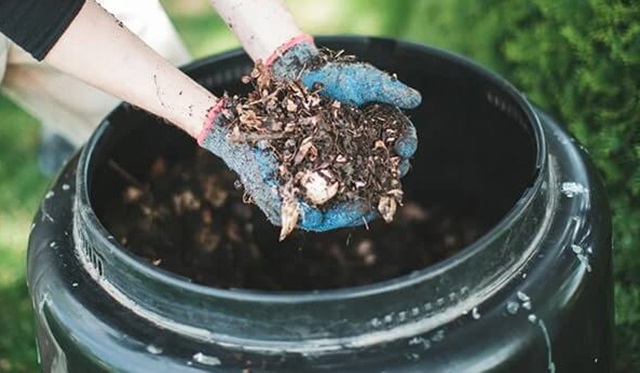
Summary of some disadvantages of organic humus
Besides the advantages, organic humus still has some disadvantages as follows:
- Nutrient content is not high: Compared to chemical fertilizers, the nutrient content in organic humus is lower. That’s why you need to fertilize the plant more.
- May contain pathogens: if not handled carefully, organic humus can contain pathogens that are harmful to plants.
- Slow decomposition process: As mentioned above, organic humus takes a long time to decompose. Therefore, it is not suitable for crops that need quick nutrition.
- Difficult to preserve: Organic mulch is very easy to decompose if you do not know how to preserve it properly, especially in high temperature and humidity conditions.
6. How to use organic humus in practical applications
The application of organic humus is very flexible, depending on the purpose of farming and the stage of crop development:
6.1. Primer
Organic humus residue is mixed directly into the soil, potting soil, or substrate before planting. This form helps improve soil structure right from the beginning, providing reserve nutrients for seedlings to develop healthy root systems.
6.2. Top dressing
During the growing stage, organic humus is added around the roots. This method provides nutrients slowly and continuously, helping to increase fertility and microbial activity in the root zone.
⫸ See more: What is top dressing? How to fertilize plants to achieve high yields
6.3. Homemade compost
Organic residue is the main ingredient to create compost at home or on the farm. By combining nitrogen-rich materials (manure, bean residue) and controlling factors such as temperature and humidity, farmers can actively create a complete organic humus source at low cost.
⫸ See more: How to compost and use compost at home in detail from a – z
⫸ See more: Agricultural waste treatment solutions help protect the environment school
At this point, you probably understand what organic mulch is? Hopefully what we share above will be useful. Click on the link chephamvisinh.vn to access our website and discover more useful information!
Contact information
>
Address : 1B Alley 774 Kim Giang, Thanh Liet, Hanoi
Phone number: 0934.214.579
Hotline: 024.66.55.46.86
Email: chephamvisinhungdung@gmail.com
Website: https://chephamvisinh.vn
>
>


