
The saying “One country – Two divisions – Three efforts – Four varieties” is not wrong at all.Therefore, after water, fertilizer is indispensable to help plants grow healthily. Among the fertilizers favored by farmers today, NPK fertilizer is the most mentioned name.So What is NPK fertilizer? How to fertilize plants with NPK fertilizereffectiveHow? Refer to the article below about NPK fertilizerMicrobial product Duc BinhPlease share.

What is npk fertilizer? How to apply NPK fertilizer to plants effectively
On the market today there are many different types of fertilizers for each specific type of crop.However, the NPK fertilizer that we introduce in this article can be used by most plants.Why is that like that? So please read the information below to know the reason and better understand what NPK fertilizer is? How to apply NPK fertilizer to plants most effectively.
Watch now: The role of organic and inorganic fertilizers for plants
1. What is NPK fertilizer?
Completely different from other natural fertilizers. npk fertilizer is a mixed fertilizer containing important ingredients that help promote plant growth quickly. The main elements contained in the composition are n,p,k and this is also the reason for the name npk fertilizer.The functions of specific elements are as follows:
- Nitrogen (N) helps plants grow stems and leaves, create bright green color and promote photosynthesis.
- Phosphorus (P) stimulates rooting, flowering, fruiting and increases pest resistance.
- Potassium (K) strengthens plants, helps plants absorb nutrients better and improves the quality of agricultural products.
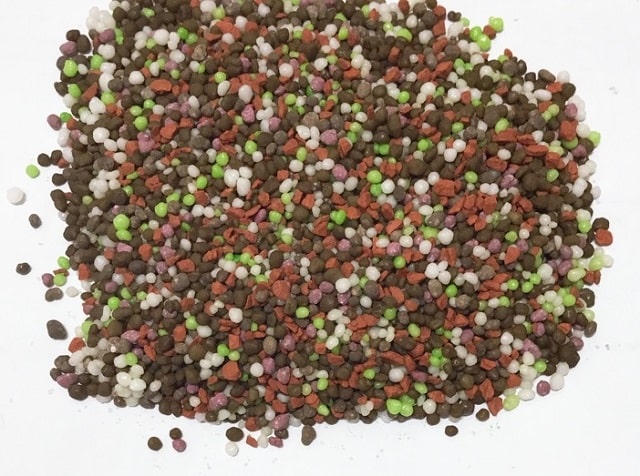
Image of NPK fertilizer
Currently on the market, people are divided into 3 types of npk fertilizers to make it easier for users to care for and choose each type of fertilizer that best suits their plants. These are 1-grain NPK fertilizer, 3-color NPK fertilizer and combined NPK fertilizer.
NPK fertilizer 1 grain
Maybe you are already familiar with this type of fertilizer, right? NPK 1 grain is produced in a production line that mixes all types of raw grains together in a certain ratio. The main ingredients in this 1 grain npk fertilizer are: SA, DAP, URE, POTASSIUM. After mixing well, they will be crushed and people will use adhesive to form boards together.
3-color npk fertilizer
What is 3-color stool? This is the type of fertilizer that farmers love and use most commonly today. The reason it is called 3-color fertilizer is because it mixes 3 types of nitrogen fertilizer together: nitrogen, potassium and phosphorus.
Compound npk fertilizer
Manufactured using chemical technology. This type of fertilizer has a very high phosphorus content.
Read now:Reveal thehow to fertilize high-yield crops
2. Uses of NPK fertilizer for plants
NPK fertilizer provides all three essential macronutrients: Nitrogen (N), Phosphorus (P) and Potassium (K) to help plants develop comprehensively. Main uses include promoting strong plant growth, developing healthy stems, leaves and roots; Stimulates flowering and fruiting and improves productivity and quality of agricultural products; Increases plant resistance to pests and harsh weather conditions.
- Provides balanced nutrition: Provides necessary nutrients for plants at the same time, helping plants grow and develop healthily.
- Increase productivity and quality: Optimize the growth process, thereby improving productivity and quality of harvested agricultural products.
- Soil improvement: Contributes to improving soil fertility.
Do not fertilize plants with too much NPK fertilizer because it can cause poisoning, cause unbalanced plant growth, be susceptible to pests, and affect the environment. Excess NPK fertilization causes the concentration of mineral salts in the soil to increase, causing root burn and preventing the plant from absorbing water.
3. How to fertilize npk plants effectively and with high productivity
Once you clearly understand what NPK fertilizer is and know how to use it correctly, you will definitely have a bountiful harvest.. Above we have explained in detail what NPK fertilizer is. Next, we will reveal how to use NPK mixed fertilizer for effective, high-yield crops.
Apply the right type of NPK fertilizer
Each type of NPK fertilizer has a different ingredient formula, and the ratio of nutritional ingredients is also different. Use the correct type of NPk fertilizer that the plant requires and as appropriate to the structure of each soil type. From there, the tree will grow and maintain the stability of the soil environment.

How to use npk mixed fertilizer
Apply NPK fertilizer at the right dose
The dosage of NPK fertilizer used for each type of crop is recorded on the product’s packaging label and instructions. To use the correct dosage to save costs, avoid waste, and meet the nutritional requirements of plants. Farmers should combine observing the state of plants and soil, weather and crops to adjust the most appropriate amount of NPK fertilizer.
Apply NPK fertilizer at the right time
Applying NPK fertilizer at the right time means applying the right amount of fertilizer, the right type of fertilizer, and the right stage when the plant really needs it. It should be noted that we do not fertilize at the same time, we need to divide the fertilizer into several times.If too much is applied at one time, the plant will not absorb it all, leading to waste, environmental pollution and reduced quality of agricultural products.
Apply NPK fertilizer properly
Once you understand NPK fertilizer and know how to apply it correctly, increasing crop productivity is no longer difficult.However, you also have to fertilize properly and reasonably to be effective.
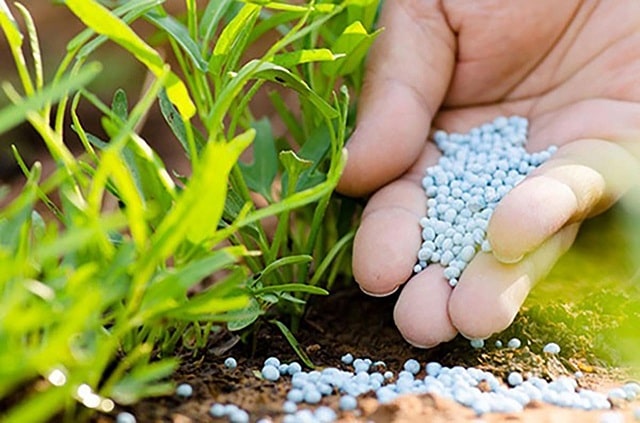
How to use npk mixed fertilizer properly
First of all, you should fertilize when the plants are healthy so their roots can absorb nutrients from the soil environment.In addition, it is necessary to determine the correct type of NPK fertilizer suitable for each growth stage to stimulate strong plant growth.. In particular, observe weather conditions so that the fertilizer does not lose nutrients.
⫸ See more:What is phosphorus-converting microbial fertilizer?
⫸ See more:3 ways to fertilize NPK for ornamental plantsHelps plants stay green
⫸ See more:InstructionsHow to fertilize NPK for bougainvillea flowerstechnical standards
Methods of fertilizing NPK for high-yield crops
Each type of crop is suitable for a certain NPK fertilization method. NPK fertilization methods are as follows:
Apply directly to the surface:
- Spread NPK fertilizer evenly on the soil surface around the tree canopy, about 15-20 cm from the base.
- Lightly mix the fertilizer with topsoil or cover it with soil to avoid evaporation and leaching.
- Water thoroughly after fertilizing so that the fertilizer dissolves and is easily absorbed by the plant.
Trench fertilization method:
- Dig small trenches, about 5 cm deep around the tree canopy.
- Spread fertilizer into the grooves and cover with soil.
- Water immediately after fertilizing.
Mix NPK with water to water plants:
- Mix NPK with water according to the manufacturer’s recommended ratio (for example: 1kg of NPK mixed with 200-400 liters of water) and stir well until the NPK fertilizer is completely dissolved.
- Use a drip or percolation irrigation system to effectively deliver fertilizer to the root zone.
Foliar spray fertilization:
- Mix NPK fertilizer completely soluble in water at the appropriate ratio.
- Spray the solution evenly on the leaf surface in the early morning or evening so that the plant can absorb it through the leaves.
4. Some tips to help apply NPK fertilizer more effectively
In order for NPK fertilizer to maximize its effectiveness, farmers not only need to choose the right type and apply it at the right time, but should also apply a few additional tips below to help plants absorb nutrients better:
- Combined withorganic fertilizerormicrobial products: When mixing NPK with organic fertilizer or microbial products, the soil will become loose, rich in nutrients and maintain moisture better. Beneficial microorganisms in the soil also help decompose organic matter, keeping the soil environment “alive”, avoiding hardening or soil degradation.
- Proper crop rotation and intercropping: Growing the same crop over and over again can easily cause nutritional imbalance in the soil. Farmers should rotate crops between legumes, vegetables and industrial crops to let the soil rest, while taking advantage of natural protein sources from legume roots.
- Check soil pH periodically: Soil pH is a factor that directly affects the ability to absorb nutrients. If the soil is too acidic, plants will have difficulty absorbing phosphorus and potassium, making NPK fertilizer less effective. People should add lime powder or choose NPK with high potassium content to help balance the pH.
- Use clean water when watering after fertilizing: After fertilizing, you should water immediately with clean water so that the fertilizer dissolves evenly, penetrates deeply into the soil and helps plant roots absorb it more easily. Avoid watering with alum or salty water because it can lose the effectiveness of the fertilizer.
- Do not fertilize close to the root: When fertilizing, spread fertilizer about 10–15 cm away from the root to avoid burning the roots. Then lightly cover the soil with soil so that the fertilizer does not evaporate or float away when exposed to heavy rain.
5. Conclusion
Above are shares about NPK fertilizer and how to apply it effectively to help increase productivity and income for farmers.Please visit the websitehttps://chephamvisinh.vnso we can advise you on the most suitable fertilizers for each type of plant. Wishing you success.
Contact information
Duc Binh Biotechnology Co., Ltd
Tax code: 0108433217
Address: 57 Lane 64 Kim Giang, Khuong Dinh, Hanoi
Phone number: 024.66.55.46.86
Transaction office
Microbial products Duc Binh – Center for research and application of biological productsspecializes in research, production and application of product lines: Probiotics, septic tank enzymes, wastewater treatment enzymes, aquatic enzymes, biological products…
Address:1B Alley 774 Kim Giang, Thanh Liet, Hanoi
Phone number: 0934.214.579
Hotline: 024.66.55.46.86
Email:chephamvisanhungdung@gmail.com
Website:https://chephamvisinh.vn
Learn more: How to effectively process and use compost at home


