
In the process of caring for plants, fertilizer is always an important factor that provides necessary nutrients for plants. In case of barren soil, farmers often have to fertilize before planting. So, what is basal fertilizer, what type of fertilizer Which primer is good, what is the technique for fertilizing plants? Let’s Duc Binh microbiological products learn more below!
1. What is top dressing?
In fact, the process of fertilizing plants is divided into two different stages: base fertilization and top fertilization. In particular, fertilization is simply understood as a way to provide abundant food sources for plants before planting and promote their growth.
Basic fertilization is a technique of applying fertilizer to the soil before planting to provide basic nutrients for plants right from the early stages of development. The purpose is to give fertilizer time to decompose, making the soil loose, rich in nutrients, and creating favorable conditions for plant roots to quickly grow and absorb nutrients when first formed. Basic fertilizers are usually organic fertilizers or phosphate fertilizers, because they take time to decompose. In addition, manure also helps difficult-to-decompose compounds have enough time to disintegrate. Thus, the plant will absorb better than usual.

Basic fertilization is a technique of applying fertilizer to the soil before planting, which has many great uses for plants
By creating an ideal soil environment with top dressing, we will optimize the use of fertilizers, thereby making the entire farming process more efficient. Thus, base fertilization not only helps farmers reduce the expensive costs of buying fertilizer but also increases population productivity and profits.
An issue that you need to pay attention to is the frequency of fertilizing must be done in the correct dosage and the process below:
- For annual crops: you should only apply fertilizer for the first time before officially planting.
- For perennial crops: you can divide fertilizer into many different times, such as fertilizing before starting sowing, fertilizing right at the time the plant has stopped growing during the year and fertilizing after harvesting.
2. Techniques for fertilizing plants to get the best yield
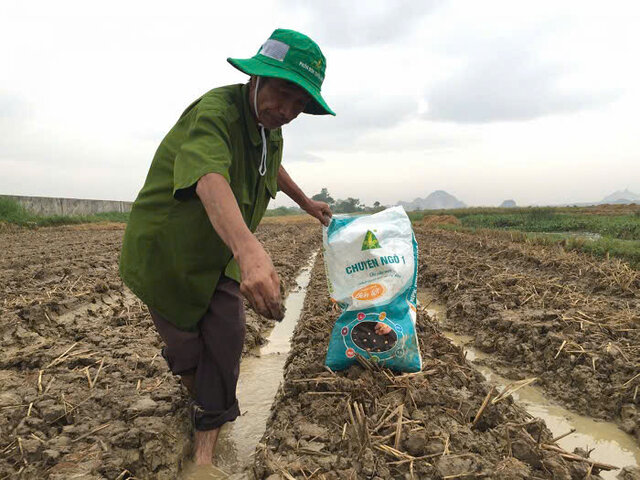
Master top dressing techniques to achieve the best results
Based on understanding what priming fertilizer is, cwe need to clearly understand the technique of using primer fertilizer most effectively. Only when people fertilize properly can they help improve soil fertility and promote plant growth and development. Below are the 3 most common fertilizing methods:
2.1. Summary of the 3 most popular fertilizing methods today
One of the issues you need to pay attention to in fertilizing plants is the method of fertilizing plants. In fact, each farmer will often have a unique way of fertilizing. If you still don’t know how to do it, you can refer to one of the methods we are about to share below.
- Method 1: Use your hand to spread the fertilizer evenly over the entire land area to be planted. After that, continue to use the hoe to gently loosen the layer of soil that has been spread so that the fertilizer can penetrate well into the soil. This method is very suitable for annual crops such as rice or vegetables.
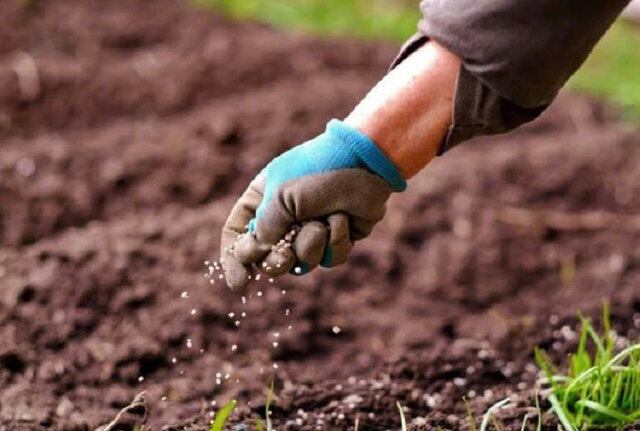
The method of fertilizing is quite simple Simple and easy to do
- Method 2: First, you also use your hands to spread a sufficient amount of fertilizer over the entire land area to be planted. After that, we prepare a new layer of soil to evenly cover the area where fertilizer was previously spread. Finally, sow the crop. This method is suitable for households cultivating vegetables.
- Method 3: Use a hoe or shovel to dig a deep hole and put manure into the hole that was previously dug. This is also the most suitable fertilizer method for perennial crops, such as fruit trees or industrial crops.
2.2 Specific instructions on effective fertilizing techniques for each type of tree
Vietnam is located in the humid tropical monsoon region, the climate is quite favorable, so the crop system grows diversely. Each type of plant has different nutritional needs and biological characteristics, so fertilization is not the same. Below are instructions on fertilizing techniques for each type of plant that people should refer to:
For rice
The biological characteristics of rice plants are strong roots, so they need loose soil to grow from the beginning. Therefore, you should use phosphate fertilizer in combination with decomposed organic fertilizer. The amount used is 10 to 15 kg of organic fertilizer plus 500 to 700 kg of natural phosphate fertilizer/ha. If people combine about 200 to 300 kg of slow-release NPK, the effect will be better.
The way to fertilize rice plants is: 5 to 7 days before transplanting, we will spread organic fertilizer evenly on the field and then plow deeply to mix the fertilizer into the soil. As for phosphate and NPK fertilizers, spread them evenly and then use a rake to gently rake them into the topsoil. Farmers will keep the field moist for 2 to 3 days before adding water. Note, we should not fertilize close to the day to avoid the fertilizer floating on the water surface and causing nutrient loss.
For fruit trees
The technique of fertilizing fruit trees such as mango, grapefruit, orange, and lemon is completely different from rice. They are perennial plants so when fertilizing:
- People use 5 to 10kg of decomposed manure combined with 200 to 300g of phosphate fertilizer and 100 to 150g of slow-release NPK for each planting hole. In case of poor soil, apply 50g to 100g of microbial fertilizer.
- We will dig a hole around the base of the tree measuring 50x50x50cm, mix organic fertilizer with topsoil and then pour it into the hole. Each layer is 20 to 30cm thick.
- Next, you spread NPK fertilizer on top, mix well with soil, add a thin layer of soil about 10cm on top before placing the tree.
- After planting, plants should only be watered lightly to maintain moisture and help fertilizer soak into the soil more effectively.
- Note, when fertilizing, people absolutely do not let fertilizer and plant roots come into direct contact with each other. The most reasonable time for fertilizing is 5 to 7 days.
For vegetables
Colorful vegetables such as: mustard greens, cucumbers, tomatoes, mustard greens… Does not need too much fertilizer but requires growers to fertilize quickly and early for plants to absorb and grow:
- The types of fertilizers that should be used include: 1 to 2kg of microbial fertilizer, 300g to 500g of natural phosphate fertilizer, 200 to 300g of slow-release NPK/100m2
- Before fertilizing, the soil needs to be plowed and loosened, then spread biofertilizer and manure on it, mixed well with a rake or hoe.
- Next, spray NPK and phosphate fertilizer in rows 20cm to 30cm apart. Note, after spreading fertilizer, you need to gently dig it to a depth of about 5 to 7cm
- After fertilizing, remember to lightly water the soil. 3 to 5 days after fertilizing, we will plant seedlings or sow seeds.
2.3 Choose the type of base fertilizer
In recent times, we often receive questions related to the issue: What type of fertilizer is best to use as a fertilizer for plants? According to analysis from experts, the type of fertilizer that farmers trust to use as base fertilizer today is:
Organic fertilizer:
The most popular fertilizers today are microbial organic fertilizers and manure. Many people tend to use organic fertilizers because they can provide adequate nutrients for plants, make the soil loose, and increase the activity of beneficial microorganisms in the soil. However, farmers should fertilizefertilizer early or before planting so that fertilizer maximizes its uses.
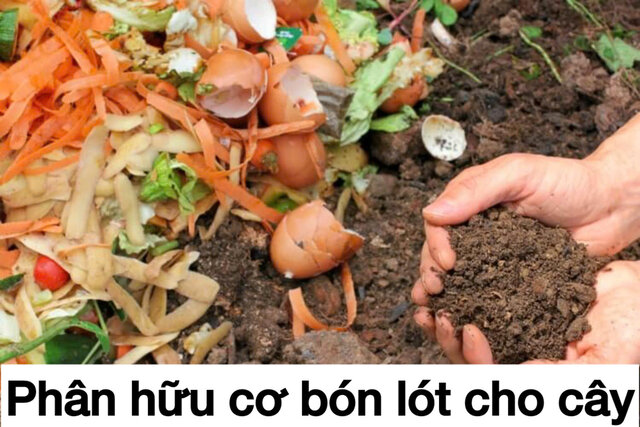
Organic fertilizer will help make the soil more porous when used as fertilizer
Use lime and amendments to regulate the pH level in the soil
In cases where the soil is acidic or the soil for perennial fruit trees is deficient in nutrients, you can consider using lime for fertilizing. Because lime has a great effect in adjusting the pH of the soil to a neutral form. Only then can plants develop and grow in the most comprehensive way.
Fertilizers are high in phosphorus and low in nitrogen
If you are growing short-term crops, you should use chemical fertilizers with high phosphorus and low nitrogen content (you can also use potassium fertilizer).
On the contrary, if you are growing perennial industrial crops, you should use phosphate fertilizer, potassium fertilizer or NPK mixed fertilizer with high levels of phosphorus, potassium and low nitrogen to fertilize the plants.
Some specific types of fertilizers that you can refer to are: Super phosphate, fused phosphate, NPK 16-16-8, DAP 18-46, NPK 5-10-3, NPK 12-15-5,…
2.4 Note the fertilizer dosage when applying fertilizer

Understanding the dosage when applying base fertilizer will help increase optimal fertilizer use efficiency
For fertilizer to work well and limit tree damage or death, farmers need to understand the dosage of fertilizer used when fertilizing. Accordingly, the amount of fertilizer used depends on many different factors such as: type of fertilizer, type of tree, season of the year and soil properties. Normally, phosphate fertilizers and organic fertilizers will be used by farmers in large quantities when fertilizing. Meanwhile, the nitrogen and potassium fertilizer group only uses a small part.
For cropland with heavy mechanical composition and rich in humus, you can fertilize with larger doses. On the contrary, if the soil has light mechanical components and is poor in fine humus, we will apply less fertilizer. This helps limit the phenomenon of loss of nutrients in the soil due to leaching.
3. Answers to some questions related to base fertilizer
Regarding the issue of fertilizing plants, there are many questions people ask. Here are a few key questions:
- Can base fertilizer be replaced with top fertilizer? You can’t because the purposes of these two ways of fertilizing are different. Basal fertilization is to create a foundation and top fertilization is to promote plant growth.
- Should nitrogen be used as fertilizer? It is not recommended that because nitrogen is easily soluble, top dressing will be more effective than top dressing
- How do you know what type of fertilizer your soil needs? You should test the pH of your soil or consult a local agricultural expert.
- How long will it take for the plant to absorb all the fertilizer? From 2 to 4 weeks depending on the type of stool
- Do I need to water after fertilizing the soil? Farmers must water but lightly so that the fertilizer can be absorbed evenly into the soil. Avoid watering too much or too hard because it will wash away all the fertilizer.
- What mistakes should you avoid when fertilizing? That is, using fresh but not yet decomposed fertilizer can easily cause the tree to die, or spreading the fertilizer too close to the root or letting the tree roots come into direct contact with the fertilizer or choosing a type of fertilizer that is not suitable for the biological characteristics of the tree.
Above is all the information related to base fertilizer (what is base fertilizer, which type is good? Base application technique) that we have compiled. Please contact Duc Binh Microbial Products to getrelevant issues to serve the plant care process!
⫸ See more: Division What is chemical fertilizer? How to use safely and effectively for plants
⫸ See more: What is top dressing? How to effectively fertilize plants
Contact information
>
Address : 1B Alley 774 Kim Giang, Thanh Liet, Hanoi
Phone number: 0934.214.579
Email: chephamvisinhungdung@gmail.com
Website: https://chephamvisinh.vn


