Soy sauce is a familiar spice in people’s lives East Asia such as: Vietnam, Japan, Korea, China,… To produce this spice, people need to use fermented soybeans for a long time. The quality of the finished product is delicious or not, whether it is safe or does not depend largely on mold or microorganisms. So, what are microorganisms in soy sauce production? What is the soy sauce production process? Please follow the following article to better understand the process of making a batch of soy sauce!
1. What are microorganisms in soy sauce production?
Microorganisms used in soy sauce production are also called molds or mildews. The scientific name of this fungus is Aspergillus Oryzae or Aspergillus Sojae. For a long time, Aspergillus Oryzae has been widely used in the production of soy sauce and miso-fermented soybeans.

Microorganisms in soy sauce production help convert Protein into Amino Acids
The main effect of microorganisms or molds used in the production of soy sauce is to produce Enzymes, supporting the process of breaking down Protein into Amino Acids. This transformation process determines the flavor of the naturally fermented finished soy sauce.
1.1 Mold
- Protease: Decomposes protein in soybeans into amino acids, creating umami (sweet meaty taste) for soy sauce.
- Amylase: Breaks down starch in wheat into simple sugars, providing food for subsequent microorganisms and creating sweetness.
1.2 Yeast
Some halophilic yeast strains are involved in the production of soy sauce, mainly Zygosaccharomyces rouxii and Candida, will take over the next stage of fermentation after the mold produces nutrients necessary for the microflora in soy sauce production to function. The main role of yeast in soy sauce production is to convert simple sugars into alcohol and organic compounds that create aroma for soy sauce.
1.3 Lactic acid bacteria
2. Soy sauce production process using microorganisms on an industrial scale
Currently, the process of producing soy sauce using microorganisms on an industrial scale at businesses is not too different. Below,Duc Binh Microbial Products will help you summarize the basic steps.
2.1. Processing soybeans
First step, soybeans need to go through a screening process to remove soil and rocks, retaining the best quality beans. Next, the soybeans are soaked in two main stages.
- Soaking stage: Soybeans are soaked in water until soft, then the shell peels off on its own.
- Rinshing: Helps clean dirt remaining on the surface of each bean. If produced according to industrial scale, people often use a strong spray hose to wash the soybeans to make soy sauce.

Soybeans used to make soy sauce must go through a soaking and rinsing process
2.2. Steam soybeans
After soaking and rinsing the soybeans, they need to be steamed. This step will help soften the beans, transform the protein easily, making it easier to Conditions for microorganisms to grow favorably. Thanks to that, the incubation time for beans will be significantly shortened. In addition, steaming beans at high temperature also helps destroy exogenous factors that affect the final soy sauce product.
2.3. Cool the soybeans
In the next step, people begin to cool the steamed soybeans. The effect of doing this is to avoid the death of microorganisms or molds, and to avoid denaturing the flour after mixing, helping the fermentation process during surface incubation take place more smoothly.

After steaming soybeans, they need to go through a cooling process
Accordingly, all the steamed ingredients are spread on the wooden floor, with a cooling fan arranged. To avoid impurities from entering, the cooling process of soybeans must be done in a clean environment.
2.4. Mold culture and microflora for soy sauce production
The first step in growing mold is to roast flour. Next, the flour needs to be sorted on a flat surface with a fan to help reduce the temperature.
When mixing the mixture, you must mix it thoroughly with the flour. After that, this material continues to be sprinkled on the material that needs to be transplanted. The culture environment needs to ensure suitable conditions for mold to grow, form highly effective enzymes, and support the decomposition of protein and starch.
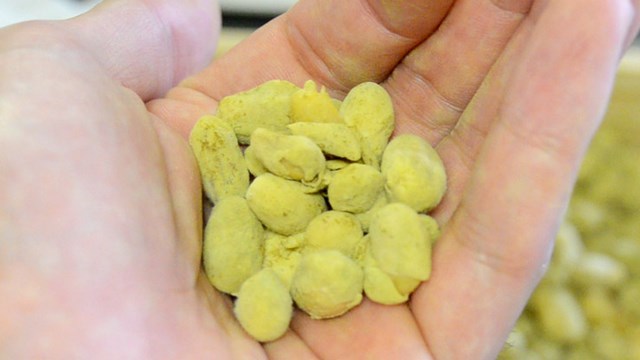
The mold growing environment must ensure appropriate temperature and humidity
In particular, the wheat flour mixed in acts as a nutritional source for mold growth, helping to improve hydrolysis efficiency. Note that the temperature of the raw material must gradually increase to 40 degrees Celsius so that the microflora can develop.
Actual bone broth production shows that in conditions of temperature from 28 to 30 degrees Celsius and humidity between 27 and 37%, the activity of Protease and Amylase Enzymes will help promote optimal effectiveness. Thanks to that, soy sauce can meet the requirements for total protein, sugar is also suitable Amino Acid.
The growth of microorganisms in soy sauce production can be described in the following three stages:
- Stage 1: After about 10 to 8 hours of seeding, the pre-mixed flour material needs to be heated to approximately 38 to 50° C, with humidity between 85% and 90%.
- Stage 2: During the next 4 to 5 hours, the temperature increases from 50 degrees Celsius to 51 degrees Celsius. At that time, mold silk begins to grow rapidly. At the same time, the silk mold mass also radiates heat, forming white silk and connecting into patches.
- Stage 3: After about 24 hours, you will observe the mushroom spores gradually turning yellow. At that time, people need to continue to beat the mold and stir to stimulate stronger fermentation.
2.5. Mix
Before composting and hydrolyzing the ingredients, people will mix them. The role of this step is to help the mushrooms mix evenly with the soybean ingredients, enhancing fermentation efficiency.
Normally, 90% of soybeans need to be pre-treated, along with 10% of wheat flour containing mold. Next, people add about 60 to 70% water.
2.6. Incubate the ingredients
Once the mixing is complete, the next thing to do is to incubate the ingredients together. The main purpose of this step is to serve the hydrolysis process next. The incubation stage of raw materials plays a very important role in increasing recovery efficiency and ensuring the quality of finished soy sauce products. During the production of raw materials, the production unit needs to maintain appropriate environmental temperature and humidity.
2.7. Hydrolyzed soybeans
The effect of hydrolyzing soybeans is to surgically transform the ingredients to produce a quality soy sauce product. In particular, the hydrolyzed raw material here is mushroom growth, mixed with salt water, performed in humid conditions.
During the first 3 to 4 days, the temperature of the tumor is usually maintained in the range of 35 to 40 degrees Celsius. If the temperature rises too high, the factory needs to cool it down to 50 to 55 degrees Celsius. In addition, the hydrolysis solution will be supplemented with warm water and soda to balance the amount of Acid.
2.8. Mold brake
Specially treated salt water, boiled is used to inhibit mold. The main purpose of mold inhibition is to control excessive mold activity and prevent impurity contamination.
Accordingly, salt water with a concentration of 20% to 30% has the ability to inhibit many types of harmful bacteria. However, salt water should only be used in moderate amounts so as not to inhibit the fermentation rate.
2.9. Filter the soy sauce
The soy sauce filtering process requires the help of a specialized vertical press. After filtering, one will obtain a soy sauce product without any residue.
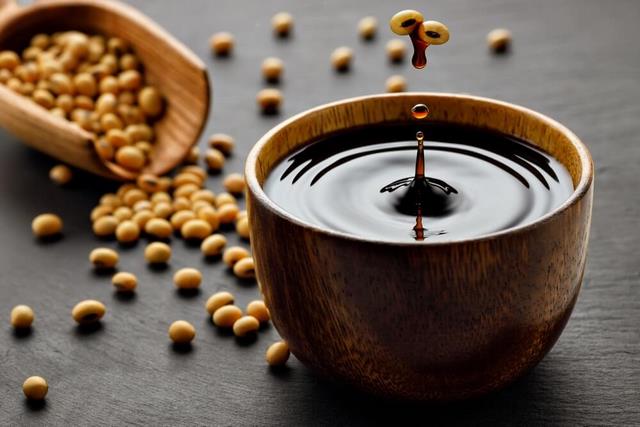
Finished soy sauce product after filtered
2.10. Bottling and labeling
The final step in the microbial soy sauce production process is bottling and labeling. After that, the product will be distributed to the dealer system and consumer customers.
3. Factors affecting the quality of soy sauce
To have a delicious, safe, and standard batch of soy sauce, we must follow the correct process and prepare ingredients to ensure the best quality. Specifically as follows:
- For input materials: Whether or not soy sauce is delicious depends largely on your choice of ingredients: Beans and wheat must be fresh, free from mold, free from pests, and free from impurities. In particular, raw materials must ensure food hygiene and safety standards.
- Carrying out the fermentation process: Ensuring incubation time and fermentation temperature is a decisive factor for the growth of beneficial microorganisms. If the incubation temperature changes during the incubation process, fermentation will be interrupted, affecting the quality of the finished product.
- Proper pasteurization process: If you want a safe, quality batch of soy sauce to reach consumers, pasteurization must be taken seriously. If we perform this step at too high a temperature or for too long a time, the flavor and color of the soy sauce may be decomposed.
- Storage conditions: The finished product must be stored in a cool, dry place, away from direct sunlight to ensure flavor and deliciousness.
4. The difference between industrial soy sauce and traditional soy sauce
Industrial soy sauce production will be carried out on a large scale, with priority given to output and efficiency. Manufacturers and businesses promote the application of modern technology to optimize time and product quality.
Note, during the production process they use chemical additives to shorten the time and increase the flavor of the product. Therefore, the taste of industrial soy sauce is quite similar, there are not as many options as traditional soy sauce. Of course, the additives used are all within the allowable threshold and are tested for food safety and hygiene, so you can rest assured.
Traditional soy sauce uses completely natural ingredients, is brewed manually, does not use chemical additives, so the fermentation time is long, even up to one year. Thanks to that, traditional soy sauce has a rich, delicious flavor, imbued with regional cultural identity.
Currently, traditional soy sauce is chosen by many people because it is more delicious and safer. However, to have a batch of soy sauce that comes out of the oven, the maker must meticulously carry out many steps and ferment it for a long time. Therefore, the price of traditional soy sauce is always higher than industrial soy sauce.
To make soy sauce at home, you can still apply the above process. However, instead of wasting time growing mold or microorganisms, use commercially available soy sauce products. Usually, after a few months, you will get the finished soy sauce product. If you want to buy microorganisms in soy sauce production, please refer to some products of Duc Binh microbial products.
⫸ See more: What is Aspergillus Oryzae mold? Uses and effective uses
⫸ See more: What effect does Enzyme Protease have in today’s life
Contact information
>
Address : 1B Alley 774 Kim Giang, Thanh Liet, Hanoi
Phone number: 0934.214.579
Hotline: 024.66.55.46.86
Email: chephamvisinhungdung@gmail.com
Website: https://chephamvisinh.vn
⫸ See more: What are the effects of garlic? How to ferment garlic for pets
>