
The amount of garbage and organic waste discharged from daily life and production activities is currently very large. If not handled well, they will seriously affect the environment as well as public health. So, exactly what are the types of garbage and organic waste? What is the specific treatment method?
1. What are the types of organic waste and organic waste?
Trash or organic waste originating from nature. For example, leftover food, grass, eggshells, etc. They have the ability to decompose quickly because they contain carbon compounds. This is a characteristic contrary to inorganic waste, products from industrial activities such as plastic, rubber, glass, etc., which are difficult to decompose in the natural environment.

What are the types of organic waste and organic waste?
Even though it has the ability to decompose quickly, organic waste still pollutes the environment if not handled properly. During the decomposition process, they often attract flies and bugs, causing a foul odor; can easily cause respiratory and digestive diseases.
It is estimated that the amount of organic waste on earth accounts for about 50 to 70% of the total waste. Therefore, if you do not invest in treatment, the lives of people in waste gathering areas are easily affected.
2. Classify garbage and organic waste
Garbage and organic waste can be classified according to characteristics of decomposition rate and origin. For each type, people apply appropriate treatment methods.
- Trash, organic waste from agricultural activities: Straw, grasshoppers, bark, coconut fiber; parts with low use value such as branches, leaves, and stems.
- Trash, organic waste from production activities: Paper, sugarcane bagasse, coffee peels, cassava peels, peanut shells,…
- Trash, organic waste from daily activities: Leftover food, egg shells, leftover vegetable stems, fruit peels, waste such as feces,…
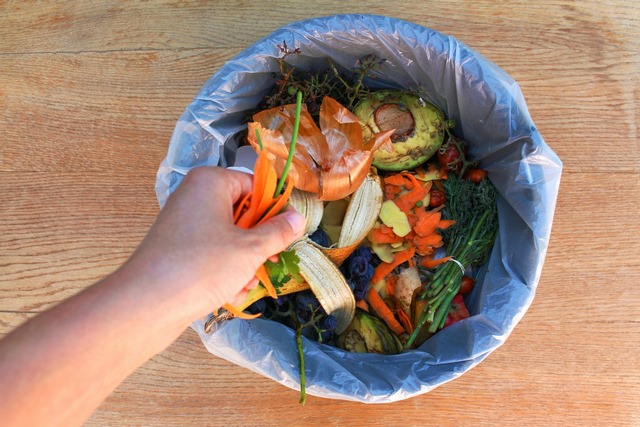
Organic waste from daily activities
In general, types of organic waste are very diverse and difficult to fully list. Although their decomposition rate is fast, they still have some impact on the environment. However, if you know how to utilize it, organic waste will be a useful source of raw materials for energy and fertilizer production.
3. Common ways to treat garbage and organic waste
Currently, organic waste can be treated in many ways. For example, some of the following methods.
3.1. Biodegradable
This is one of the most commonly used methods of treating organic waste today. The use of heat,
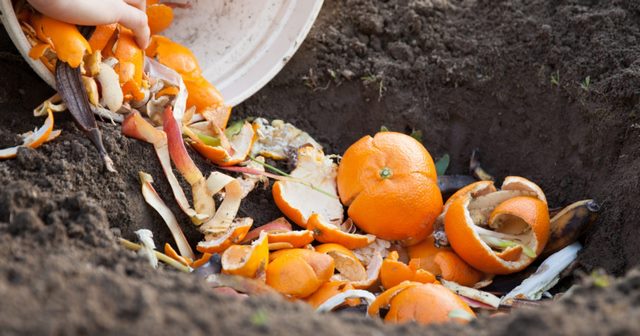
bacteria and organic substances are converted into organic fertilizer products that will help make the soil environment more fertile.
Treatment of biodegradable waste is essentially landfilling
In addition, this treatment method also scores low cost. However, landfills need to arrange an air system and classify waste for scientific treatment.
The process of burying biodegradable waste is currently implemented in 6 basic steps. Specifically:
- Step 1: Waste is collected and classified with inorganic waste.
- Step 2: Large bulldozer system carries out leveling.
- Step 3: Spray disinfectant on the surface of the newly leveled waste.
- Step 4: Sprinkle lime powder.
- Step 5: Build soil in layers.
- Step 6: Treat the ground to return and plant more trees.
3.2. Biogas production
In addition to landfilling for biodegradable waste, organic waste is also treated with Anaerobic decomposition to produce biogas, also known as Biogas. To treat waste in this way, people need to build a specialized composting system. Biogas sources include methane and CO2 gas that can serve cooking and heating needs using gas energy.
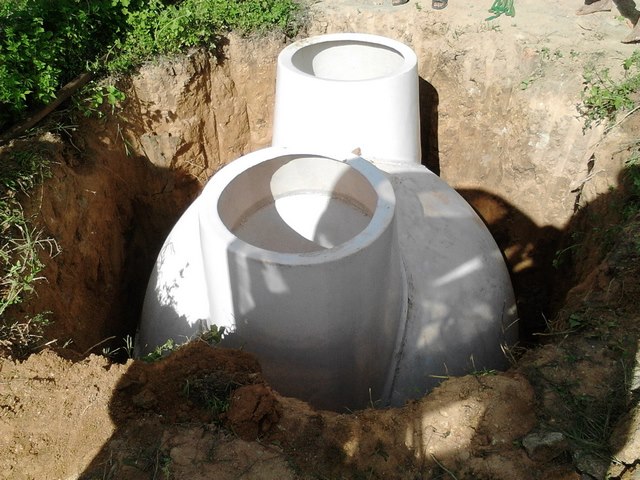
Trash composting system to produce gas Biogas
3.3. Burn
With this treatment technique, people need to use high temperatures to burn trash. Accordingly, waste can be burned in a thermal furnace or spontaneously burned in the environment. However, spontaneous burning of organic waste is not encouraged because it easily causes air pollution.
In many developed countries, advanced waste incineration technology at high temperatures from 1000 to 1100 degrees Celsius is being widely applied. The advantage of this waste treatment method is that it does not have to use a large area of land and can be used to create electrical energy. However, the implementation cost is relatively high, because people need to build a modern incinerator system.
3.4. Methane collection
At waste collection sites, many places are applying waste classification, building systems to collect and utilize methane gas. This gas source is often used as an energy source for daily activities, production (if the output is large), or converted into many other forms of energy.
3.5. Raising earthworms
Raising earthworms with organic waste is considered an optimal waste treatment method, without emitting gases that pollute the environment. On the other hand, organic waste can be consumed quickly by worms.

Organic waste is a food source for earthworms
Organic waste is now a food source for earthworms. After that, earthworms are used to produce fertilizer, provide plant growth, and support soil improvement.
4. Why is it necessary to treat garbage and organic waste?
Organic waste treatment always plays a central role in protecting the environment, balancing the ecosystem, along with many other economic and social benefits. Such as:
- Limiting environmental pollution: The amount of organic waste generated from daily life and production activities is currently relatively large. Proper handling will help protect the environment; somewhat limit water pollution, air pollution, and help prevent climate change.
- Reduce the load on garbage dumps: Garbage and organic waste concentrated in landfills are increasing. If not classified and treated, they will create a burden, shortening the landfill’s operating time. However, if handled well, the operating life of each landfill can be significantly extended.
- Helps reuse resources: Organic waste is not always a waste material. If used well, they are raw materials for the production of renewable energy sources, serving daily life and production. For example, Biogas is still used as a substitute for industrial gas in many places.
- Helps improve soil quality: Fertilizer produced from organic waste helps significantly improve soil quality, enhancing water absorption; helps agricultural production activities take place more efficiently, without dependence on chemical fertilizers.
- Promoting the development of the renewable energy industry: Biogas from organic waste can be considered as renewable energy, serving many areas of life. Thus, the work of treating this type of waste has been promoting the development of the renewable energy industry.
- Help protect public health: Garbage and organic waste are treated according to proper techniques to help minimize environmental pollution. Public health will then be less affected.
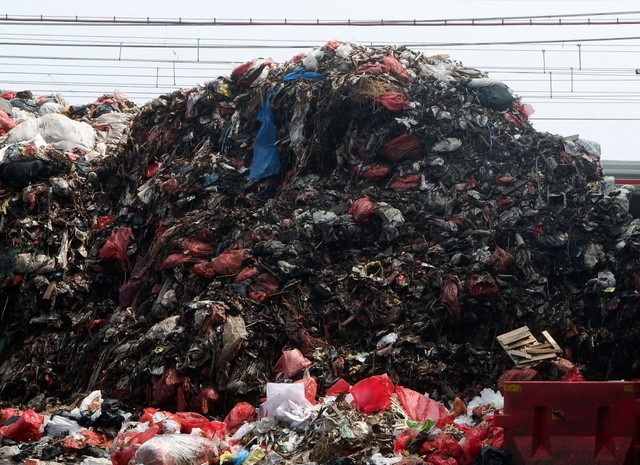
Properly treating garbage and organic waste helps reduce the load on landfills
Hopefully through the above article, you can understand exactly what types of garbage and organic waste are. If you need to buy biological products used to treat waste, please refer to the product list at https://chephamvisinh.vn/.
⫸ See more: What are microorganisms in soy sauce production? Soy sauce production process
⫸ See more: What is Aspergillus Oryzae mold? Uses and effective uses


