
Organic matter, although not in a large proportion, is a decisive factor in the quality and of soil fertility. More deeply, they affect the efficiency of farming and agricultural cultivation. So, the origin of the organic ingredients in What is land? Do you know their role and methods of adding organic matter to the soil?
1. What is the source of organic matter in soil?
Organic matter is always considered an important ingredient, playing a core role in maintaining soil fertility and health. However, there is a fact that many people do not know: What is the origin of organic ingredients in soil? These are extremely small microorganisms that we cannot see with the naked eye.
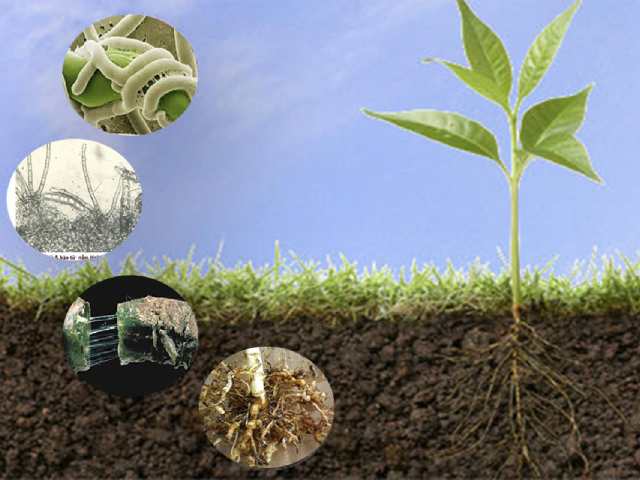
The source of organic matter in soil is microorganisms and organic humus
Organic matter in soil originates from microorganisms that decompose organic matter and they are created in many different ways:
1.1 From organisms living in the soil
One of the main sources of organic matter is from organisms that live in the soil, including insects, earthworms, microorganisms and fungi. When they die, these bodies decompose into simple organic matter, providing large amounts of organic nutrients to the soil. This process not only enriches organic matter but also helps aerate and improve soil drainage.
1.2 From plants and trees
Crops and plants are also a rich source of organic matter for the soil. Fallen leaves, dead roots and other plant parts, when decomposed, become organic matter. Plant roots not only provide organic matter directly but are also a place of strong microbial activity in the soil, contributing to promoting the process of decomposition and regeneration of organic matter.
1.3 From animal manure and agricultural waste
Animal manure and agricultural waste such as straw and sugarcane bagasse are also important sources of organic matter in soil. If people use properly, these ingredients will decompose into organic matter, supplement nutrients for plants, improve soil porosity and maintain moisture.
2. What does organic matter in soil consist of
Soil contains 5% organic matter. Organic storage in soil includes organic matter such as soil biomass, organic matter from decomposition, plant residue and conversion processes in the soil. Specifically as follows:
2.1 Protein-containing compounds
Protein content in natural organic matter ranges from 3% to 6%. It is the result of acid hydrolysis releasing amino acids, amino sugars, and ammonia. According to analysis from scientists, there are about 20 amino acids and 2 amino sugars. This component accounts for a high proportion of N nitrogen compounds of organic matter. Each type of soil has different N content
2.2 Carbohydrates
Carbohydrates are particularly important organic components in soil. Its role is to provide nutrients for plants and maintain a stable soil ecosystem. The concentration of Carbohydrates in soil usually ranges from 5% to 20% depending on climate, soil type and frequency of microbial activity.
Carbohydrates in soil are mainly polysaccharides – which are long chains of simple sugar molecules combined together with many components such as: pectin, cellulose, hemicellulose… On the other hand, Carbohydrates also contain a small amount of simple sugars. Simple sugars are formed from the decomposition of organic matter in the soil due to microbial activity.
The role of simple sugars is to provide energy for microorganisms, contributing to the formation of soil structure. The presence of Carbohydrates in the soil greatly determines the characteristics of the soil, helping to retain water, increasing cation exchange capacity, promoting microbial activity and plant growth.
2.3 Compounds containing phosphorus (P)
Soil contains a large amount of organic phosphate fertilizer. Organophosphate components include: inositol hexaphosphate, nucleotides, phospholipids. It is an important source of phosphorus for the activities of soil organisms and the growth of dragon trees.
2.4 Some other ingredients
In addition to humus, minerals, and water, soil also contains large amounts of other organic substances. This substance is called “organic residue”, representing the appearance of polyphenol rings, which plays an important role in soil and plants.
3. How does the decomposition of organic matter in soil take place?
3.1 Initial phase
During this stage, microorganisms, especially bacteria and fungi, begin to break down complex organic compounds such as cellulose, lignin and proteins. These are compounds that are difficult to break down and often require special enzymes from microorganisms. For example, cellulose can only be decomposed by bacteria or fungi that are capable of producing the enzyme cellulase.

Microorganisms decompose complex organic compounds
Organic compounds are broken down into smaller molecules, such as organic acids, CO2, and water. This process often occurs rapidly in humid conditions and warm temperatures, increasing microbial activity.
3.2 Resolution phase
After complex compounds are broken down into smaller compounds, microorganisms continue to break them down into even simpler compounds, typically are amino acids, fatty acids and sugars. These are easily decomposed forms and can be immediately used by organisms living in the soil.
At the decomposition stage, the rate of decomposition depends on temperature, humidity, soil pH and the amount of available oxygen. The decomposition process takes place fastest in aerobic conditions, that is, when there is enough oxygen to support microbial activity.
⫸ See more: Microbial products for treating organic waste
3.3 Mineralization stage
The final stage of organic matter decomposition is mineralization. Here, the remaining organic compounds are converted into inorganic substances such as ammonia (NH3), nitrate (NO3-), phosphate (PO4-3) and other metal ions. These substances are the form of nutrients that plants can absorb and use to grow.
Mineralization occurs more quickly in high temperature and humid conditions, helping to optimize microbial activity. However, if soil conditions are not ideal, this process can slow down, leading to the accumulation of undecomposed organic compounds.
4. How does organic matter affect soil?
From the above organic matter decomposition process, it can be seen that microorganisms have a great impact on improving soil quality. Accordingly, the great benefits of organic matter decomposed by microorganism are:
4.1 Providing nutrients for plants
Organic matter is the main source of essential nutrients for plants, especially nitrogen, phosphorus and potassium. When microorganisms decompose organic matter, these nutrients are released and become easily absorbed by plants.
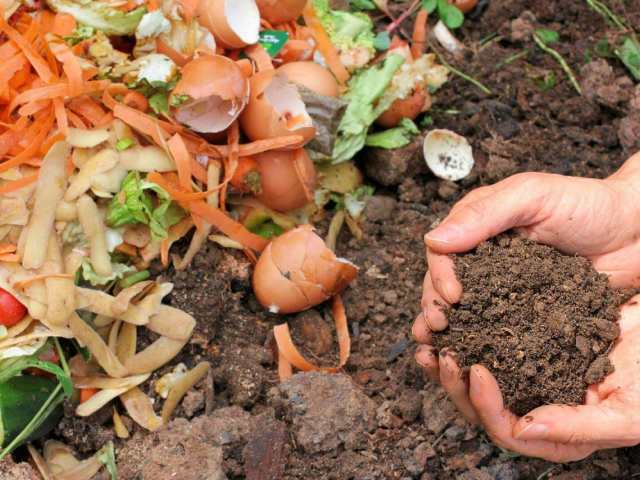
Organic matter helps soil become more nutritious and loose
4.2 Improving soil structure
Organic matter helps create better soil grain structures, making the soil better able to hold water and air. This is especially important for sandy soils, which often have very low water and nutrient holding capacity. Soils with high organic matter are often soft, easy to work, and easily permeable.
4.3 Increase water retention
Organic matter has the ability to hold water very well, helping to maintain soil moisture and minimize erosion. This is important in arid areas where natural water sources are scarce. Plants grown in soil rich in organic matter are often more resistant to drought conditions.
4.4 Balancing soil pH
Organic matter can reduce soil acidity, help regulate pH and create favorable conditions for plant growth. Besides, maintaining pH at a balanced level will create the opposite conditions to help microorganisms in the soil grow and function more strongly.
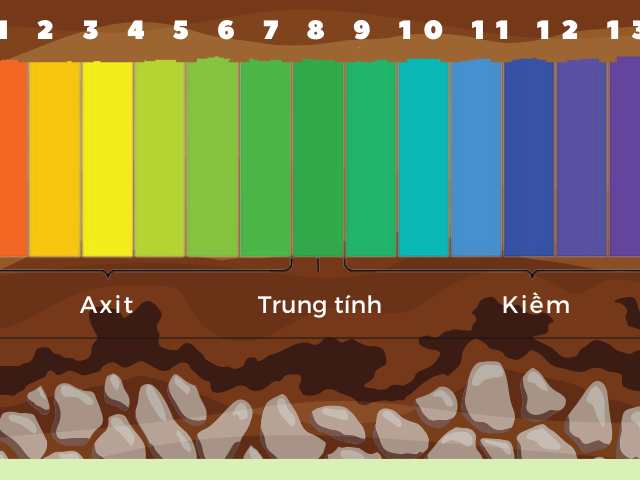
Organic substances help maintain ideal pH
4.5 Reduce the risk of soil erosion
Organic matter helps improve soil structure, increase the adhesion of soil particles, thereby minimizing erosion. When soil has a lot of organic matter, its resistance to the effects of wind and water will increase, helping to protect the topsoil.
5. Effective methods of adding organic matter to soil
The source of organic components in soil is microorganisms, but in reality, not all types of soil are naturally rich in microorganisms. Therefore, to effectively supplement organic matter, the most optimal and sustainable solution is to introduce beneficial microorganisms into the soil through methods such as:
- Apply Compost (or organic compost) to the soil: Compost is formed from the decomposition of organic waste such as leaves, kitchen waste and animal manure in the presence of oxygen.
- Application of manure: Manure, including manure from livestock and poultry, helps improve soil porosity and enhance beneficial microorganisms.
- Using straw and agricultural waste: Straw and other agricultural waste such as corn stalks and rice husks are common sources of organic matter that can be added to the soil. To make straw decompose faster and more effectively, people should compost along with green manures or microbial fertilizers.
>
>
⫸ See more: What is organic fertilizer? Uses, methods & How to use plant fertilizer
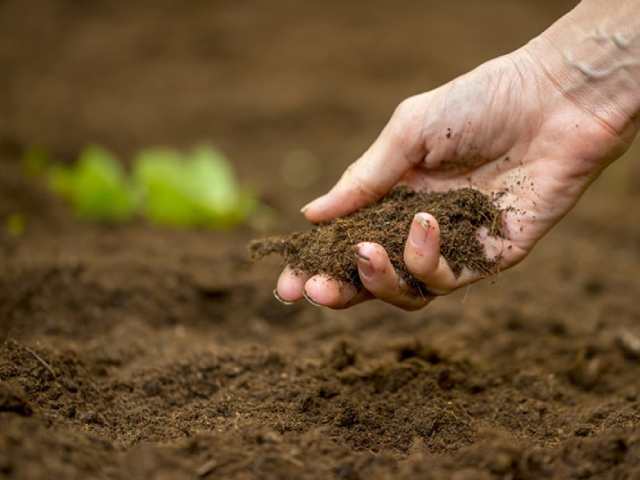
Agricultural products can be used to compost organic fertilizer to fertilize plants to improve soil quality
With the above sharing, I hope that the article has helped you answer the question what is the origin of organic ingredients in soil, its role and how to improve soil. For more advice on methods of adding microorganisms to the soil, you can contact Duc Binh Microbial Products
⫸ See more: What is biotechnology in wastewater treatment? Popular methods
⫸ See more: What is the method of composting biological waste? Advantages, disadvantages and implementation
Contact information
>
Address : 1B Alley 774 Kim Giang, Thanh Liet, Hanoi
Phone number: 0934.214.579
Email: chephamvisinhungdung@gmail.com
Website: https://chephamvisinh.vn


