Fertilizer is an indispensable “food source” for all crops. Among them, micronutrient fertilizer is one of the types of fertilizer that is very commonly used today. In just a small amount, they can provide plants with rich nutritional content. So what is micronutrient fertilizer, why is micronutrient fertilizer necessary for plants? How to use? Our article below will help you understand the issue.
1. What is micronutrient fertilizer?
In farming, there are many different types of fertilizers that help improve soil quality and increase crop productivity. Fertilizers are one of them. This type of fertilizer contains many essential nutritional elements (minerals) that plants need but only in very small amounts. Although the proportion is not high, they are indispensable in the growth and development of plants.
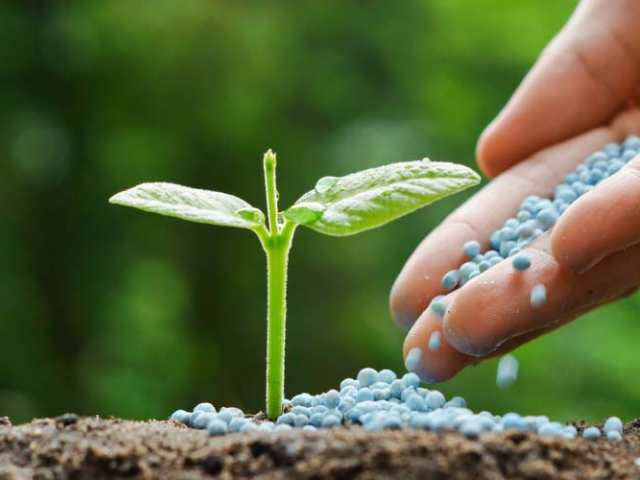
Micronutrient fertilizers contain many minerals necessary for plants
2. Signs of identifying plants lacking micronutrients
When there is a lack of micronutrients, plants will have abnormal symptoms. Below are signs that plants need micronutrient supplementation:
- Plants lacking copper: Gums WILL appear. If it is a fruit tree, when copper deficiency occurs, the problem will be more serious, especially during the fruit-bearing period, when the fruit on the tree will have signs of necrosis.
- Manganese deficiency: If this substance is lacking, the leaf cover and leaf flesh all turn yellow, but the leaf veins are still dark green.
- Zinc deficiency: The edges and veins of young leaves will turn green, the leaf blade in the middle will turn yellow. During this time, the tree has almost no branches or branches, the number of fruits is small, and the quality is not guaranteed.
- Iron deficiency: The fish plant turns light green, the leaf veins in the middle are dark, the leaf flesh between the veins will turn yellow. Just by observing you will see the difference in leaf color between parts of the leaf. If iron deficiency persists, all leaves on the plant will turn white or yellow.
- Lack of chlorine: The telltale sign is the discoloration of the leaves. Specifically, the tips of the leaves gradually wilt, turn yellow, then bronze brown, and eventually the tree will die.
- Boron deficiency: Without this micronutrient, young leaves on plants will be deformed, thin, pale in color, and many yellow or white spots will appear on the leaf surface. In particular, leaf stems and petioles have cracks, flowers are poorly developed, the number of pods is small, and the quality is not guaranteed.
- Molybdenum deficiency: Large yellow spots on the leaves
After discovering that plants lack trace elements, farmers need to urgently fertilize to quickly overcome the above situation. If this situation continues for a long time, the tree will develop poorly and even die.
3. Important trace elements for plants
Fertilizers are made up of many different elements. These elements participate in many biochemical processes in plants, helping to improve growth, enhance resistance and increase productivity. Some typical trace elements can be mentioned as:
3.1 Iron (Fe)
Iron is one of the most important trace elements, playing a key role in photosynthesis. Without iron, the plant will have yellow leaves, especially on young leaves. Providing enough iron helps plants improve their ability to photosynthesize and produce energy.
3.2 Zinc (Zn)
Zinc participates in protein synthesis and promotes plant growth. It is also important for flowering and fruiting. When plants lack zinc, their growth slows and leaves become deformed.
3.3 Manganese (Mn)
Manganese is an essential element for photosynthesis and energy metabolism. Manganese deficiency will result in black spots or discoloration of leaves. Proper supply of manganese helps plants stay healthy and increase productivity.
3.4 Copper (Cu)
Copper participates in many biochemical processes: enzyme synthesis and iron absorption. It also plays a role in fighting a number of diseases that harm plants. Copper deficiency can lead to weak plants and poor growth.
3.5 Molybdenum (Mo)
Molybdenum is an element necessary for the synthesis of the enzyme nitrate, which helps plants effectively use nitrogen from the soil. Molybdenum deficiency can reduce crop yields.
3.6 Boro (B)
Boro aids in cell division and root development. It is also necessary for flower and fruit formation. Boron deficiency can cause root rot and flower drop.
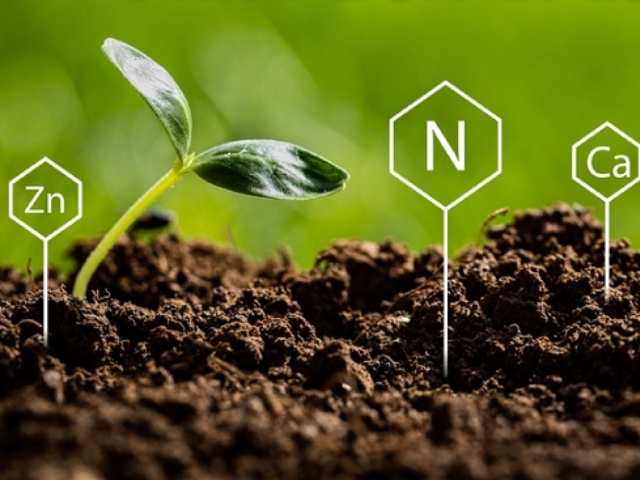
Important trace elements for plants
4. Why are micronutrients necessary for plants?
“Small yet broken” is how farmers often talk about micronutrient fertilizers. They participate in all metabolic activities in the plant, ensuring the plant has the best conditions to grow. The great benefits that micronutrients bring to plants that we cannot deny are:
4.1 Food that promotes photosynthesis
Photosynthesis is an important process that helps plants convert solar energy into chemical energy. Trace elements such as iron and manganese are essential components in photosynthetic enzymes. Iron deficiency can lead to yellow leaves, reduce photosynthesis and ultimately affect crop yield.
4.2 Enhance plant resistance
Micronutrient fertilizers not only support growth but also help plants increase resistance to pests and harsh weather conditions. Boron in fertilizers helps strengthen cell walls and increase plant resistance to harmful factors. Healthy plants will easily resist diseases and pests.
4.3 Improving the quality of agricultural products
Complete addition of micronutrients not only helps plants grow well but also improves product quality. Crops that are adequately supplied with micronutrients often have better flavor, brighter color and higher nutritional quality. This not only benefits consumers but also contributes to increasing the economic value of agricultural products.
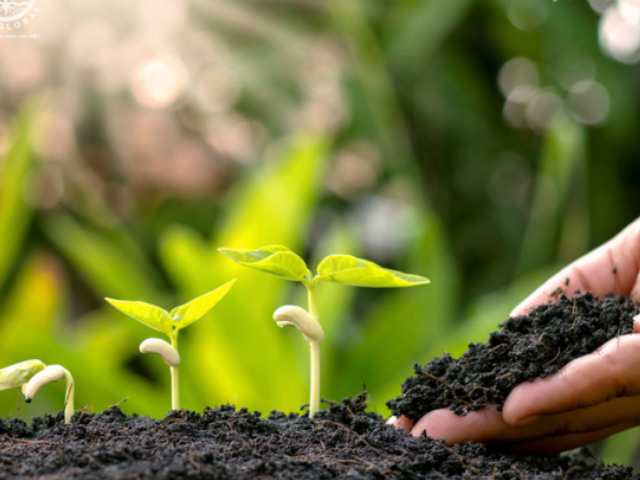
Fertilizers help improve the quality of agricultural products
4.4 Promote root growth
Some elements such as zinc and molybdenum play an important role in root system development. A healthy root system helps plants absorb nutrients and water effectively.
4.5 Regulating metabolism
Micronutrients participate in chemical reactions in plants, thereby regulating metabolism and enhancing nutrient absorption. This helps the tree grow stronger and more balanced.
⫸ See more: What is nitrogen-fixing microbial fertilizer? Classification, uses and how to use effectively
⫸ See more: What is NPK fertilizer? How to fertilize for high-yield crops
5. Methods of providing micronutrients to plants
There are many ways for farmers to effectively provide micronutrients to plants. Depending on the size and variety of plants, you should consider choosing the appropriate fertilization method:
5.1 Applying fertilizer
- Granular fertilizer: Micronutrient fertilizers can be spread evenly on the ground or applied to rows, then covered with soil. This method helps the fertilizer dissolve slowly and provide nutrients to the plant through the roots.
- Soluble fertilizer: Mix micronutrient fertilizer with water and then water directly into the soil. This helps the fertilizer quickly penetrate the soil, making it easy for plants to absorb.
5.2 Foliar fertilization
With this method, we will dissolve foliar fertilizer micronutrients in water and then use a spray bottle to spray it on the foliage. This method helps the plant absorb micronutrients quickly through the leaf surface, especially useful during the period when the plant is growing strongly.
An important note when fertilizing over leaves is to do it in the early morning or late afternoon to avoid harsh sunlight causing the fertilizer to evaporate or harm the plant. leaves.

Foliar fertilization method helps provide micronutrients to plants quickly quickly
5.3 Using the mist system
This is a convenient method for growers on large areas who want to save time. Spray technology helps provide nutrients evenly and effectively to plants. Accordingly, only the portion of the fertilizer is dissolved in water, using specialized equipment to spray in mist form.
6. What should you pay attention to when using micronutrient fertilizers?
Although micronutrients are important, they can still harm plants if people use them incorrectly. Here are some important notes you need to know:
- Determine plant needs: Because each type of plant needs different trace elements at different times during development.
- Choose the right fertilizer: Micronutrient fertilizers come in many different forms such as chemical fertilizers, organic fertilizers and biological products. You need to rely on soil characteristics, plant types, and farming methods to choose the appropriate fertilizer.
- How to apply micronutrients: You can use methods such as: spraying directly, dissolving into irrigation water or spraying on leaves for each type of plant.

Choose a fertilization method Micronutrient fertilizers are suitable for each type of crop and each soil area
- When to use micronutrient fertilizers: You should consult an agricultural expert or study documents to determine the appropriate time. Some plants need fertilizer in the early stages, but some plants need fertilizer when flowering and fruiting.
- Dosage: Over-fertilization can cause plant poisoning. If the plant only needs moderate trace elements such as Ca, Mg, S, you can use micronutrient fertilizer.
7. Answering questions related to micronutrient fertilizers
Certainly many people still do not understand clearly about micronutrients. Regarding this type of fertilizer, there are many issues to dissect. Here are some key questions:
- There are trace elements in the soil, why do we still need to fertilize? Because each stage of plant growth requires different amounts of nutrients. Sometimes trace elements in the soil are in excess and there is enough gas for plants to grow. However, when plants grow strongly, more fertilizer is needed. Therefore, if we do not provide enough fertilizer above, the plant will grow slowly, flowering and fruiting will have low productivity.
- How to detect trace element deficiency in plants? Signs of a plant lacking micronutrients are very clear. Therefore, people only need to observe the leaf color, branching speed, rooting, and branching of the tree to know.
- Are micronutrients used for all types of plants? Each type of soil lacks a different micronutrient. Furthermore, the need for trace elements of each crop is not the same. Therefore, people must use the correct type and correct dosage.
- How to fertilize plants with micronutrients? There are many ways for you to choose: Apply directly to the soil, mix with other fertilizers to fertilize or soak with seeds, spray on leaves…
- Should plants be regularly sprayed with micronutrients? Lack or excess of trace elements will negatively affect plants. Therefore, micronutrient fertilizer spraying needs to be done in the right process, at the right time, and in the right dosage. Specifically, for fruit trees, people should spray for 2 consecutive years and then stop for 1-2 years. As for rice, corn, and beans, we can spray continuously for many years until the crops grow well and smoothly.
You can consult for free at Duc Binh microbiological products to better understand how to care for plants.
⫸ See more: Answer: The origin of organic components in soil is what?
⫸ See more: What is the method of composting biological waste? Advantages, disadvantages and implementation
Contact information
>
Address : 1B Alley 774 Kim Giang, Thanh Liet, Hanoi
Phone number: 0934.214.579
Email: chephamvisinhungdung@gmail.com
Website: https://chephamvisinh.vn