
Chemical fertilizers are industrial products that cannot be lacking in modern agriculture, helps provide necessary nutrients for plants. Understanding the benefits and impacts of chemical fertilizers is extremely important to ensure both economic efficiency and environmental sustainability.
1. Definition and benefits of chemical fertilizers
Chemical fertilizers are produced from naturally occurring chemicals or minerals. Through a series of advanced industrial processes including raw material extraction, extraction, processing and blending to create finished products that can provide the most complete nutrition for plants.
Chemical fertilizers are produced in many different forms such as nitrogen fertilizers, phosphate fertilizers, potassium fertilizers or micronutrient fertilizers, with the main ingredients commonly found in chemical fertilizers being N, P, K. Each type has its own uses suitable for each stage of plant development with many different uses like:
- Provides nutrients quickly: Fertilizer contains nutritional elements such as nitrogen, phosphorus and potassium in an easily absorbable form. At the same time, enhances absorption, accelerates metabolism… Thereby promoting the development and growth of plants.
- Increase crop productivity: Proper use of chemical fertilizers helps increase crop productivity significantly. Studies show that using chemical compounds during the growth and flowering stages can increase productivity by up to 20-50% compared to traditional farming.
- Improve product quality: A study published in the journal Agricultural Sciences showed that crops fertilized with chemical fertilizers have higher yields and product quality definitely. Fully fertilized fruits have bright colors and uniform sizes, increasing their economic value in the market.

Chemical fertilizers provide important nutrients for plants
NPK fertilizer is a specialized chemical fertilizer, while chemical fertilizer is a broader group of fertilizers. NPK fertilizer contains three main macronutrients: Nitrogen (N), Phosphorus (P) and Potassium (K) mixed together. Chemical fertilizers include many different types of inorganic fertilizers, which may contain one or more nutritional elements.
2. How to use chemical fertilizers safely and effectively for plants
To achieve high efficiency in using chemical fertilizers, farmers need to clearly understand the dosage, timing and type of fertilizer suitable for each type of crop as well as the stage of plant development. This is fundamental knowledge that not only helps plants grow optimally but also minimizes negative impacts on the environment, such as soil and water pollution due to chemical residues.
To achieve high efficiency in using chemical fertilizers, farmers need to clearly understand the dosage and time of application. In addition, you also need to know how to choose the right fertilizer for each type of plant as well as the stages of plant development. This is fundamental knowledge that not only helps plants grow optimally but also minimizes negative impacts on the environment such as: soil and water pollution due to chemical residues.
2.1 Chemical fertilization techniques
For chemical fertilizers, farmers often apply three main techniques: deep fertilization, broadcast fertilization and foliar irrigation. Depending on the type of plant, soil conditions, weather and growth stage of the plant, different methods are applied to get the highest efficiency. Specifically:
- The deep fertilization method is suitable for perennial crops and plants with deep roots, the fertilizer is applied to the soil layer near the roots. Thanks to that, plants absorb it quickly for greater efficiency.
- Spread fertilization is the simplest and most time-saving way because you only need to spread the fertilizer evenly on the soil surface around the plants. This technique is often used in the rainy season or in households with adequate irrigation systems to completely disintegrate. Priority is given to short-term crops, crops, rice…
- Fertilization can be applied to most types of plants. Specifically, irrigation will be applied during the growth and development stage of the plant. This type is suitable for households with large farming areas. When fertilizer requires mixing according to the manufacturer’s ratio recommends to achieve high efficiency without causing leaf or tip burn.
2.2 Dosage and timing of fertilization
Each type of plant and stage of development will have different nutritional needs, so fertilizing at the appropriate time helps plants absorb nutrients more effectively.
- Short-term crops: Such as vegetables, rice, or cash crops often require more nitrogen during the growing period. For example, rice in the tillering stage needs to fertilize about 30-40kg of nitrogen (N), 20-25kg of phosphorus (P2O5), 10-15 kg of potassium (K2O) per hectare.
- Perennial plants: For fruit trees or industrial plants, priority should be given to supplementing nutrients such as phosphorus (P) and potassium (K, especially in the flowering and fruit-bearing stages. For example, with coffee and pepper plants in the post-harvest stage, pruning and cutting leaves, it is necessary to fertilize 120-150kg of nitrogen, 80-100kg of fertilizer. phosphate, 100-120kg potassium per hectare.
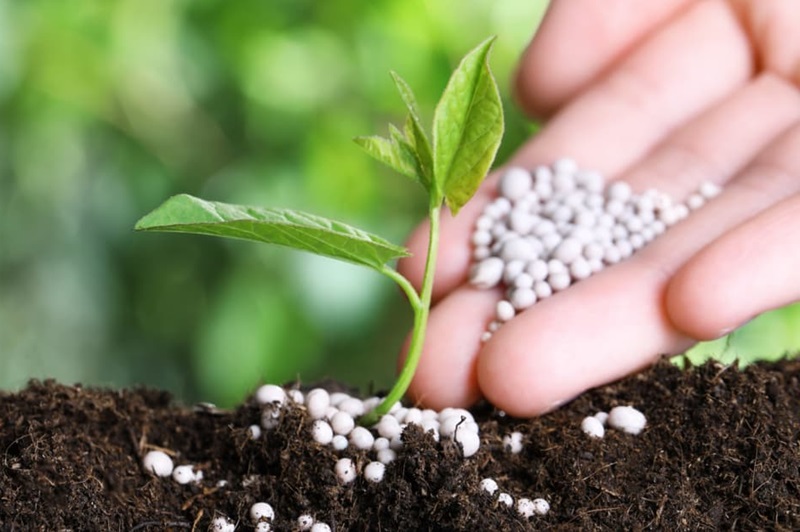
For plants to have high yields, you need to make sure to use the right type of fertilizer and fertilize at the right time
2.3 Choose chemical fertilizer according to the nutritional needs of plants
Each type of crop has different nutritional needs and requires different amounts and types of fertilizer. To meet the needs through each stage of development , farmers need to rely on the following in-depth knowledge:
- Nitrogen fertilizer: Nitrogen (Nitrogen) is an important nutrient that helps plants develop stems and leaves and enhance photosynthesis. For short-term crops such as rice, vegetables, leaf crops, and leafy crops (such as mustard and water spinach), nitrogen needs are often high in the early stages of development. Therefore, priority should be given to choosing urea fertilizer (46% nitrogen) and ammonium sulfate fertilizer (21% nitrogen) to fertilize during the period when the plant is growing strongly to promote the growth of leaves and stems.
- Phosphorus fertilizer: Phosphorus (Phosphorus) is especially important for perennial crops such as fruit trees, industrial crops and root crops (potatoes, carrots, onions). Currently on the market there are 3 preferred types of fertilizers: super phosphate (16-20% phosphate), fused phosphate (12-14% phosphate), and phosphorite fertilizer. Can be combined with organic fertilizer to apply during the soil preparation stage or as a base fertilizer during the flowering stage.
- Potassium fertilizer: Is an important ingredient that helps plants cope with adverse weather conditions such as drought and frost. In addition, potassium also contributes to improving the quality of fruits, tubers and seeds, increasing the sweetness and durability of the skin. Potassium Chloride (60% K2O), Potassium Sulfate (50% K2O) are often fertilized during the period when plants are developing fruits or tubers to improve product quality
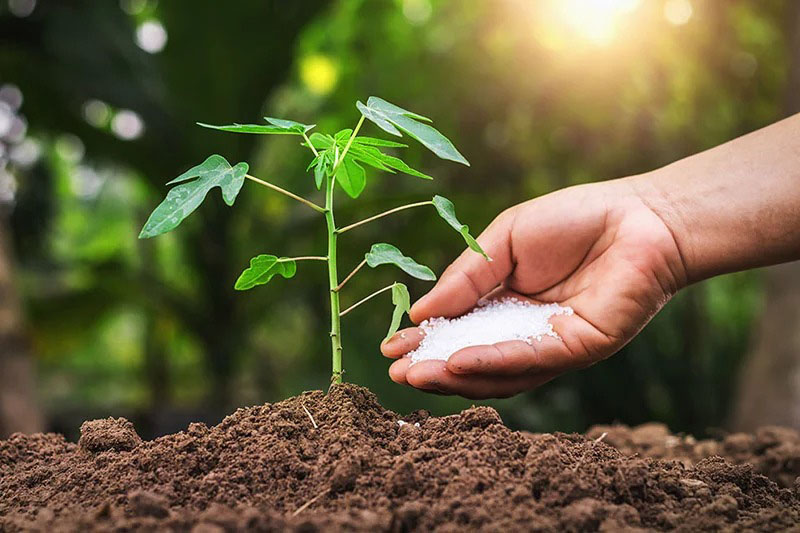
Based on the type of plant development stage (seeding, growth, flowering, fruiting) to choose fertilizer
3. Compare the similarities and differences between chemical fertilizers and organic fertilizers.
Even though it has many advantages in farming, chemical fertilizers still have differences compared to organic fertilizers. To help everyone see this advantage, the information below is a suggestion for you.
3.1 Similarities
Organic fertilizers and chemical fertilizers both have in common that they provide nutrients for plants to grow and develop. Because the ingredients of these two types of fertilizers contain trace elements that plants need.
3.2 Differences
In addition to the similarities, the above two types of fertilizers also have big differences and factors that affect plants and the environment. This review is summarized as follows:
About classifying types of feces.
- Chemical fertilizers: Includes main types of fertilizers: nitrogen fertilizer, phosphate fertilizer, potassium fertilizer, mixed fertilizer, complex fertilizer and micronutrient fertilizer.
- Organic fertilizers are divided into two main groups: Traditional fertilizers (green manure, manure, manure from sparse feed…) and industrial organic fertilizers (microbial organic fertilizers, biological organic fertilizers, mineral organic fertilizers and microbiological fertilizers).
About nutritional content.
- Chemical fertilizers: Have a fairly high nutritional ratio but are difficult to control the stability of plants.
- Organic fertilizer: Has standard nutrient ratio and stability. However, nutritional elements are not much.
About usage.
- Chemical fertilizers are often used when fertilizing. Specifically, the time when the tree flowers and bears fruit…
- Organic fertilizer: Can be used as both basic and top dressing. However, it is often used as a base fertilizer.
Solubility and effectiveness.
- Chemical fertilizers: Have the ability to dissolve quickly, are rich in nutrients and help plants grow quickly.
- Organic fertilizer: Slow-dissolving but long-lasting and very good for improving soil.
About product quality.
- Using chemical fertilizers gives the product a beautiful color but does not last long.
- With plants grown using organic fertilizer, the resulting product is not too beautiful but of good quality.
Impact on the ecosystem.
- Using chemical fertilizers will negatively impact the natural ecosystem. They kill beneficial microorganisms and seriously affect water sources and soil.
- Using compost will contribute to balancing the ecosystem and being environmentally friendly.
4. Trends and solutions to replace chemical fertilizers
Currently, according to experts at Duc Binh Microbial Products with concerns about the negative impact of chemical fertilizers on the environment and human health, alternatives to fertilizers have been formed. This is also becoming a trend for sustainable agriculture. This trend not only helps improve the quality of agricultural products but also protects the environment, enhances soil health and minimizes the consequences of excessive use of chemical compounds. Evidence is that farmers are gradually shifting their demand to organic, microbiological and biological fertilizers.
- Organic fertilizer is a natural source of nutrients that helps plants grow and is more sustainable than chemical fertilizers. Organic fertilizers improve soil fertility, increase the activity of beneficial microorganisms in the soil and help plants grow more sustainably. In addition, using organic fertilizers also reduces the risk of water pollution and chemical accumulation in the soil.
- Biofertilizers are developed from microorganisms such as nitrogen-fixing bacteria and phosphorus-solubilizing bacteria. Biofertilizers are widely used in sustainable farming and organic farming models, and are a suitable solution for increasing production efficiency without harming the environment.
- Microbiological fertilizer provides bacteria Beneficial organisms help plants grow stronger through nitrogen fixation and decomposition of indigestible nutrients in the soil. Microbial fertilizers help improve plant health naturally, without causing soil degradation like chemical fertilizers.

There is an increasing trend of using fertilizers to replace chemical fertilizers to be environmentally friendly
Chemical fertilizer is one of the important factors in promoting crop productivity. However, each farmer needs to clearly understand the techniques and how to use them to avoid causing negative impacts on the environment and health. To learn more about fertilizer products and effective farming methods, don’t forget to visit chephamvisinh.vn with a team of reputable technicians and agricultural experts always ready to advise customers.
⫸ See more: How to water phosphorus plants effectively and when is a good time to fertilize phosphorus most
⫸ See more: Phosphorus-converting microbial fertilizer is what?
Contact information
>
Address : 1B Alley 774 Kim Giang, Thanh Liet, Hanoi
Phone number: 0934.214.579
Hotline: 024.66.55.46.86
Email: chephamvisinhungdung@gmail.com
Website: https://chephamvisinh.vn


