

Microbiological media is an indispensable solution in the aquaculture and wastewater treatment industries. With the ability to provide an optimal living environment for microorganisms, this material helps increase the effectiveness of treating substances that cause pollution and protect the environment. If you are interested in microbial substrates in aquaculture but do not have specific, reliable information, please refer to the article “What is a microbial substrate? Our role and application of microbial substrates in aquaculture” to have the most cost-effective yet effective solution for aquaculture.
1. Microbial substrates and their principles of operation
Microbiological media are materials with large surfaces that are added to biological wastewater treatment systems to create a favorable environment for microorganisms to adhere, reside and develop into biofilms. In this way, the substrate helps increase the density and number of microorganisms in the treatment tank, thereby improving the efficiency of decomposing pollutants in wastewater.
Microbiological media have a special structure with a large surface area, usually made from polymers, synthetic fibers or organic materials that are inert to chemicals, ensuring long life and stability in wastewater environments. The product is designed in a porous form or with many small holes, creating capillaries to help distribute water and nutrients evenly, while increasing the adhesion and growth of microorganisms.
- Large surface area: Special design with many pores or complex structure to maximize adhesion area for microorganisms.
- High durability: Withstands mechanical and chemical impacts in wastewater treatment environments.
- Light weight: Easy to move in the reactor for mobile media.
- Diverse materials: Can be made from many different materials, commonly HDPE, PVC, or natural biological materials such as coconut fiber, biochar.
Therefore, the microbial substrate is a place for microorganisms to adhere thereby form a mucous membrane that decomposes organic matter in wastewater. The mechanism of action of the substrate is based on the principle of absorption and biological decomposition through 4 main stages:
- Adhesion: When wastewater flows through the substrate, beneficial microorganisms in the water will adhere to the surface of the substrate. Large surface area and porous structure help microorganisms easily attach and grow stably.
- Absorbing pollutants: After attaching to the substrate, microorganisms come into contact with pollutants in wastewater, they will absorb organic compounds as a source of nutrients to maintain life and development.
- Biodegradation: Microorganisms use absorbed organic substances to carry out the process of metabolism, decomposing complex substances into simpler compounds such as: water, CO₂ and other gases, not harmful to the environment.
- Cleaning water: After the pollutants have been decomposed, the content of toxic substances is significantly reduced. Treated wastewater can be reused or discharged into the natural environment, contributing to protecting water sources and reducing environmental pollution.

Microbial media has the ability to effectively clean water and create a sustainable system
2. Popular types of microbial substrates on the market
On the market today, there are many types of substrates with different designs, meeting the diverse needs of wastewater treatment of livestock farmers. Each type of substrate is designed to suit with its own system and processing conditions, to improve the efficiency of the biodegradation process. Depending on the purpose and scale of the livestock farm you choose the appropriate price.
2.1 MBBR media
Modern MBBR (Moving Bed Biofilm Reactor) microbial media is specially designed for wastewater treatment systems with continuous flow. This type of substrate is usually made from high quality PE plastic, has a small cylindrical or spherical shape with a concave surface, helping to increase the contact area and adhesion of microorganisms.
In the MBBR system, the microbial media can move freely in the tank thanks to the stirring force of the water flow or the aeration system. When moving, the substrate will repeatedly come into contact with organic substances and pollutants in the water, creating conditions for microorganisms to effectively absorb and decompose. Thanks to this ability, MBBR allows rapid treatment without the need for large tank space.
MBBR media is suitable for use in both domestic and industrial wastewater treatment systems, providing high efficiency thanks to its flexibility, durability and ability to maintain a large microbial density in a small area.

MBBR can move freely in the tank, enhancing contact between microorganisms and contaminants
2.2 Spherical microbial media
Spherical substrate with a surface containing many gaps and voids inside helps increase the contact area so that microorganisms adhere and grow. The substrate is usually made from high quality plastic or ceramic, with good bearing capacity and durability in wastewater environmental conditions. The spherical structure not only keeps microorganisms firmly attached but also helps increase the circulation of wastewater, ensuring microorganisms have enough oxygen to grow and decompose organic matter.
Spherical media are commonly used in biological filtration systems thanks to their high stability and effective treatment capabilities. This price type can is also suitable for medium to large sized treatment tanks, helping to save space and improve waste treatment efficiency.
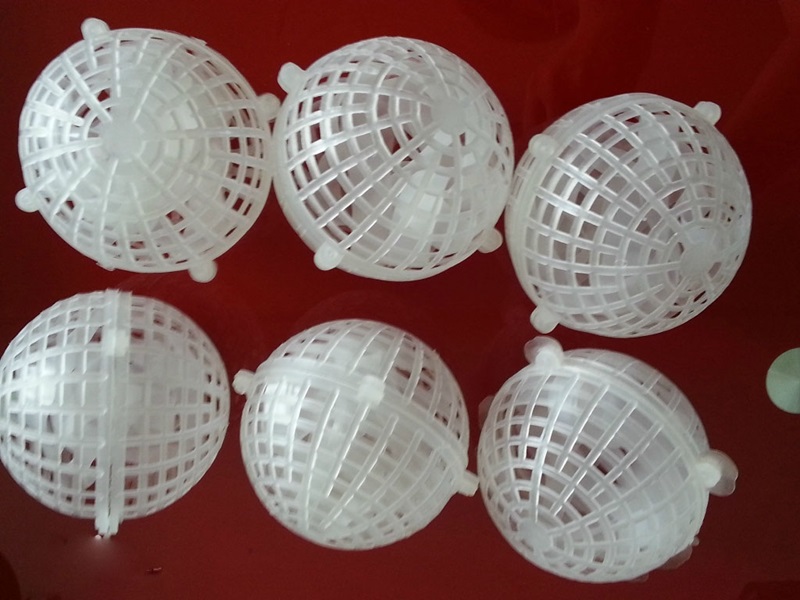
Spherical media are often used in biological filtration systems
2.3 Fiber media
Fibrotic media have a long and thin fiber structure, often made from polymers or natural fibers. With a fibrous structure, the substrate has the ability to create a dense network in the treatment tank, helping aerobic and anaerobic microorganisms maintain high density and optimize the process of decomposing organic matter. The uniform distribution of fibers also helps wastewater move easily through the tank, ensuring effective contact between microorganisms and contaminants.
This type of media is very suitable for large-flow wastewater treatment systems, thanks to the ability to improve treatment efficiency without increasing tank size. In addition, this type of media also helps reduce clogging and system maintenance, creating favorable conditions for continuous and effective wastewater treatment.
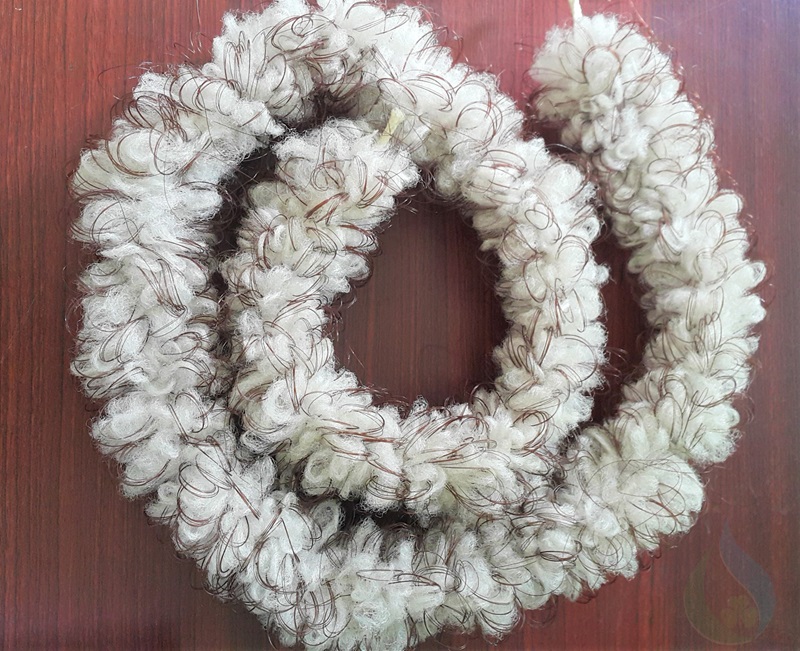
Fibre media are commonly used in high-flow wastewater treatment tanks
2.4 Honeycomb microbial media
The substrate is designed to have a honeycomb-like structure, with uniform grid cells creating many gaps and voids. The media is usually made from high quality plastic or durable ceramic, capable of withstanding harsh environmental conditions during wastewater treatment. The mesh structure helps distribute water evenly throughout the treatment tank, increasing the surface area for microorganisms to adhere to, creating conditions for wastewater to circulate effectively.
This type of substrate is very suitable for large-scale wastewater treatment systems thanks to its ability to treat effectively and save space. Honeycomb microbial media contributes to improving wastewater treatment efficiency, reducing pollution and contributing to sustainable environmental protection. The stability and durability of the substrate also ensure that the treatment process continues continuously without the need for regular maintenance or replacement.
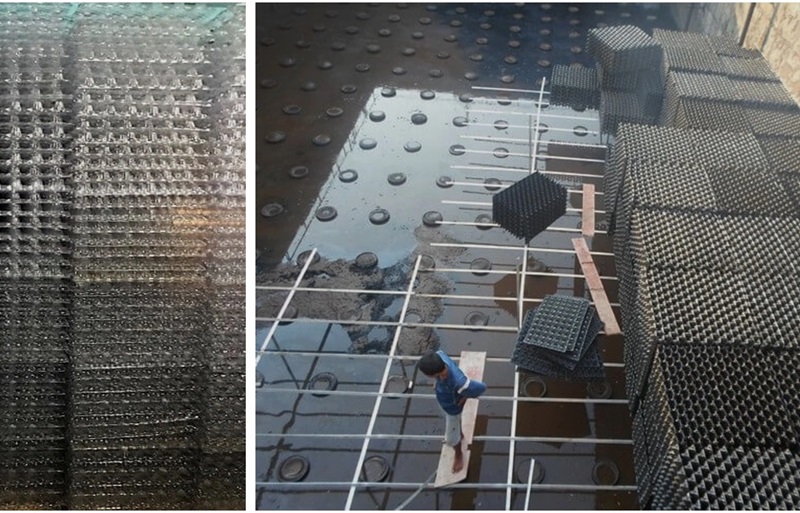
Honeycomb media suitable for large capacity wastewater treatment systems
3. The importance of microbial substrates in aquaculture
With the ability to improve water quality and promote the growth of beneficial microorganisms, growing media contribute significantly to optimizing production performance and protecting water resources. The outstanding benefits below show that substrate is the key to opening a future of sustainable development for the aquaculture industry.
- Improving water quality: Thanks to the operating principle of the substrate, toxic substances are converted into non-harmful compounds, thereby maintaining a clean and safe water environment for cultured organisms.
- Decomposition of bottom organic matter, pond water treatment: Microorganisms attached to the substrate will decompose leftover food and waste shrimp, fish and other organic matter in the pond, helping to clean the bottom and pond water.
- Reducing toxic gases: Vi Organisms on the substrate have the ability to convert toxic gases such as ammonia and nitrite into smaller substances. more toxic, helping to stabilize the water environment and reduce stress for aquatic animals.
- Stabilize pH and water color: Microbial activity helps maintain biological balance in water. pond, thereby stabilizing the pH and water color, creating the best living environment for aquatic animals.
- Enhancing the growth of beneficial microorganisms: Microbial substrate provides an ideal living environment for beneficial microorganisms such as bacteria, fungi and algae. These microorganisms not only help decompose waste but also play an important role in providing nutrients to farmed organisms, promoting their growth and development.
- Creates conditions for the formation of a stable ecosystem: The use of microbial media helps establish and maintain a natural ecosystem in ponds or aquariums. Microorganisms living on the substrate will compete with pathogens, minimizing the risk of infection for cultured organisms and improving their overall health.
- Supporting shrimp farming technology using Biofloc: Microbiological substrates promote the formation of biofloc particles. These particles not only treat waste but also become a natural food source rich in protein for aquatic animals, helping to save food costs.
- Increasing shrimp farming density: Thanks to the ability to effectively treat waste, the use of microbial media allows farmers to increase farming density, from That increases productivity.

Microbiological substrates support sustainable development in aquaculture
4. Important notes when using microbial substrates in aquaculture
The use of microbial substrates plays an important role in wastewater treatment, creating a favorable environment for aquatic products to grow, contributing to environmental protection. However, for this system to operate effectively and sustainably, people need to pay attention to the following issues:
4.1 About substrate density
We must use substrate with moderate density, in accordance with the manufacturer’s recommendations. People should not use a substrate that is too thick because it will limit the space to move between the substrate particles, reducing the possibility of contact between microorganisms and contaminants. On the contrary, too sparse a density will reduce the surface contact area. This also affects the ability of microorganisms to absorb pollutants.
According to analysis by long-time aquaculture experts, the current ideal substrate density is 25 to 50% of tank volume. That density ensures the substrate can move freely in the tank or pond so microorganisms can adhere easily and have a stable growth environment.
If the microbial substrate exceeds 67% of the tank volume, it will hinder their movement, so the ability to stir the surface and provide oxygen to ponds and tanks will be limited, affecting biological processes.
4.2 Substrate quality
This is a particularly important factor that people must pay attention to when using substrate. A good substrate has the ability to provide a large surface area for microorganisms to adhere safely, creating favorable conditions for the growth and development of microorganisms. Currently on the market there are many different types of substrates. If classified by material, there will be: HDPE plastic substrate, PP plastic substrate, ceramic substrate. In which:
- HDPE plastic media is light, durable, and reasonably priced.
- PP media is more heat resistant, suitable for harsh environments.
- The substrate has very high durability, good temperature and chemical resistance, but the price is always high.
4.3 About the operating process
During the process of using and operating biological substrates, people need to pay attention to providing enough oxygen for microorganisms to breathe by using air blowers. On the other hand, we need to pay attention to adjusting the pH. Ideally, you should maintain the pH between 6.5 and 8.5.
In parallel with the above two issues, in order for the substrate to operate effectively, we must control the temperature of the water environment and the substrate. If the temperature is too low or too high, it affects the activity of microorganisms. Furthermore, tanks, ponds, and pipeline systems need to be cleaned properly and regularly to avoid blockages and ensure the system operates smoothly and effectively.
4.4 About the time to form biological mesh
When the substrate is put into a tank or pond for about 25 to 30 days, a dense biofilm will form on the surface. During the above period, farmers must ensure operating parameters to create a stable environment for microorganisms to grow. Note, the operation process must be continuous, not interrupted because it will cause microorganisms to die.
4.5 About inspection and maintenance
If you want the microbial substrate to operate effectively and be durable, you need to check it regularly and maintain it periodically. If the substrate shows signs of damage: Broken or worn, people should replace the substrate with a new one so as not to interrupt the activity of microorganisms.
The application of microbial substrates in aquaculture and wastewater treatment not only helps optimize the growth process of microorganisms but also improves the efficiency of treating pollutants, contributing to environmental protection and human health protection. If you want to learn more about substrates as well as other biological products supporting agriculture don’t hesitate contact German Microbial Products Average for the best options.
⫸ See more: Aquaculture in our country today: Challenges & Future development direction
⫸ See more: What is Em biological product? Benefits, uses and most detailed preparation methods
⫸ See more: 6 effective measures to treat shrimp pond water to prevent pollution fruit
Contact information
>
Address : 1B Alley 774 Kim Giang, Thanh Liet, Hanoi
Phone number: 0934.214.579
Hotline: 024.66.55.46.86
Buy/Zalo: 0934.214.579
Email: chephamvisinhungdung@gmail.com
Website: https://chephamvisinh.vn


