
Composting coconut fiber to plant trees means using by-products from coconut processing to make tree planting material. With the weight of the coconut, the coconut fiber will be about 30% rare and after peeling, we get coco peat. This is an effective material used to fertilize soilfavored by many people. Let’s go togetherMicrobial product Duc BinhLearn more details through the article:What effects does coconut fiber have?How to compost coconut fiber to grow treesokay!

Let’s learn about composting coconut fiber to grow trees
1. What is composting coconut fiber for growing trees?
Composting coconut fiber to plant treesBringing clean raw materials to use as soil to fertilize plants or as planting material on farms. Through the peeling process, we will obtain coco peat – a good raw materialforplant growth.
This is a fast and effective method of harvesting coco peat at home so that agricultural farmers can improve production efficiency without costly costs. Coconut fiberhelpIncreases fertility for crops, creating more ventilation for plant roots to grow. Coco peat acts as a buffer zone for plants, increasing productivity and heat resistance for plant roots in hot weather.
Coco peat also helps make the soil more porous like microbial organic fertilizer. They are not harmful and are very safe for plant soil. Through the process of obtaining coco peat, they are used as planting beds for most plants such as hydroponic vegetables, flowers, mushrooms or sprouts.
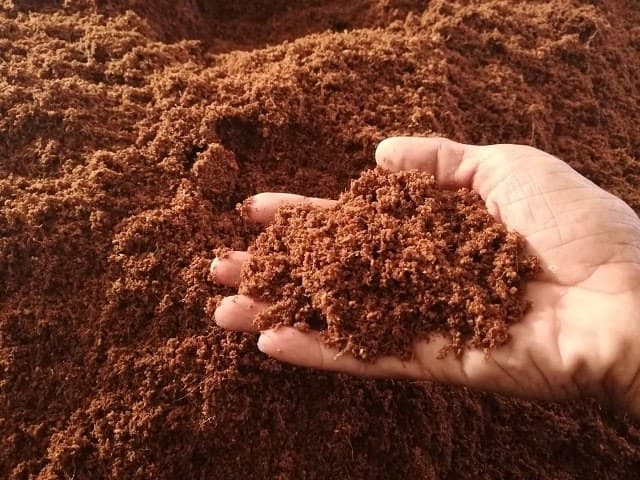
Effects of coconut fiber
On farms with large areas and livestock modelsbig peopleAlso use coir peat for lining or bedding to limit the stench emitted from animal feces. Types of bacteria and pathogensthereby minimizing and contributingIncrease productivity and quality of livestock.
After harvesting the livestock for sale, the bedding can still be used to make coconut fiber, fertilizer or plant planting material, providing high nutrition as well as safety for plant growth. It is because of the above reasonscomposting coconut fiber to plant treesis a popular form, used at home for livestock or farming.
2. Why is it necessary to process coconut fiber?
Before composting coconut fiber to plant trees, we need to process coconut fiber, the reason is because the effect of coconut fiber is Tannin and Lignin, these are two substances that hinder plant growth. Specifically, they will absorb nutrients and air from plants. These two substances are also difficult to decompose. Lignin only dissolves in alkali, causing plants to become poisoned and stunted. If the coconut fiber is not treated, the tree may die.
To process coconut fiber, we need to rely on the properties of these two substances. Tannins have a salty taste and are soluble in water, causing proteins to precipitate. Lignin is insoluble in water, solvents or even acids. However, they can be degraded or saturated to some extent by alkalis.In approxIt takes 12 hours of treatment for Lignin to be completely removed.
The coconut fiber processing process also needs to be repeated, this will help ensure that the two bad substances mentioned above will be completely removed. If treatment is not performed, even if coconut fiber is composted, it cannot create an environment for plants to grow. On the contrary, that environment will only make the plant’s condition worse.
Watch now: How to compost straw and leaves to quickly decomposemake organic fertilizer
3. How to properly handle coconut fiber
Before composting coconut fiber to plant trees, we need to process coconut fiberto eliminateGet rid of bad substances.There are many different methods to handle it, but in this article we focus on understanding itabout the method of removing tannin and lignin.
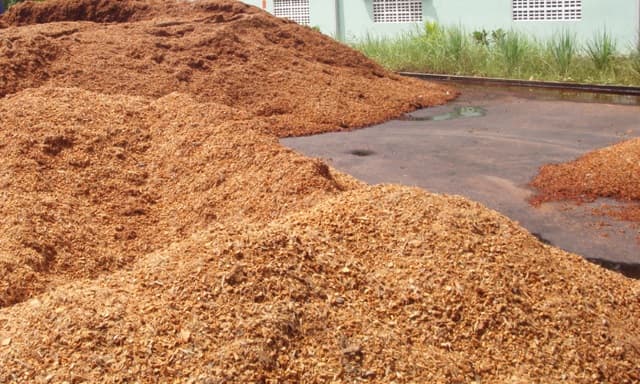
Coconut fiber needs to be treated before composting
Step 1: Create coconut fiber pimples
To be able to process raw coconut fiber and form coir pimplesrelativesNeed a machine to chop coconut fiber. For those who specialize in composting coconut fiber, a chopping machine is an indispensable device. At this time, the raw coconut fibers will be separated and chopped. During the process of shredding coconut fiber, some additives can also be added such as bagasse, corn stalks, etc. Using the machine helps save effort and time.
Step 2: Separate tannin
We will have to soak the coconut fiber in a barrel of water for about 2-3 days, then pour out the water and see that the coconut peat is red and the water is dark. Although it is very soluble in water, to be sure to remove tannin, you should repeat this step 2-3 times.
Step 3: Separate Lignin
If you want to separate Lignin quickly, you should use lime. Pour lime into a bucket of clean water, then add coco peat processed in step 2 to stir with a stick. Soak the coco peat in lime water for about 7 weeks and the Lignin will completely dissolve into the water. At this point, you just need to treat it all with clean water.
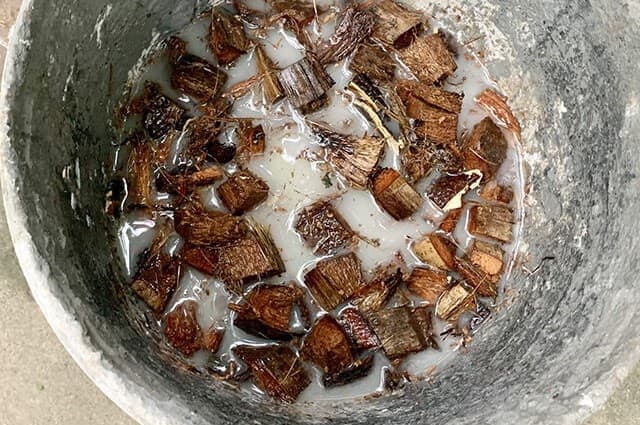
Lime can be used to separate Lignin faster
In addition, if you want to ensure all Lignin and lime are removed, you should soak it in clean water for about 1 day, then repeat 3-5 times to remove more lime and Lignin. Once the toxic substances have been removed, take the coco peat out and squeeze it as dry as possible.
After processing, coco peat can be used for composting. At this time, Tannin and Lignin have been completely removed, creating the most ideal environment for plants to grow.
4. How to compost coconut fiber to grow plants
Currently there are 2 wayscomposting coconut fiber to plant treesThe most common is conventional incubation or trichoderma incubation. Let’s learn about both of these methods to choose accordingly.
4.1 Conventional incubation
Tocomposting coconut fiber to plant treesAccording to the usual method, you will have to prepare some specific tools and ingredients. The tools are all agricultural tools, and the ingredients are coconut fiber, fertilizer, lime and biological products.
Preparation tools
- Scale: used to weigh ingredients to calculate the appropriate ratio.
- Compost tarpaulin: used for composting outdoors, covering the compost pile to avoid some outside influences.
- Shovel: used to mix or beat ingredients to help them mix evenly.
- Watering box: used to water the compost pile with water or some biological products. You should use a watering container with good water control such as a reaming container.
- Empty area: this will be the place used to compost coconut fiber without affecting family activities or life. The composting area should also not have stagnant water, be high or have a high mound of soil in the middle, and be gentle around it to increase drainage.
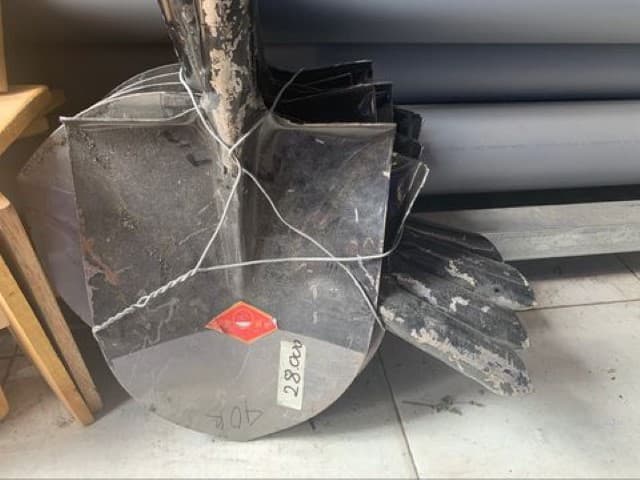
Prepare some agricultural tools to compost coconut fiber
Prepared ingredients
The raw material ratios below will apply to 1 ton of coconut fiber.
- Coir peat: 1 ton.
- NPK fertilizer: 6kg.
- Lime powder: 10kg.
- Super phosphorus: 30kg.
- Composting product EMZEO: 5 packages of 200gr
- Clean water: 200 liters.
How to proceed
This method of composting coconut fiber for planting trees takes a lot of time.In return, peoplewill save maximum costs.
- Step 1: you need to use prepared coco peat, NPK fertilizer, lime powder and super phosphate to mix together. The proportions have been calculated in the prepared ingredients section.
- Step 2: After mixing well, spread and spread the mixture out, trying to keep the thickness of the mixture about 20-30cm.
- Step 3: mix 5 packetspreparation EMZEOalong with 200 liters of water. This will be a mixture that causes organic matter to decompose faster, speeding up the composting time of coconut fiber. This product is very commonly used instead of chemicals in agriculture. This product can also be used instead of chemical fertilizers or as a plant protection drug.
- Step 4: Use the prepared mixture to water the coconut husk compost mixture so that the humidity reaches about 60%. You can check by picking up a handful of the mixture and squeezing it tightly. If there is water seeping through your fingers, the humidity is appropriate. After watering the inoculant until the compost pile is over 1m high, cover it with a tarpaulin.
- Step 5: microorganisms will decompose after about 4-5 days of incubation, at which time the mixture inside will heat up to about 60 degrees. If you compost in the summer, you should check and water to reduce the temperature. This helps keep the proteins in the mixture without causing microorganisms to die. During the first 10 days, the mixture temperature will increase quite quickly.
- Step 6: after about 7 weeks of incubation of the mixture,you needStir them to add water and maintain moisture. Repeat this process for about 1 month, then about 10-20 days until the compost mixture is completed.
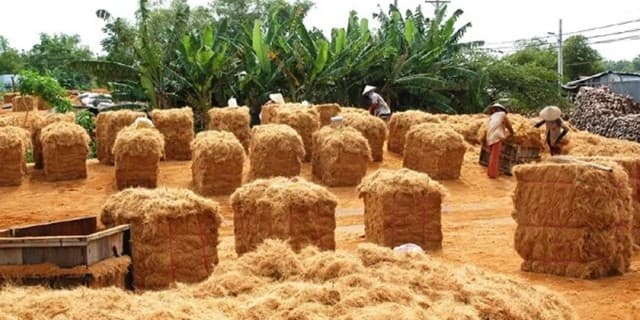
Composting conventional coconut fiber is a popular method.
4.2 Incubation with trichoderma
This is also a method tocomposting coconut fiber to plant treesvery simple, but you will need to buy trichoderma mushrooms at a price that is not cheap at all.
- Step 1: Use processed coconut peat to mix with trichoderma mushrooms purchased in quantity: 2 packstrichoderma bacillusDuc Binh 200gr + 2 packs of EMZEO composting product 200gr composting treatment for 1 ton of coconut fiber. Water with clean water to reach 55% incubation humidity.
- Step 2: mix the mixture well to ensure it is porous, then cover with the prepared canvas.
- Step 4: regularly check the mixture every 3 days, repeating for about 3 weeks.
- Step 5: When the coconut fiber pimples are dark brown, it means the mixture is ready to use.

How to compost coconut fiber with trichoderma fungus to quickly decompose and fertilize plants effectively
With incubation methodtrichoderma,Incubation time will be shortened, it only takes about 20 days. However, this method requires people to buy quality trichoderma mushrooms at a quite high price. So,in households and small farms, this method has not been widely used.
5. Answer questions related to the effects of coconut fiber
Not everyone understands the uses and uses of coconut fiber. Besides advantages, this material also has many disadvantages that need to be overcome. Therefore, if people want to use coconut fiber for plants, they need to know:
How does coconut fiber affect plants?
- Retains moisture well, helping plants grow stably: The plus point of coconut fiber is that it dries quickly and retains moisture for a long time. Therefore, when fertilizing plants, it helps the soil retain water, avoiding drought, especially in the summer. For plants that need a lot of moisture, using coconut fiber is the optimal choice, helping plants grow stably and avoid wilting due to lack of water.
- In addition to the ability to retain water and keep warm, coconut fiber has high breathability. It helps water drain away quickly, effectively solving the problem of waterlogging in the rainy season. Thanks to that, the tree will not have root rot even if it rains frequently.
- Coconut fiber also helps roots grow strongly thanks to loose soil, so tree roots can penetrate the soil without any difficulty. Mixing coconut fiber with soil will help keep the soil loose, minimizing soil compaction, which reduces the ability to exchange gases.
- In addition, coconut fiber has many natural organic substances. This is a great environment for beneficial microorganisms to function. Thanks to these microbial strains, plants can absorb nutrients more easily.
Similarities and differences between coconut fiber and soil
In terms of similarities, coconut fiber as well as soil are both environments to retain moisture and support plant growth and development. That is the necessary space for plant roots to absorb nutrients, ensuring ventilation for plants to grow stably.
The difference between coconut fiber and soil is that: Coconut fiber is light, porous, and drains faster than soil. On the contrary, planting soil contains more nutrients but the soil is compacted and not loose. Therefore, combining these two factors together, people will have an ideal growing environment.
What are the disadvantages of coconut fiber?
In addition to its advantages, coconut fiber still has some disadvantages that require people to thoroughly handle it before use. Specifically, we must remove stubborn tannins and lignin that harm plants. Processing these two substances is not easy, requiring both time and technique.
Another thing, coconut fiber is not as nutritious as soil, so if used alone, it will not provide enough nutrients for plants to grow. Therefore, people must combine coconut fiber with appropriate fertilizers.
How much does coconut fiber sell for?
Currently grown coconut fiber comes in many forms: Coconut fiber powder, coconut fiber tablets, pressed coconut fiber cake. Product prices range from 50,000 VND to 150,000 VND/bag depending on weight, product quality and supply brand. People need to note that if coconut fiber has been processed, the selling price will be higher.
Composting coconut fiber to plant treesThis is a method that has a very good effect on coconut fiber with plants, for agricultural people. This method will help plants have a pest-free environment to grow and achieve high performance. Wishing you success.
Contact information
Duc Binh Biotechnology Co., Ltd
Tax code: 0108433217
Address: 57 Lane 64 Kim Giang, Khuong Dinh, Hanoi
Phone number: 024.66.55.46.86
Transaction office
Microbial products Duc Binh – Center for research and application of biological productsspecializes in research, production and application of product lines: Probiotics, septic tank enzymes, wastewater treatment enzymes, aquatic enzymes, biological products…
Address:1B Alley 774 Kim Giang, Thanh Liet, Hanoi
Phone number: 0934.214.579
Hotline: 024.66.55.46.86
Email:chephamvisanhungdung@gmail.com
Website:https://chephamvisinh.vn
Learn more: Vermicompost: Uses, how to make & Use effectively to fertilize plants
⫸ See more:What is organic mulch? Structure, role and usage of organic humusin agriculture
⫸ See more:Instructions How to treat soil before growing vegetables clean
⫸ See more:Detailed instructionsHow to compost rice husks and peanut shells to quickly rot
⫸ See more:How to compost green manureUse plant fertilizer


