Safe and effective wastewater treatment is always a hot issue attracts the attention of everyone. Especially with industrial production or business models following the garden – pond – barn model , this is more urgent. Faced with that need, biotechnology in wastewater treatment has become the top choice because it brings great efficiency. great, reducing the negative impact of wastewater on the ecosystem.
1. What is biotechnology in wastewater treatment?
Biotechnology in wastewater treatment is a method of using living organisms such as microorganisms, algae or plants to decompose or remove pollutants in wastewater. This is a sustainable and environmentally friendly solution, replacing traditional treatment methods with toxic chemicals or complex, expensive physical processes.
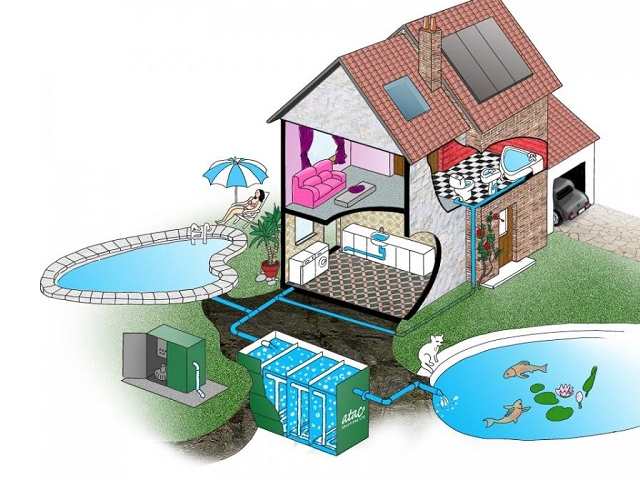
Biotechnology in wastewater treatment is trusted by many people
Microorganisms play an important role in this wastewater treatment method. They have the ability to decompose complex organic compounds into simpler compounds. Specifically, aerobic microorganisms use oxygen to decompose organic substances, while anaerobic microorganisms decompose these substances without oxygen.
2. Evaluate the advantages and disadvantages of biological wastewater treatment methods
Wastewater treatment using biotechnology is highly appreciated, but it is not without disadvantages. Before applying this solution, people should clearly understand its advantages and disadvantages to choose and apply with the most peace of mind:
2.1 Advantages
Compared to traditional wastewater treatment methods, biotechnology brings many outstanding benefits such as:
- Environmentally friendly: Does not use toxic chemicals, does not create secondary waste that causes pollution. Instead, one can take advantage of the life of microorganisms to naturally and effectively treat wastewater. This helps minimize negative impacts on ecology and water ecosystems.
- High efficiency: Biotechnology is capable of treating wastewater with high efficiency, especially with difficult-to-decompose organic substances.
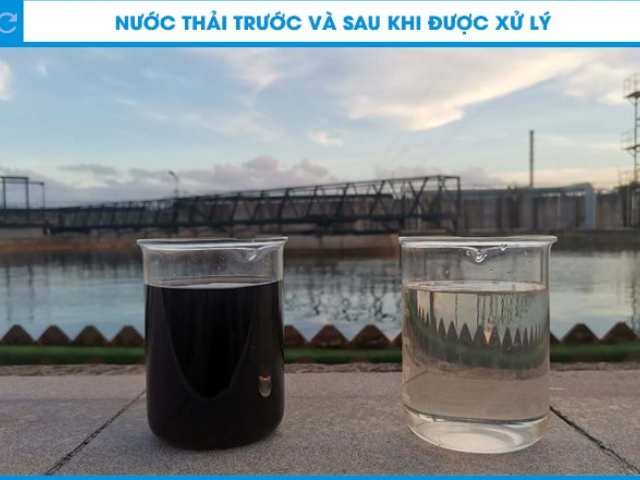
Biological method of wastewater treatment bring high efficiency
- Operating cost savings: Biological methods typically have lower operating costs than other methods thanks to the reuse and biorecycling of treatment agents. This helps save initial investment costs and maintenance costs, suitable for businesses and organizations with limited resources.
- Ability to treat a variety of waste sources: Biotechnology can be applied to many different types of wastewater, from domestic wastewater to industrial wastewater, with high efficiency in many treatment scales.
- Reduce sludge: Compared to chemical or mechanical methods, biotechnology produces less sludge, reducing the cost and effort of sludge treatment.
2.2 Disadvantages
In addition to the outstanding advantages mentioned above, this technology is also inevitable certain limitations such as:
- Time-consuming treatment: Biological treatment processes, especially anaerobic methods, often take place more slowly than chemical or physical methods, because it takes time for microorganisms to grow and decompose pollutants.
- Strict environmental control requirements: Microorganisms involved in wastewater treatment require stable environmental conditions (temperature, pH, oxygen concentration, nutrients) to function effectively. If not properly controlled, processing efficiency may decrease or the process may be interrupted.
- High initial investment costs: Some modern biological wastewater treatment systems, such as microbial membrane filtration (MBR) technology, require high installation and operating costs. Besides, maintaining the filter system is also quite expensive because the membrane is easily clogged.
- Effectiveness depends on the quality of input wastewater: Biotechnology works well with wastewater with moderate organic matter content. If wastewater contains many toxic substances and chemicals, microorganisms will be destroyed, leading to ineffective treatment as desired.
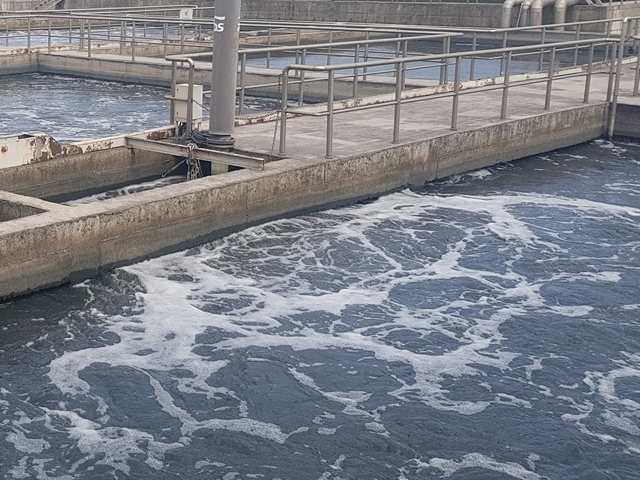
The wastewater treatment process is quite time consuming
3. Suggestions for wastewater treatment methods using biotechnology
Biotechnology in wastewater treatment mainly uses microorganisms to decompose pollutants in wastewater, transforming them into less toxic forms. Below are the most popular methods you can refer to and apply:
3.1 Biological aerobic treatment method
Aerobic treatment method is a method that uses aerobic microorganisms. These are microorganisms that need oxygen to live and decompose organic matter in wastewater.
Accordingly, aerobic bacteria will decompose organic compounds in wastewater, creating CO₂, water and a small amount of microbial sludge. Wastewater will be continuously aerated in the tank to provide oxygen for bacteria and create conditions for them to grow and function best.
Aerobic methods are often applied in aeration tank systems or biological filter tanks. After the treatment process is completed, the wastewater will be separated from the microbial sludge. At this point, you can reuse treated wastewater or release it into the environment without causing any negative effects.
⫸ See more: What are microbial products for wastewater treatment? How to use it?
3.2 Biological anaerobic treatment method
In contrast to the aerobic method, the anaerobic method of wastewater treatment uses anaerobic microorganisms, which means they do not require oxygen but still function and grow well. This is considered biotechnology in wastewater treatment with the most effective energy saving. They even help produce renewable energy, methane.
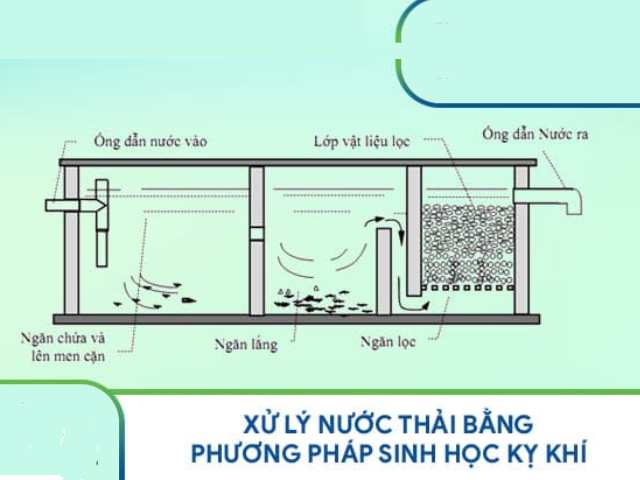
Anaerobic treatment method biology
Regarding the mechanism of action, anaerobic bacteria decompose complex organic compounds into intermediate products such as fatty acids, hydrogen and CO₂. Another group of bacteria then continues to break down these compounds into methane and CO₂. Finally, the methane produced will be reused in other production activities.
To treat wastewater with this method, people will lead wastewater into anaerobic tanks. This process takes from a few days to a few weeks, depending on environmental conditions and wastewater type.
⫸ See more: What is septic tank treatment yeast? How to use septic tank yeast effectively
3.3 Activated sludge treatment method
Activated sludge method is an aerobic biological wastewater treatment solution, using a mixture of microorganisms (called activated sludge) to treat wastewater. This is a common method in domestic and industrial wastewater treatment.
Accordingly, wastewater is put into an aeration tank, where microorganisms in activated sludge decompose organic substances in the wastewater. This decomposition process takes place quickly thanks to the continuous supply of oxygen in the aeration tank.
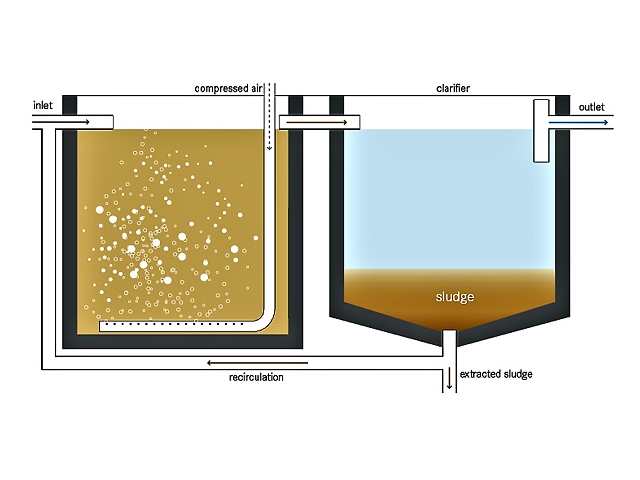
Activated sludge treatment method – Microbial sludge in wastewater treatment
After treatment, activated sludge (including bacteria and decomposed organic matter) will settle to the bottom of the tank and clear water will be separated for further treatment or discharged into the environment. Meanwhile, activated sludge is collected and reused in the system, or can be further processed to make fertilizer or produce energy.
⫸ See more: What is microbial sludge? The role of microbial sludge in wastewater treatment
4. Necessary conditions for applying biological wastewater treatment technology
People need to understand that, not always, under any conditions, the application of biotechnology in wastewater treatment is highly effective. To achieve the desired results, the following standards must be met:
- Wastewater must be free of dangerous toxic substances that cause microorganisms to die or be inhibited during operation.
- If wastewater contains heavy metal salts, it will also reduce the activity capacity of microorganisms. Therefore, the decomposition and screening time takes a long time, and the effect is not as expected
- On the other hand, when treating wastewater with biological technology, you need to pay attention to BOD content and COD content. The allowable content of these two parameters is 0.5 ≤ BOD/COD ≤ 2. If BOD or COD both exceed the allowed threshold, the treatment process may fail. In case COD is many times greater than BOD, farmers should switch to anaerobic biological treatment.
5. Principles for selecting wastewater treatment technology
Currently, there are many different wastewater treatment technologies for people, businesses, and industrial parks to choose from. If you are wondering which treatment technology to choose is appropriate and economical, please note the following issues:
- Clearly determine financial potential: In other words, we must choose wastewater treatment technology that suits the investment budget. That helps reduce costs while still ensuring operational efficiency.
- Understand processing time: Depending on your needs and level of necessity, you must consider the time factor when choosing processing technology. In particular, companies and enterprises that produce on a large scale and operate continuously need to apply wastewater treatment technology quickly and without interruption.
- Understand the operating process: Understanding the operating principles of the treatment system will help us properly evaluate the effectiveness and applicability of each technology.
- Consider system lifespan: This is also an important factor you need to consider when choosing wastewater treatment technology. Priority is given to choosing a treatment system that is durable, sturdy, has few failures, and requires little maintenance. That will help the system operate stably and long-term, so the production process will not be interrupted.
Biotechnology in wastewater treatment is increasingly diverse and meets the needs of a large number of households, production and business units, and industrial parks. For more detailed advice on how to apply the methods above, readers can contact Duc Binh Microbial Products according to the information below:
Contact information
>
Address : 1B Alley 774 Kim Giang, Thanh Liet, Hanoi
Phone number: 0934.214.579
Email: chephamvisinhungdung@gmail.com
Website: https://chephamvisinh.vn
>
>