
Among the types of fertilizers commonly used for agricultural cultivation, manure is a readily available source so the cost is cheap. Besides, manure is also quite diverse, but not all types are good. On the contrary, if people do not know how to use it properly, they can poison themselves, causing harm to plants. Therefore, do not miss the important general knowledge about what is manure and the best types below.
1. Explain what is manure?
Manure is classified as organic fertilizer. They are a readily available source that comes from the waste of household or farm animals. These wastes include urine, solid feces, and even leftover food from livestock and poultry. To be more specific, this is exactly what remains after the process of domestic animals absorbing and digesting food.
In addition, livestock owners also mix straw, grass, stubble or other plants into the manure. They are added when the owner wants to make bedding at the same time to help the manure decompose quickly and reduce odors.
In short, what is manure? It is an organic fertilizer used in agricultural cultivation originating from animal waste and other types of agricultural waste (by-products). People also use biological products to compost manure to quickly decompose as well as increase nutrients and avoid harm to the environment.

What is manure?
2. What types of manure are best?
As mentioned above, manure is quite diverse in types. They are classified based on the animal’s own waste. For example, cow manure comes from cows, buffalo manure comes from buffaloes, etc. Each type of manure will have different nutritional composition and characteristics, so it is suitable for fertilizing different types of crops. To use it effectively, people need to understand the composition and nutritional content of the types of manure below.
2.1. Cow manure – Characteristics and nutritional content
Duc Binh microbial products can confirm that this is also the source of organic fertilizer used The most widely used of all manures. Because cows are livestock raised in large numbers not only in many localities of our country but also in many countries around the world. Cows are also raised for many different purposes such as pulling power, plowing, meat, especially milk.

Cow manure is the most widely used of all manures
The source of nutrients that cow manure brings is also very large and necessary for plants to grow and develop healthily. This type of fertilizer when used in agricultural cultivation is mainly dry fertilizer, the nutrient content is as follows:
- Nitrogen (protein): 1.2
- Phosphorus (phosphorus): 2.4
- Potassium: 2.1
- Magnesium: 0.1 – 0.2
- Calcium: 0.2 – 0.4
- Iron: 100–200 ppm
- Copper: 5–10 ppm
- Zinc: 10–20 ppm
- Manganese: 20–40 ppm
When using cow manure, people should note that this type is most effective and suitable as a base fertilizer, but must be applied in moderate amounts. When using top dressing, apply around the base and cover.
2.2. Chicken manure – Characteristics and nutritional content
In the best types of manure then ranked second is chicken manure. Chickens are raised for meat and eggs in many families and farms, so the amount of manure used for farming is also quite large. The specific nutritional content of chicken manure is as follows:
- Nitrogen (protein): 1.6 – 2.0
- Potassium: 2.0
- Phosphorus – Phosphorus: 1.8
- Calcium: 0.5 – 0.8
- Copper: 20 –40 ppm
- Magnesium: 0.3 – 0.5
- Zinc: 40– 80 ppm
- Manganese: 80– 160 ppm
- Iron: 400– 800 ppm

Chicken manure has the highest potassium content and is rich in protein
Chicken manure is especially suitable for fertilizing all types of plants in different stages of development, helping to balance the pH of acidic soil. However, due to the high potassium content, it is necessary to compost before fertilizing to avoid poisoning the plants as well as the risk of bacterial and fungal diseases.
2.3. Pig manure – Characteristics and nutrient content
Along with chicken manure and cow manure, pig manure is also commonly used in agricultural cultivation. The ingredients of nutrients are as follows:
- Nitrogen: 2.2
- Phosphorus – Phosphorus: 2.1
- Potassium: 1.0
- Manganese: 40 –80 ppm
- Copper: 10 –20 ppm
- Zinc: 20– 40 ppm
- Iron: 200 – 400ppm
- Calcium: 0.3 – 0.5
- Magnesium: 0.2 – 0.3

Pig manure is suitable for fertilizing flowering fruit trees
Manure from pigs or pigs compared to chicken manure has an average nutritional content but is very suitable for fertilizing and caring for fruit crops. Especially during the flowering stage. Pig manure can be used in liquid form to water plants or in solid, composted form. But according to experts, it is better to use dry fertilizer that has been fermented with biological products. This not only helps protect the environment but also prevents poisoning and fungal diseases that damage plants.
2.4. Vermicompost – Characteristics and nutrient content
Among the types of manure , the definition of vermicompost is still quite new. It is waste created from earthworms. People will let these worms use goat manure, cow manure or other organic waste as food and create this special type of manure.
Vermicompost is an organic fertilizer that is highly appreciated for its microbiology and nutrients. The microflora inside is very rich, helping to balance the Ph level and supplement humic acid, as well as baby worm cocoons. Thanks to that, the land is always fertile, avoiding degradation due to long-term cultivation.
Vermicompost manure is suitable for all types of plants, with N – P – K content of N: 0.9 – P: 1.15 – K: 0.2
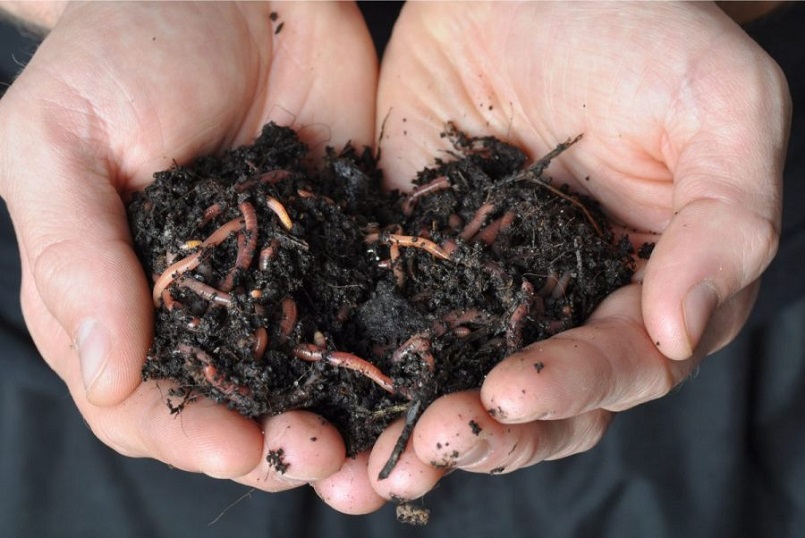
Vermicompost Cinnamon helps supplement Humic acid
2.5. Goat manure – characteristics and nutrient content
Along with the best manures mentioned above, goat manure also has high nutritional content. In particular, goat manure has a mild odor and does not cause discomfort to people around. The content of specific nutrients is as follows:
- Nitro: 1.2 – 1.6
- Phosphorus: 0.8 – 1.2
- Potassium: 0.6 – 1.0
- Magnesium: 0.2 – 0.4
- Calcium: 0.4 – 0.6
- Iron: 300–600 ppm
- Zinc: 30–60 ppm
- Manganese: 60– 120 ppm
- Copper: 15– 30 ppm
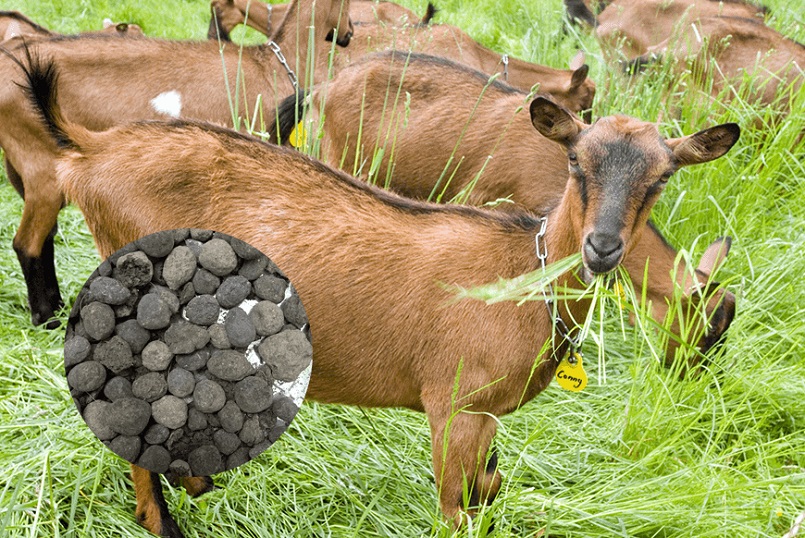
Goat manure causes less unpleasant odor bear
Instructions on how to quickly decompose manure
The common characteristic of fresh manure is that it has a strong odor and can even carry many bacteria, fungi and worms. Therefore, composting with probiotics and biological products is the leading solution to overcome the above situation.
How to compost What is manure, how to compost it? Please follow the instructions below:
– Ingredients to prepare: Clean water + 1 ton of fresh manure such as buffalo manure, chicken manure or optional pig manure + 20kg of phosphate fertilizer + 6kg of rice bran + 1 pack of Trichoderma Bacillus product – Duc Binh 200gr + 1 pack of EMZEO deodorizing product 200gr.
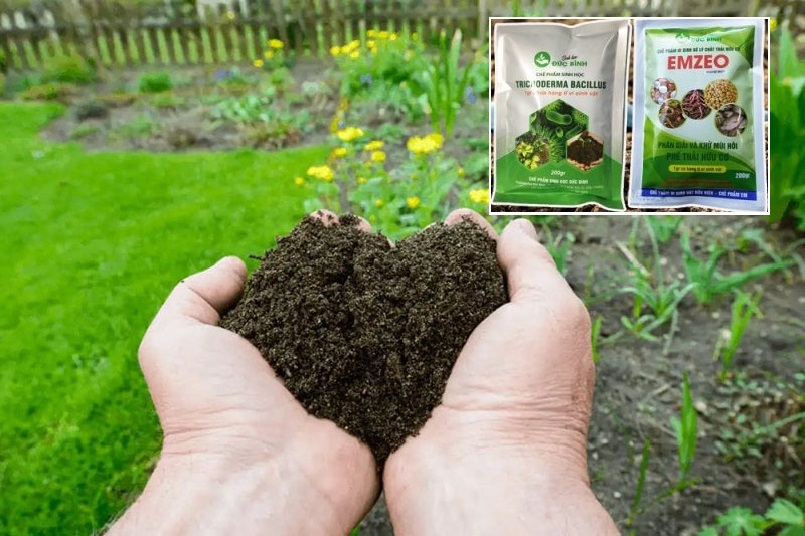
Manure should be composted before fertilizing plants
– Steps to compost:
- Step 1: Prepare a bare area of land and spread a layer of fertilizer on it about 10 centimeters thick. Then, sprinkle 1 packet of Trichoderma Bacillus preparation and mix well.
- Step 2: Sprinkle 6kg of rice bran on the surface of the mixed compost. Water to ensure compost moisture reaches 50 – 55%. Pick up some feces and see water leaking from between your fingers, this proves that the humidity has met standards. Stack the compost to a height of about 1.6 meters and a width of about 1.8 – 2.2 meters.
- Step 3: Compost for 30 – 35 days, remember to cover the compost pile with a tarpaulin. Regularly check, if there is a smell, use EMZEO product + 1kg of rice bran sprinkled on the surface to remove.
- Step 4: During the first 3 – 5 days, remember to water more or regularly open the canvas if the compost temperature increases, 70 degrees Celsius.
The above are shares to help people better understand what manure is, as well as which type of manure is best. In particular, we hope that knowledge of how to properly compost manure will help eliminate disease-causing fungi and bacteria inside so people can use it more effectively.
⫸ See more: What is phosphate fertilizer? How many types are there? Instructions on how to fertilize effectively
⫸ See more: Is planting a snake plant in front of the house good? no?


