
In fact, if you want plants to grow and develop healthily, you cannot not use fertilizers. In particular, phosphate fertilizer is a particularly important fertilizer line that many people choose. However, over- or under-fertilization of phosphate fertilizer is harmful to the plant. So what is phosphate? How many types are there? Let’s Duc Binh microbial products learn to use them effectively, economically and productively!
1. What is the role of phosphate fertilizer?
Phosphorus fertilizer is simply understood as a form of inorganic fertilizer, providing phosphorus – a common and necessary nutritional element for plants. In particular, phosphorite and apatite ore are the two main raw materials to produce phosphate fertilizer.
In nature, the nutritional component phosphorus exists in the form of phosphate ion, with the chemical formula (PO4)3-. This is also one of three important factors that affect from 30 – 40% on the growth and development process of tree species.
Phosphorus in phosphate fertilizer is a protein component that helps make cells. Therefore, the life of plants is always associated with phosphate fertilizer. In other words, to have a bumper crop and high yield, there is no shortage of phosphate fertilizer. In particular, plants have higher yields when people know how to combine inorganic fertilizers with organic fertilizers.

What is the role of phosphate fertilizer?
- Phosphorus participates in the development process of the root system, increasing the ability to absorb nutrients and water, thereby promoting photosynthesis and respiration in plants.
- Phosphorus in phosphorus plays a role in creating cell nuclei, promoting the formation of new parts such as germination, branching, branch division, determining flowering, fruit set as well as large, firm, fully ripened fruits and evenly.
- Affects the transport of powder and accumulated sugars to seeds or parts of protoplasm; Thanks to that, the plant is able to resist cold and heat.
- Lan also also helps increase resistance to harsh, adverse weather conditions (climate) such as: drought or flooding and pests.
- Phosphorus fertilizer helps limit and minimize the harmful effects of excessive nitrogen fertilization. At the same time, it also acts as a buffer to help plants withstand acidity and alkalinity.
2. How many types of phosphate fertilizers are there?
Phosphate fertilizer is really necessary, so many factories and enterprises promote production. So, how many types of phosphate fertilizers are there on the market:
2.1. Natural phosphorus
As the name suggests, this is a group of phosphate fertilizers of completely natural, unprocessed origin. Because it is completely natural, this phosphorus group also contains organic substances formed from the decomposition of plants and animals. This increases the nutrition of the stool.
Natural phosphate fertilizers are made from phosphorus-containing ores such as phosphorite and apatite with the following concentrations:
- Apatite: often used to fertilize alkaline and acidic soils, especially soils with high levels of phosphorus poverty. Because Apatite ore contains the highest natural phosphorus content, about 30 – 32% P2O5, calcium and many other minerals.
- Phosphorite: In addition to being used to fertilize alkaline and acidic soils, it is also used to fertilize soil that is frequently flooded, very suitable for legume varieties. In Phosphorite ore, P2O5 content is about 8 – 12%. It is known that this is dry fertilizer, in powder form.
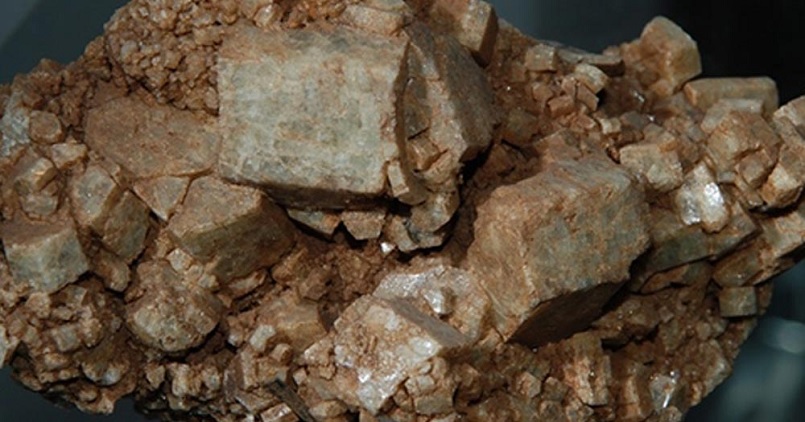
Natural phosphate color
2.2. Phosphorus processing
Along with natural phosphate, processed phosphate fertilizer is also popular with two main types available on the market:
- Fused phosphate: the origin of fused phosphate fertilizer is created from the production of phosphate ore at high temperatures, the main component of which is Ca(PO4)2. Due to the fusing process, this type of phosphorus is often gray-green or gray-white in color. Fused phosphate fertilizer is highly alkaline, helping to supplement Mg2+ and Ca2+, so it is very suitable for fertilizing acidic, infertile soil, corn and bean plants.
- Superphosphate: What is superphosphate? It is superphosphate with the main chemical composition being Ca(H2PO4)2. This is also a commonly used type of phosphorus because its outstanding characteristics are that it is easily soluble in water and soil, giving quick results.
Superphosphate fertilizers are also divided into two subgroups: single and double superphosphate. They are used for basic and top-dressing but are not suitable for alum soils due to their acidity.
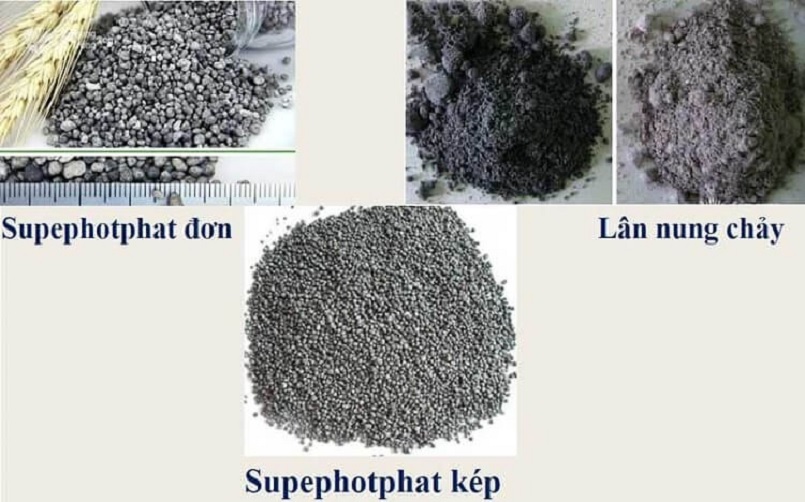
Some types Popular processed phosphate fertilizer
3. What happens when you fertilize too much or too little phosphorus?
Phosphorus fertilizer is very good and necessary for plants, but does not mean that, the more phosphorus, the better. In fact, over- or under-fertilization of phosphorus is harmful to plants. Farmers need to understand the harmful effects of over- or under-fertilizing with phosphate to avoid making mistakes. According to Duc Binh microbial products:
3.1. Harmful effects of plants when lacking phosphorus:
- Lack of phosphorus or phosphorus results in low crop productivity and quality. In particular, when the plant is in the flowering, fruiting or seeding stage or is old and lacks phosphorus, the harvest efficiency is very low.
- Without enough phosphorus, the plant’s branching and leaf growth is poor, and the leaves even turn yellow, gradually turning purple and red instead of lush green. More dangerously, the leaves will fall off a lot, greatly affecting the photosynthesis process of the tree.
- The tree has poor photosynthesis, so the fruiting process is also affected, producing few fruits, poor resistance, and low productivity.
- The leaves lack phosphorus, so the protein synthesis process also stops. Therefore, the plant grows with narrow leaf plates, small leaves, and even tend to stand upright. At this time, the plant increases nitrogen storage in the form of nitrate.
- Lack of phosphate fertilizer causes slow growth of plant roots and poor ability to absorb nutrients, resulting in short plants.
- Finally, the plant does not receive enough phosphate fertilizer, so its ability to synthesize starch and sugar declines. This leads to small flowers, few fruits, slow ripening, thick spongy skin and susceptibility to fungal diseases.
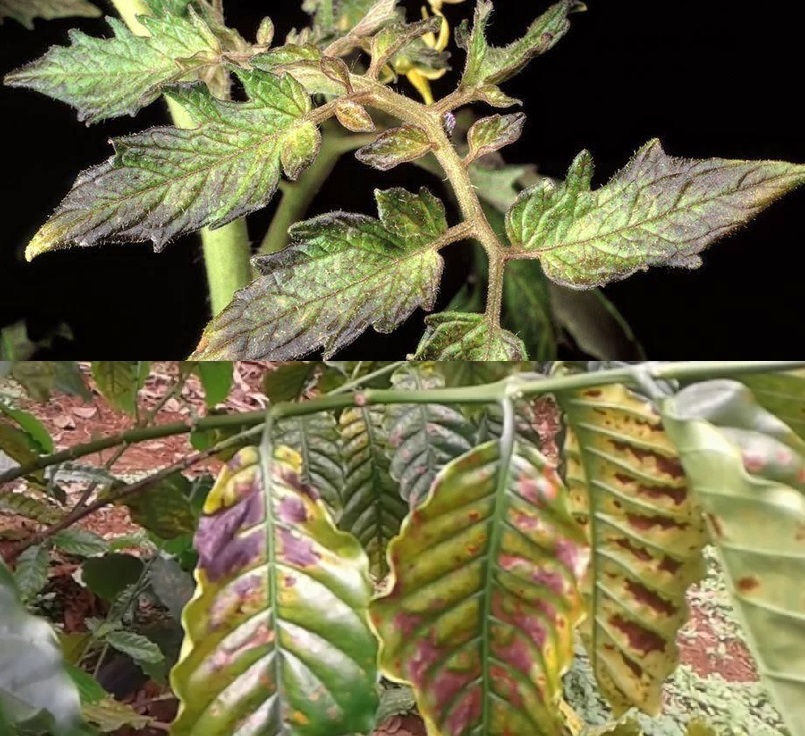
Symptoms and harmful effects of plants lacking phosphorus
3.2. Harmful effects of excessive phosphorus fertilization:
If a plant lacks phosphorus, it is easy to detect, while excess phosphorus is difficult to detect. However, when fertilizing too much phosphorus, plant growth is inhibited, leading to excess pigmentation and copper and zinc deficiency. Plants fertilized with excess phosphorus will cause harm as follows:
- Fruits, flowers and tubers ripen too early, so do not have enough time to accumulate nutrients, seriously affecting crop productivity.
- Inhibits growth of the flexible mechanism of phosphorus. It can be transported from old parts to young, or growing, parts.
⫸ See more: What is NPK fertilizer? How to fertilize plants with NPK
4. Instructions on applying phosphate fertilizer properly and effectively
As mentioned above, it is extremely necessary to understand clearly what phosphate fertilizer is and how over or under fertilization is harmful. Therefore, when fertilizing phosphorus, people must follow correct techniques
- Phosphorus fertilization needs to be based on the characteristics of each crop type. For upland plants and crops, super phosphate should be used, and for wet rice plants, natural or fused phosphate should be used.
- Phoshophorus fertilizers are usually suitable for basic fertilization, while superphosphate can be used for top dressing.
- When applying phosphorus, it needs to be combined with micronutrients to supplement the necessary trace elements for the plant.
- Phosphorus fertilizer should be combined with manure at a ratio of 2%:3-5%. Most effectively, super phosphate should be composted with manure and combined with biological products to increase the efficiency of phosphorus, while limiting soil fixation.

Biological products should be used in composting manure with phosphate fertilizers
- Phosphorus fertilizer needs to be divided according to soil type, whether the soil is more or less acidic to choose the appropriate type of phosphorus. For heavily acidic soil, choose natural fertilizer, and for MG-poor, infertile soil, use fused phosphate, only for alkaline soil, use superphosphate.
- Phosphorus fertilizer also needs to be applied as a mechanical fertilizer to the soil. Specifically, loam soils need to be fertilized in rows and choose a type of phosphorus that dissolves quickly and is easy to absorb.
5. Phosphorus fertilizer should be used as a base or top fertilizer
To get the answer to this question, people need to clearly distinguish the concepts of base fertilization and top fertilization. Top dressing is a form of fertilizing at the stage of plant development, after the plant has leafed out or is in the growth process. Therefore, the main purpose of fertilizing is to supplement nutrients to help plants grow strongly, promoting flowering, fruiting or seeding with the highest yield and quality.
Baking fertilizer is fertilizing during the soil preparation stage before sowing seeds or planting trees. The purpose of basic fertilizer is to provide nutrients to the plant right at the full stage so that the plant can develop roots and adapt to the environment.
Thus, phosphate fertilizer is mainly used to fertilize plants. Fertilizing at this time helps supplement the necessary amount of phosphorus for the pre-planting period. Specifically, providing phosphorus so that the roots grow quickly, the tree has enough nutrients to stabilize and adapt from the beginning. For acidic soils, alkaline soils, and nutrient-poor soils, phosphate fertilizer application is especially important. It is the initial foundation for the tree to grow, creating momentum for the next stage.
⫸ See more: What is top dressing? How to fertilize plants to achieve high yields
⫸ See more: What is base fertilizer? Fertilizing technique for plants
6. Answer questions related to phosphate fertilizer
Even though it is a popular type of fertilizer, used frequently in farming, not everyone understands its characteristics, properties, and uses. Here are some key questions:
- How often is it best to apply phosphate fertilizer? The density of phosphate fertilizer depends on the type of soil and crop. Most farmers will fertilize with phosphate fertilizer before planting, then supplement periodically with plant growth: every 2 to 3 months for perennial plants.
- Is phosphate fertilizer soluble in water? There are two types of phosphate fertilizer: Super phosphate is easily soluble in water, so when applied to soil, plants can absorb it immediately. Fused phosphate fertilizer, which is difficult to dissolve, is mainly used to fertilize acidic soils or as fertilizer for plants to absorb over a long period of time.
- Should you fertilize phosphate with NPK fertilizer? Farmers can combine these two types of fertilizers together to improve productivity but need to be careful. If you use super phosphate mixed with NPK it will be very good. However, if you use fused phosphorus mixed with NPK, it is not okay because the sulfate contained in it will reduce the plant’s nutrient absorption efficiency.
- Should you apply phosphate fertilizer in the rainy season? If people fertilize during the rainy season, there will definitely be some loss, especially when the soil is washed away. Therefore, the advice for people is to fertilize before buying or mix it with organic fertilizer to ensure the highest efficiency.
- What are the signs of phosphorus deficiency in plants? The leaves change from dark green to purple-red, grow poorly, slowly, have few flowers, small fruits, slow ripening and are susceptible to pest attacks.
Through the above article, we hope you have clearly understood what phosphate fertilizer is, its role, effects and how to use phosphate fertilizer correctly for plants! In particular, with the knowledge of using phosphate fertilizer shared above, it will help farmers have a good harvest.
⫸ See more: What is micronutrient fertilizer? Why are micronutrients necessary for plants?
>
>
Contact information
>
Address : 1B Alley 774 Kim Giang, Thanh Liet, Hanoi
Phone number: 0934.214.579
Email: chephamvisinhungdung@gmail.com
Website:https://chephamvisinh.vn


